
blackwater diving in thailand & myanmar
What is Blackwater diving?
Blackwater Diving is an extraordinary way to experience night diving from a completely different perspective!
Diving into the Darkness
During a Blackwater dive, you descend into very deep water, far from any reef, with no other reference than a downline equipped with powerful lights.
In complete darkness, you drift in mid-water and observe the marine life that naturally comes towards the light.
Discovering an Invisible World
Blackwater diving gives you the opportunity to encounter marine life that you would almost never see on a regular dive.
You may encounter:
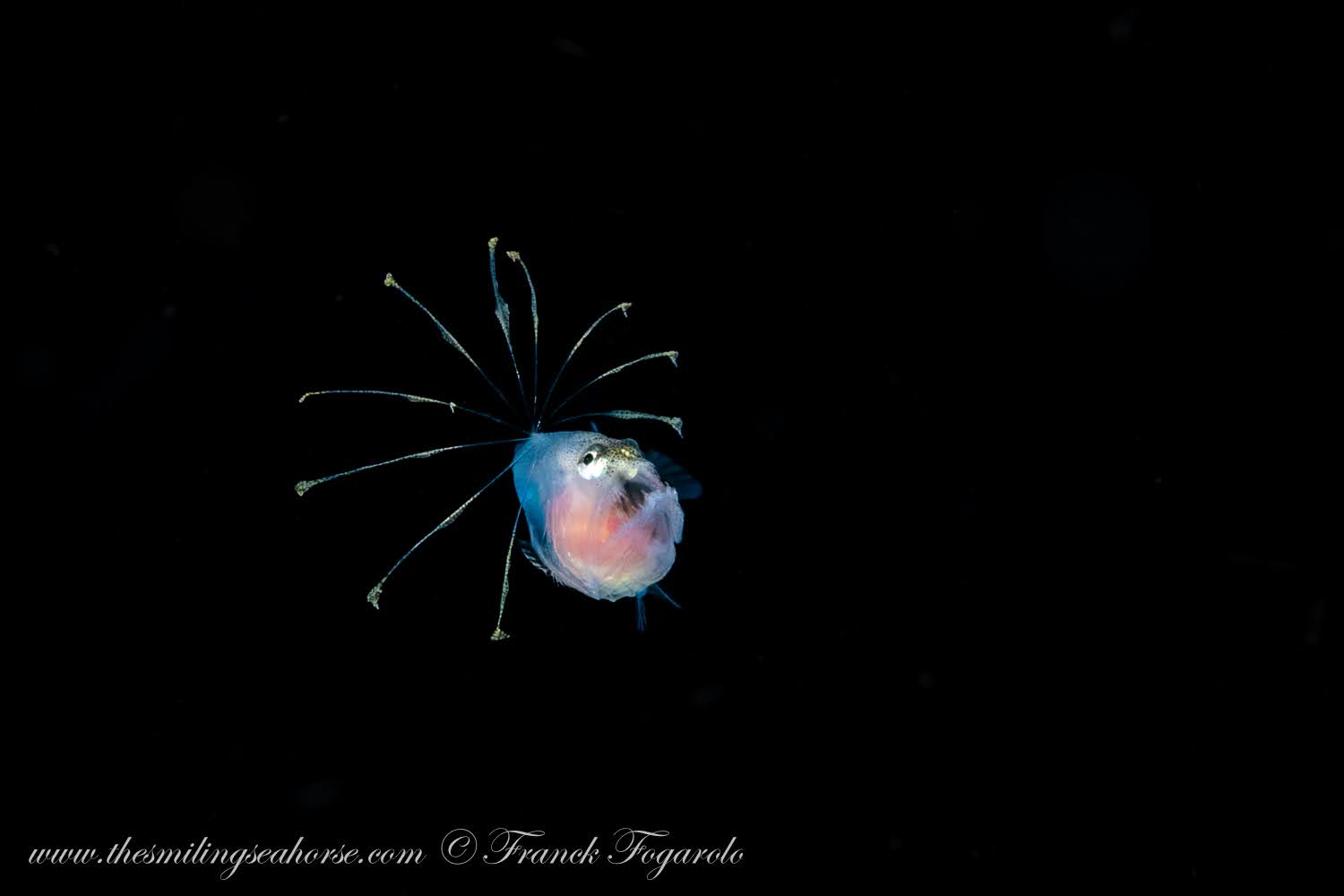
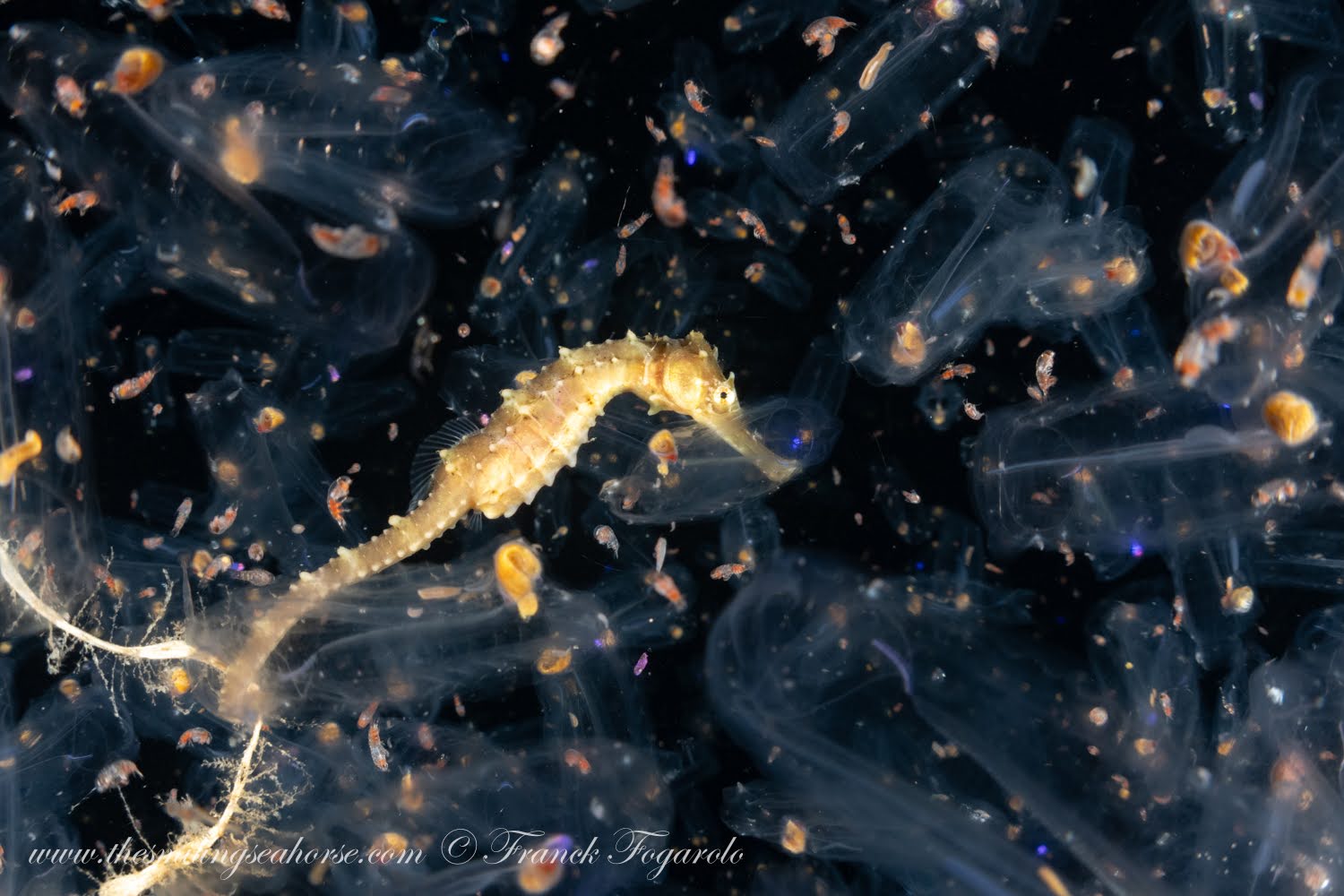
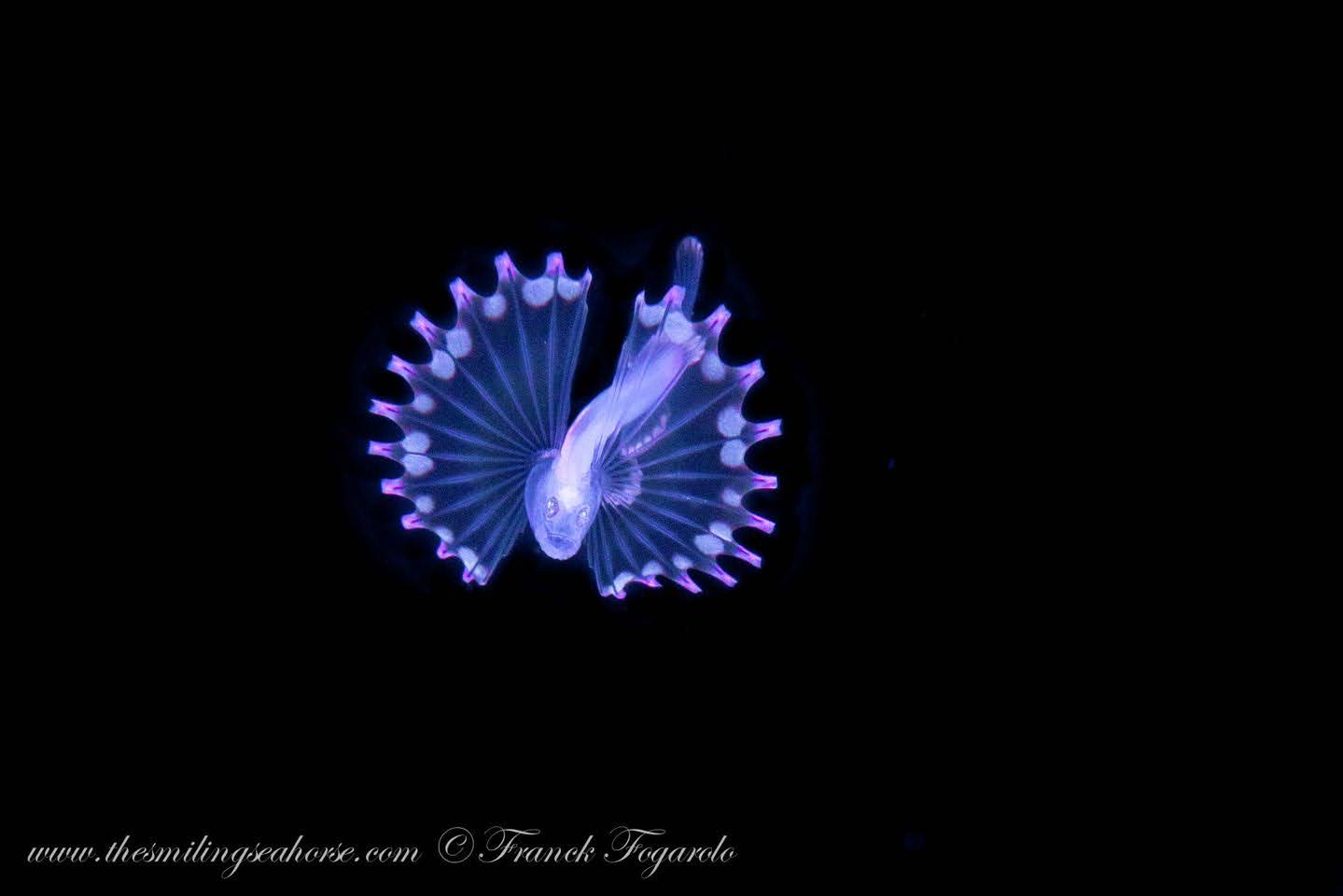
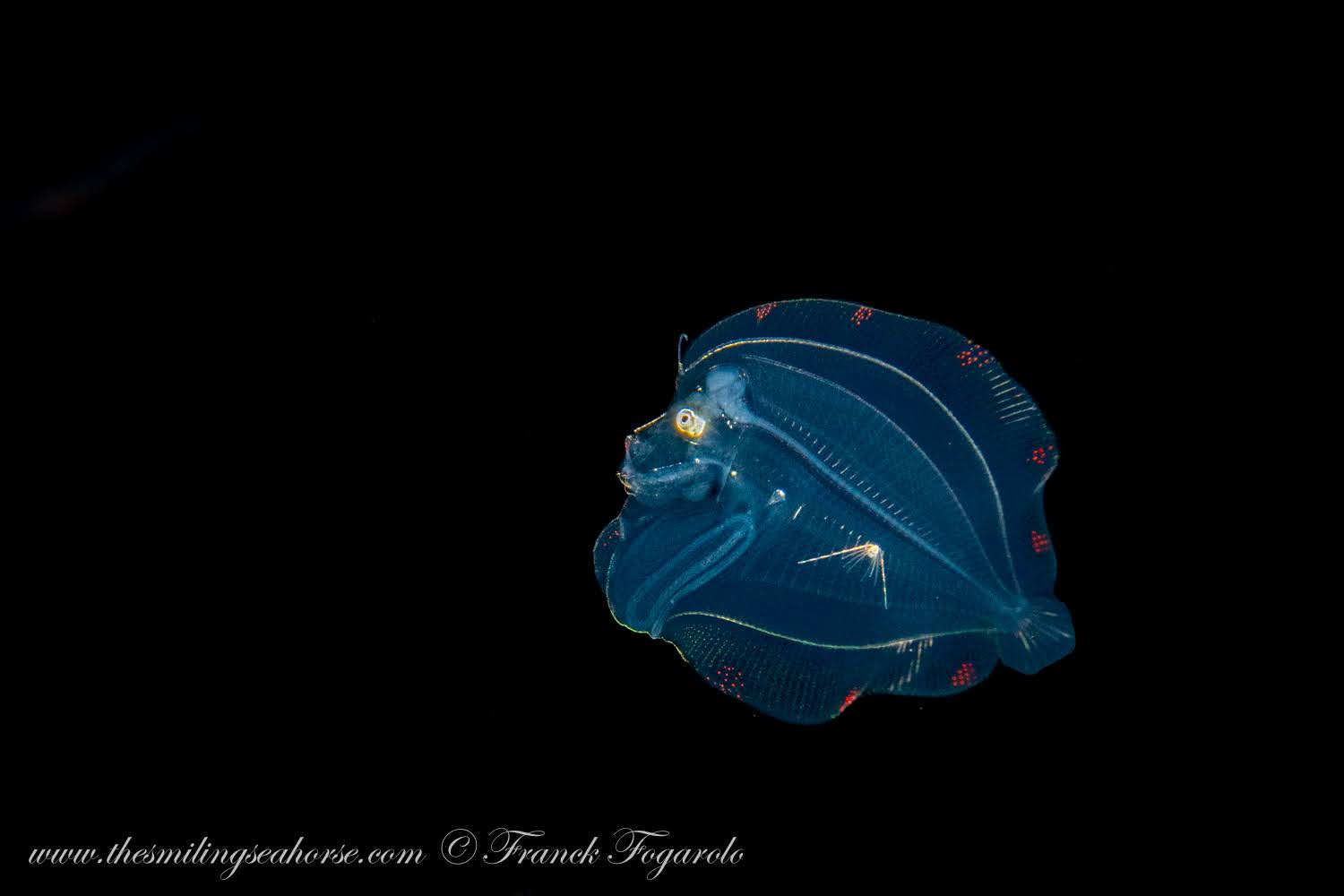
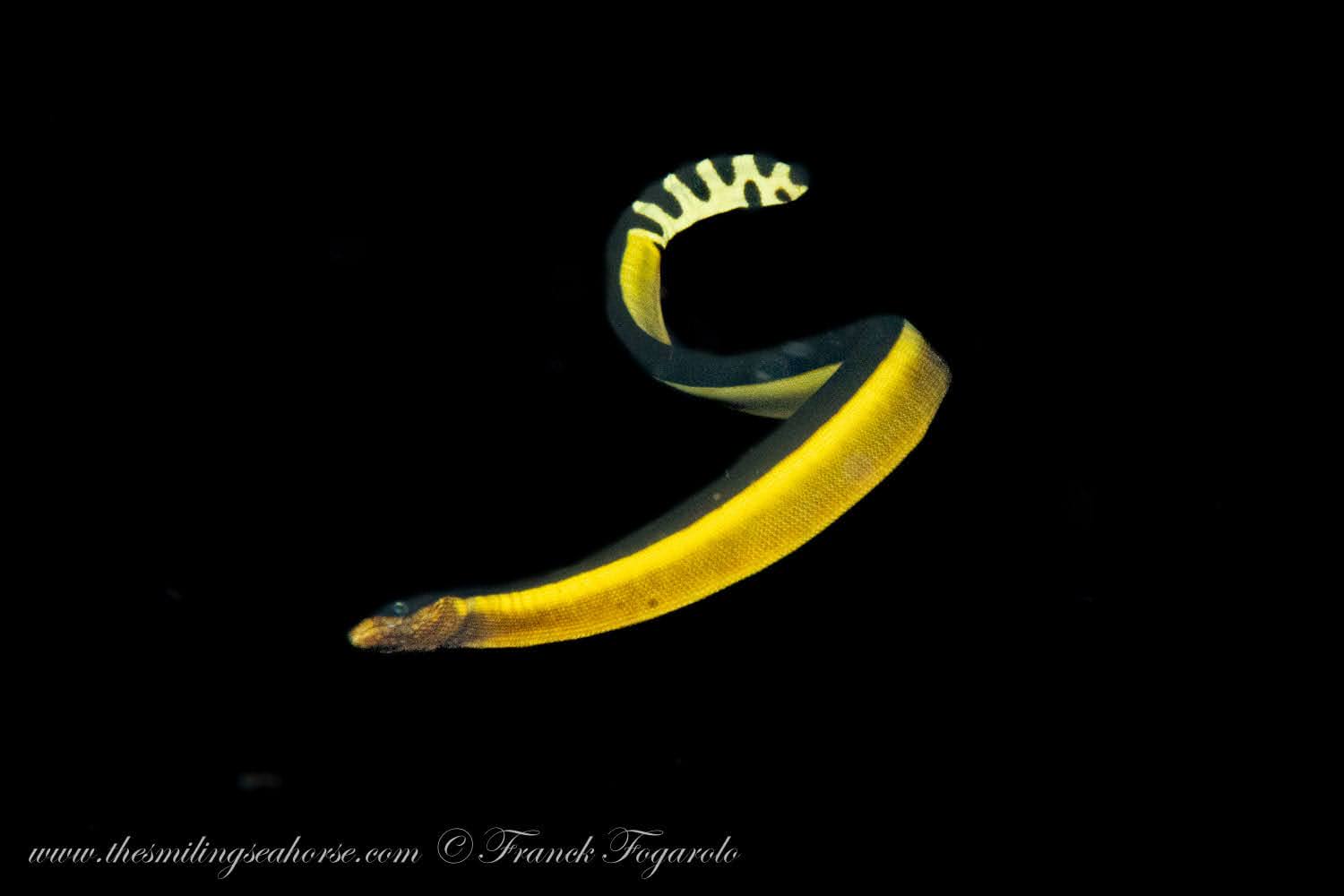
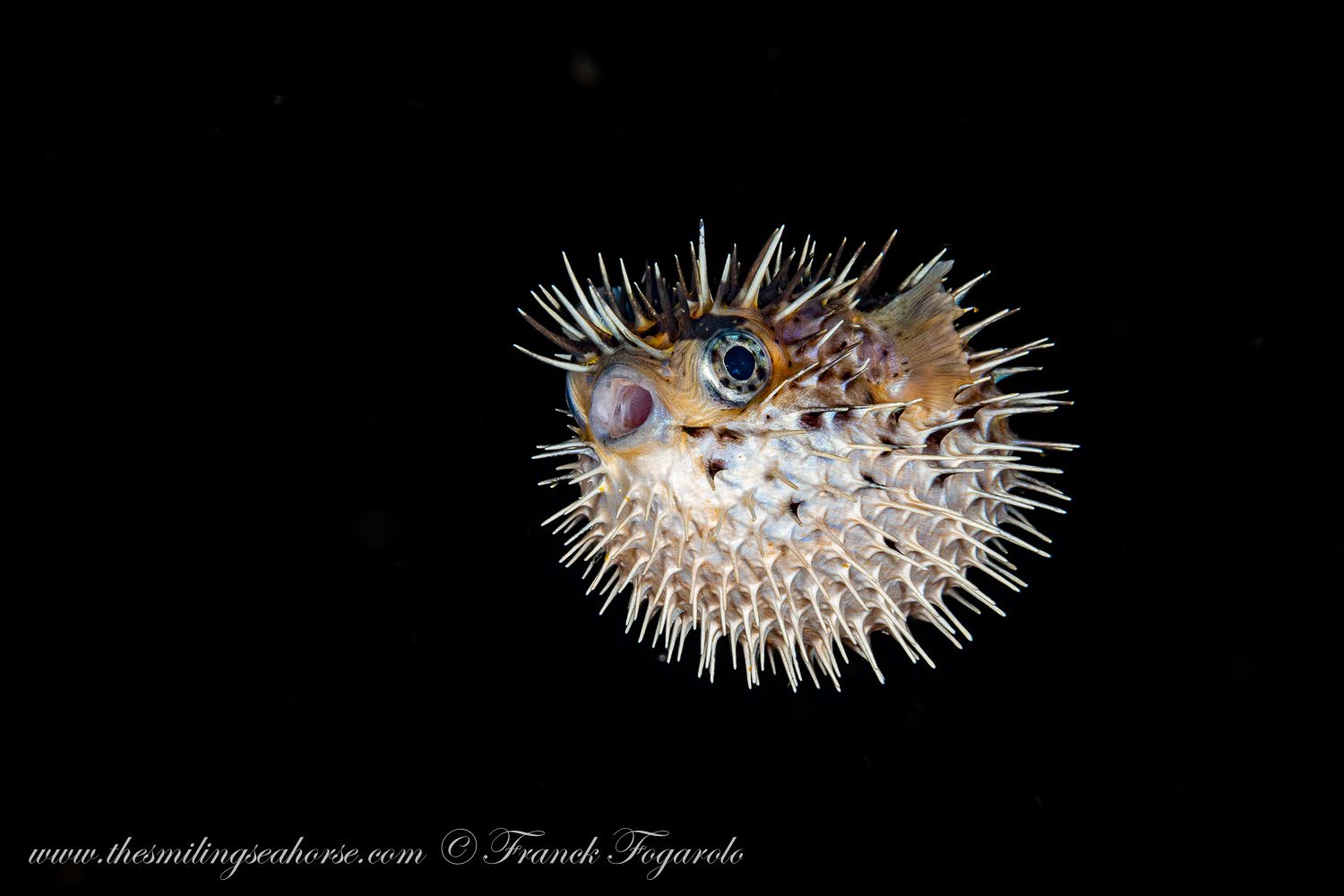
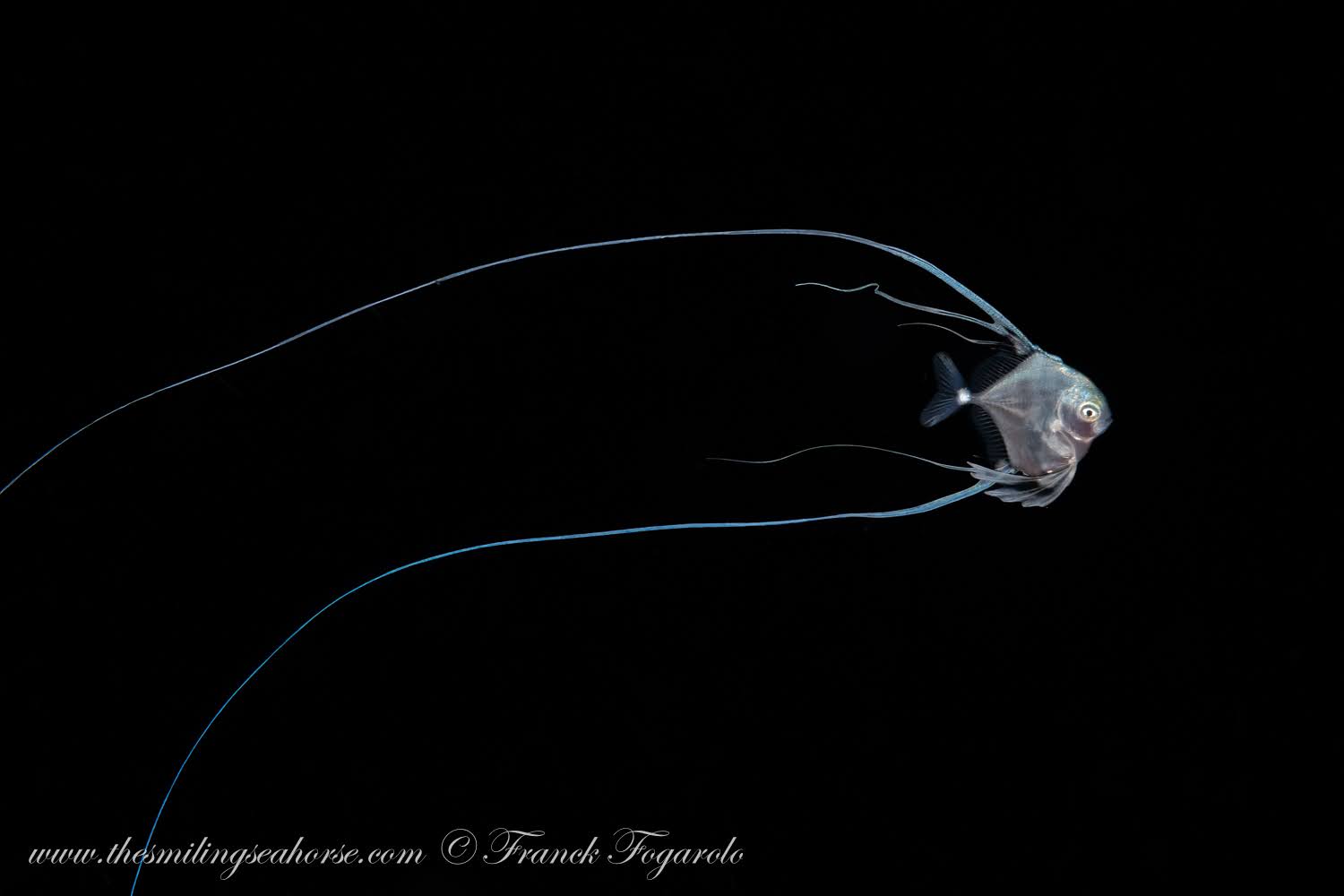
- fish larvae and juveniles;
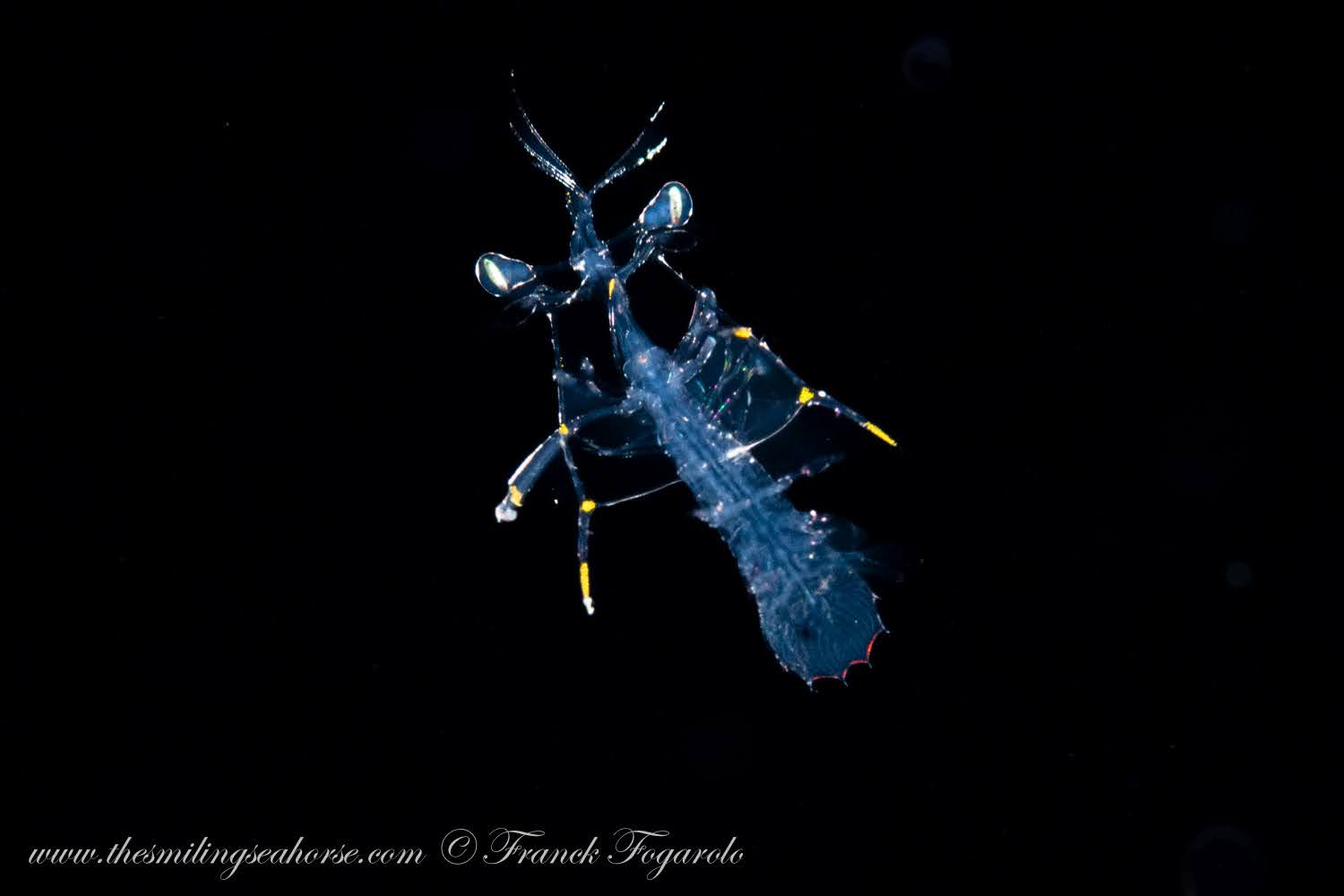
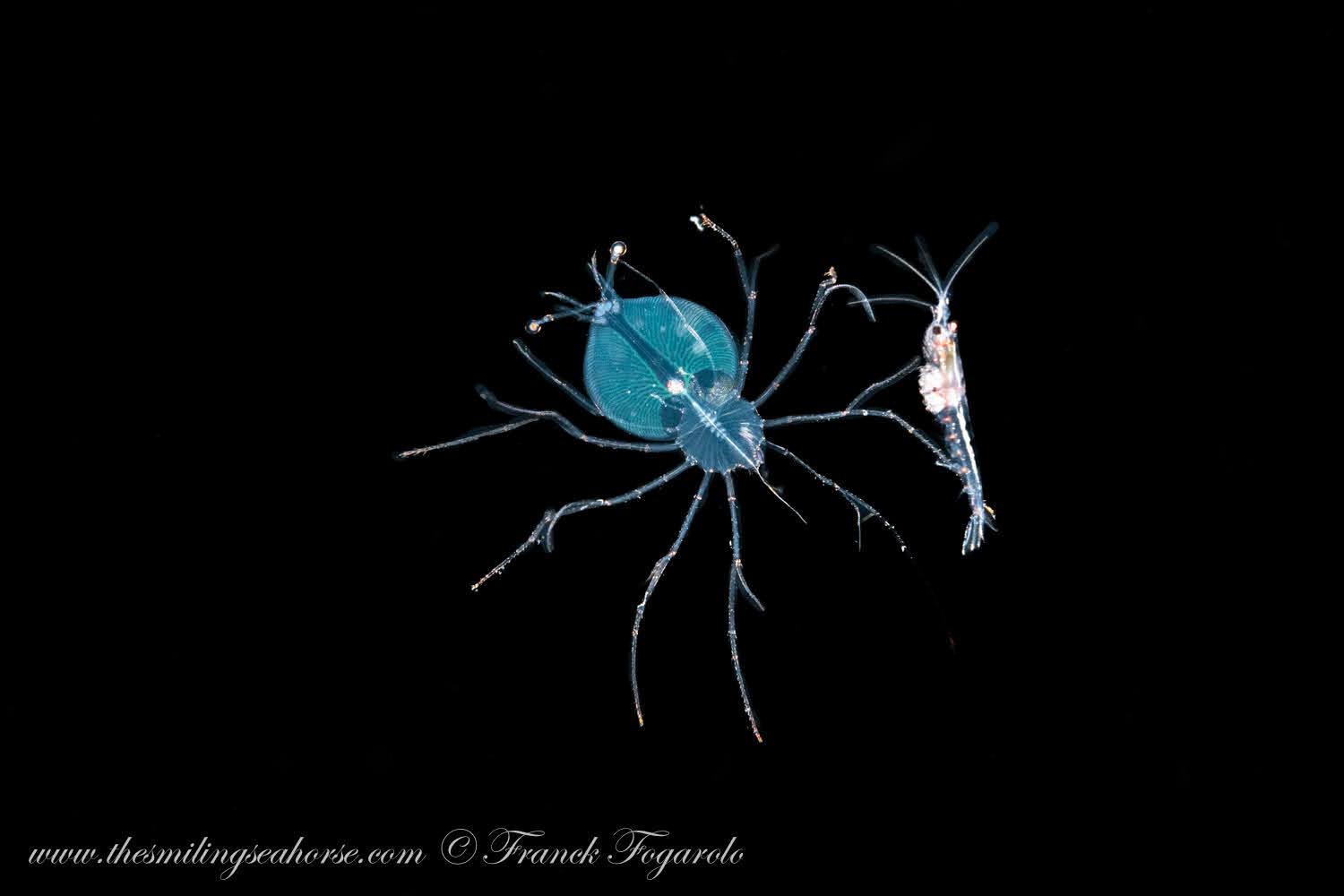
- young crabs and shrimps, still drifting in the open water before settling on the reef;
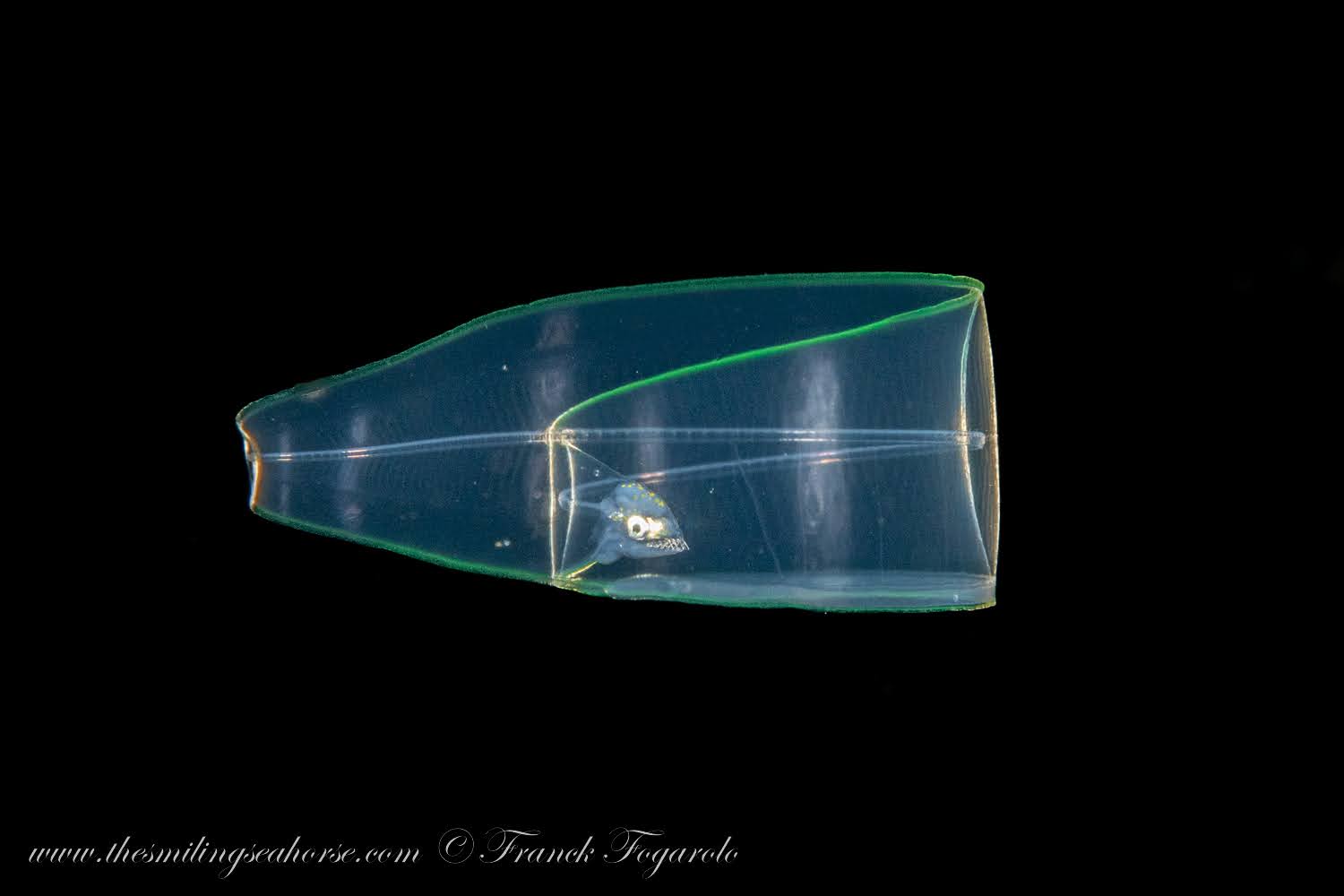
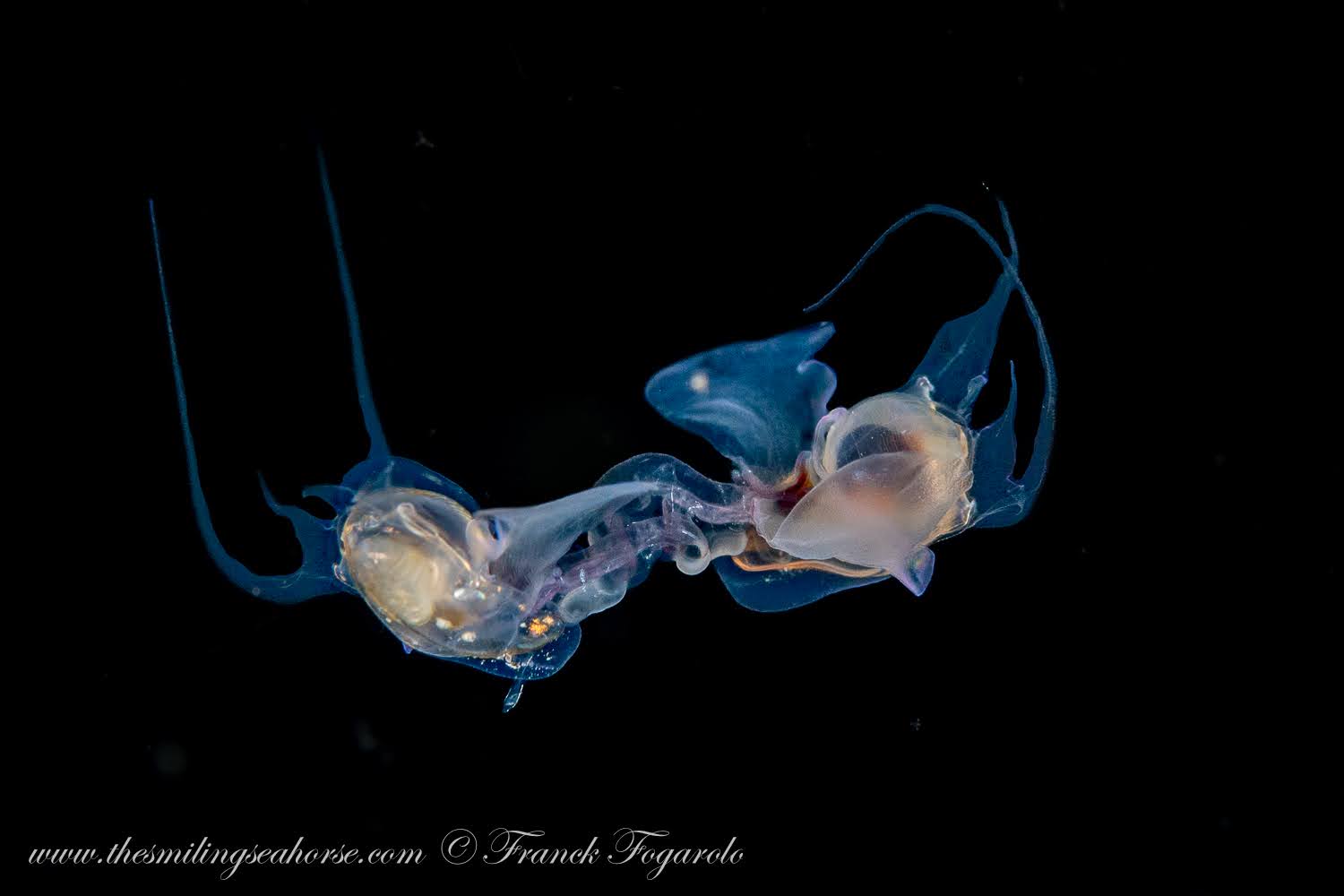
- strange and translucent creatures that go unnoticed during traditional dives;
- and sometimes even deep-sea creatures that would normally never venture up to the reefs.
Blackwater diving VS Bonfire diving
What Is the Difference?
The main difference between these two types of diving lies in what is beneath you. Blackwater Diving takes place in the open ocean, above very deep water, while Bonfire Diving is carried out above a reef or sandy area.Two Techniques, One Principle
In both cases, we use powerful lights to attract plankton and observe the many creatures that come to feed on it. You can therefore encounter larvae and juveniles during both types of dives. However, once they reach areas closer to the reef, they are generally further along in their development and closer to their adult form.Why Do We Prefer Blackwater Diving?
Over the years, we have achieved better results with offshore Blackwater Diving in the waters of the Andaman Sea. That doesn’t mean we don’t enjoy regular night dives on the reef. They offer a completely different experience, with their own unique encounters and surprises!What can you see on a Blackwater dive in Thailand?
When Fiction Becomes Reality
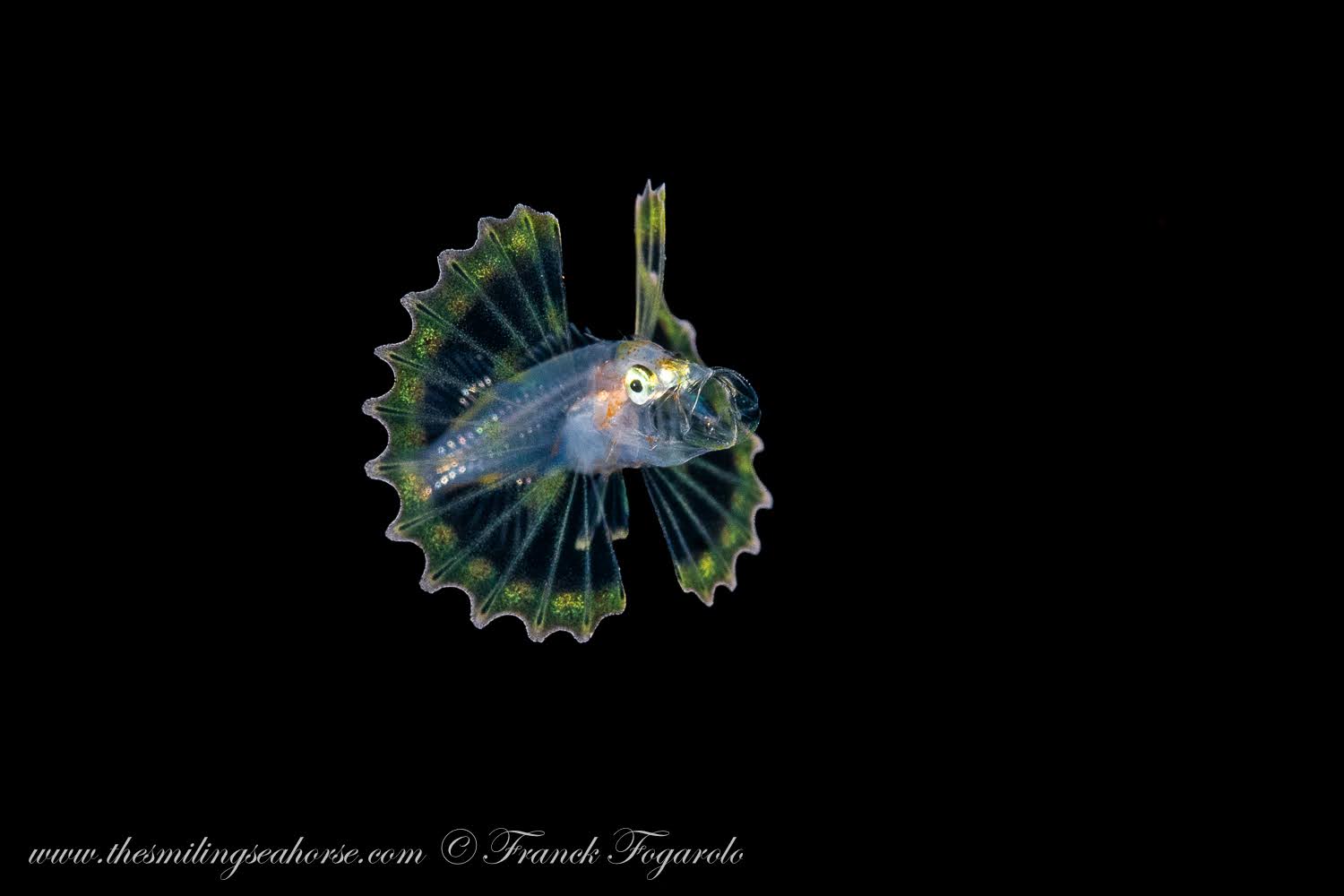
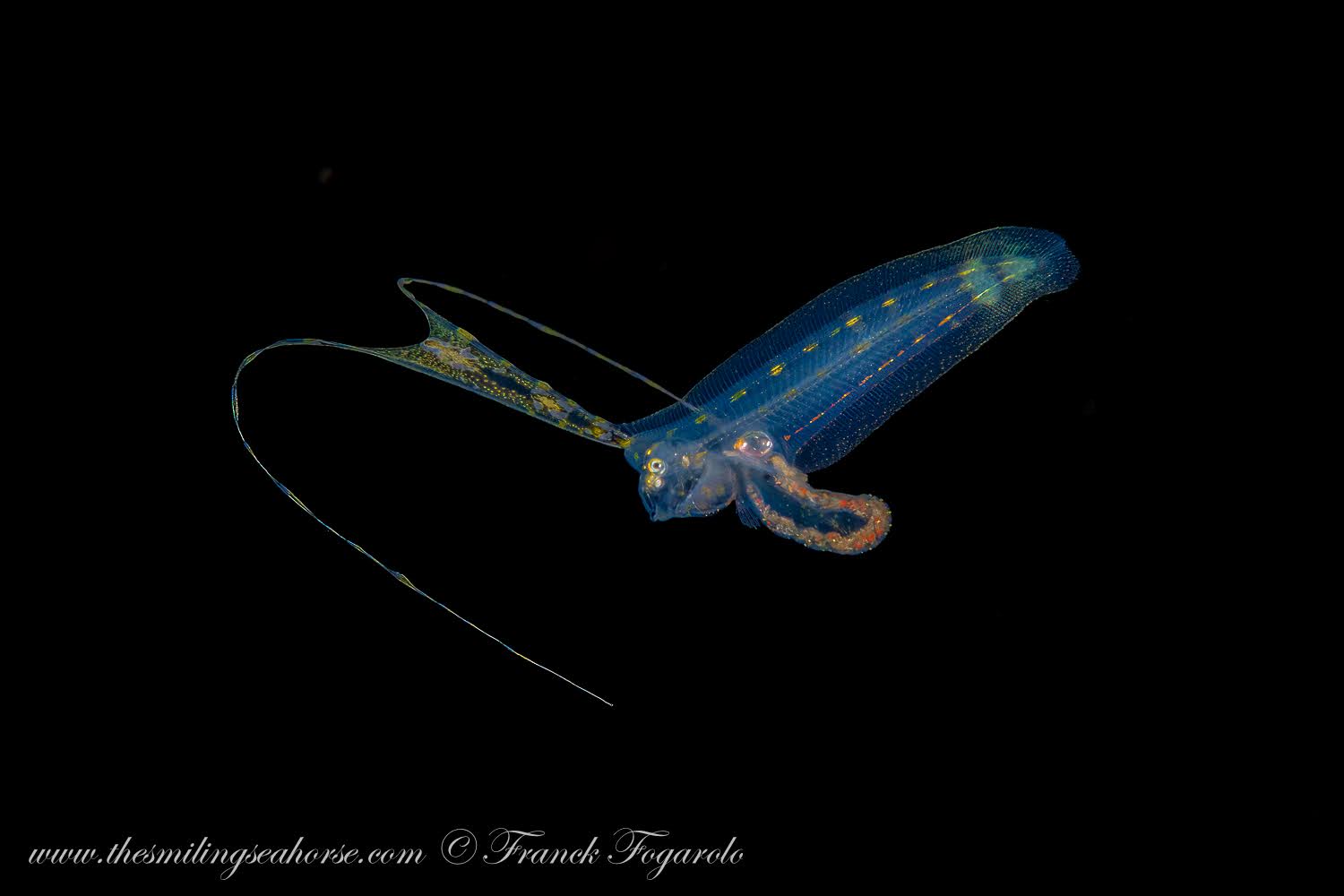
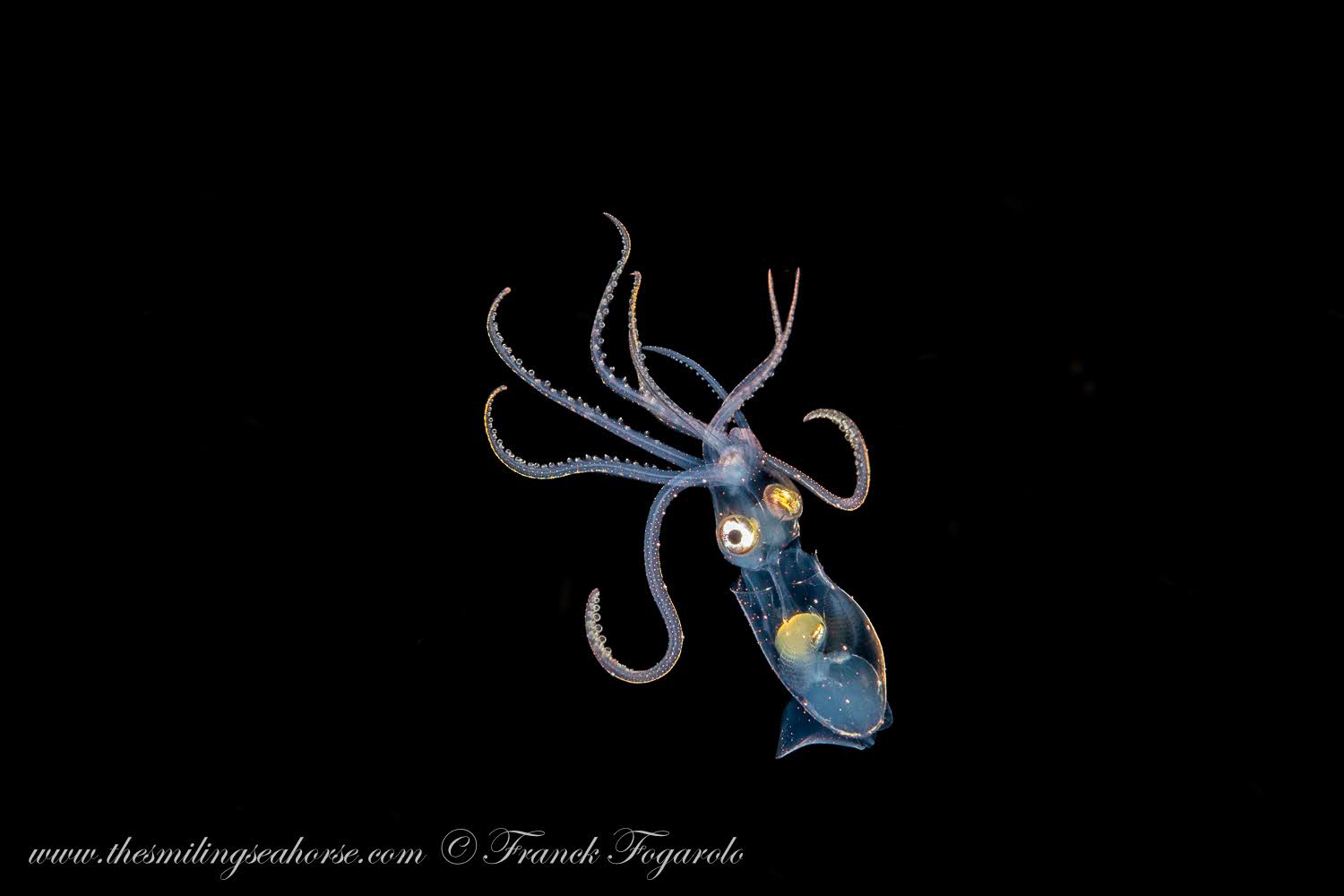
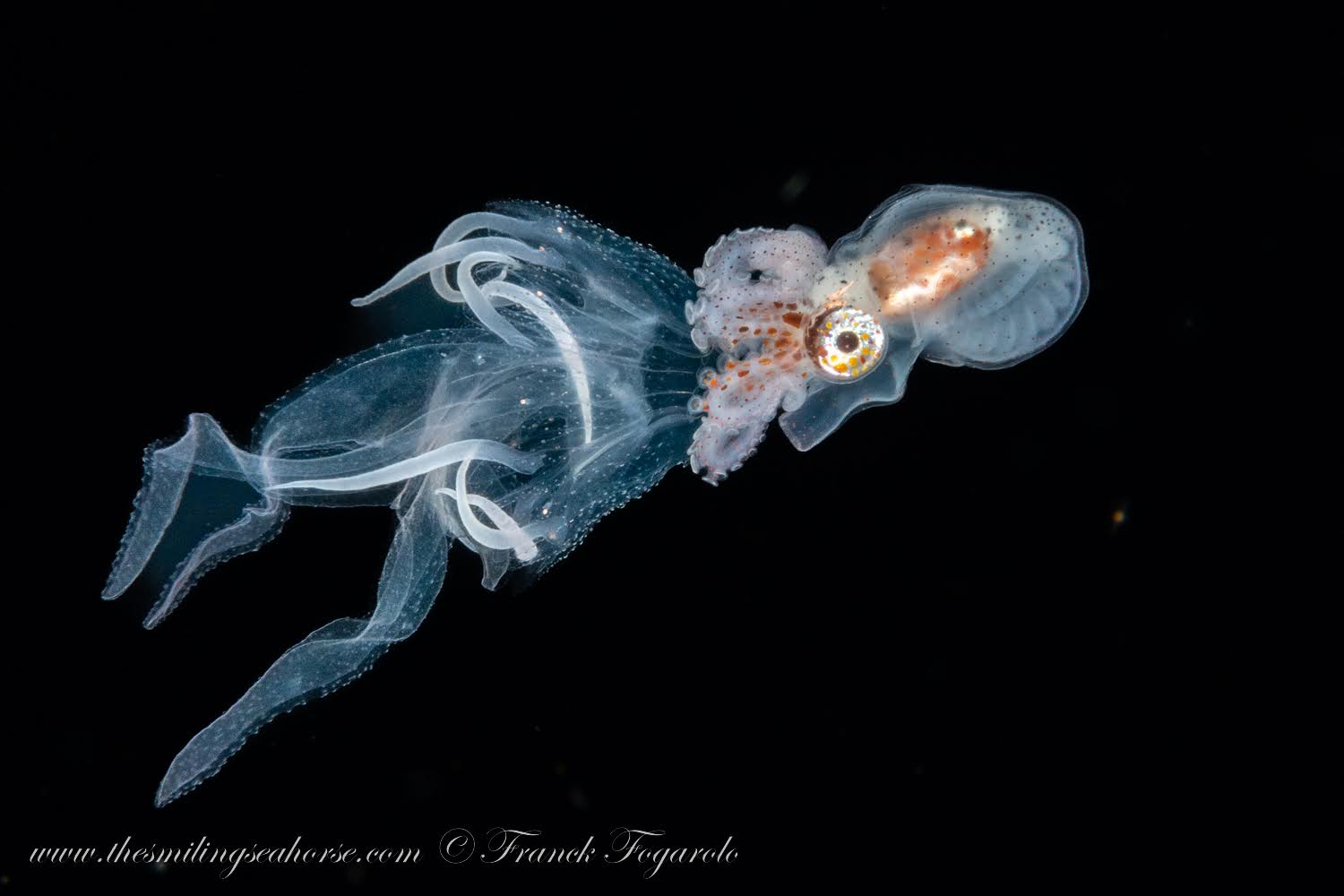
Remember all those strange creatures you’ve seen in science-fiction movies: transparent, dreamlike creatures, tiny aliens with long arms and completely improbable shapes… In Blackwater, they become real! During your dives, these little “monsters” come out to perform in the beam of your lights, before disappearing back into the darkness.A World Made for Photography
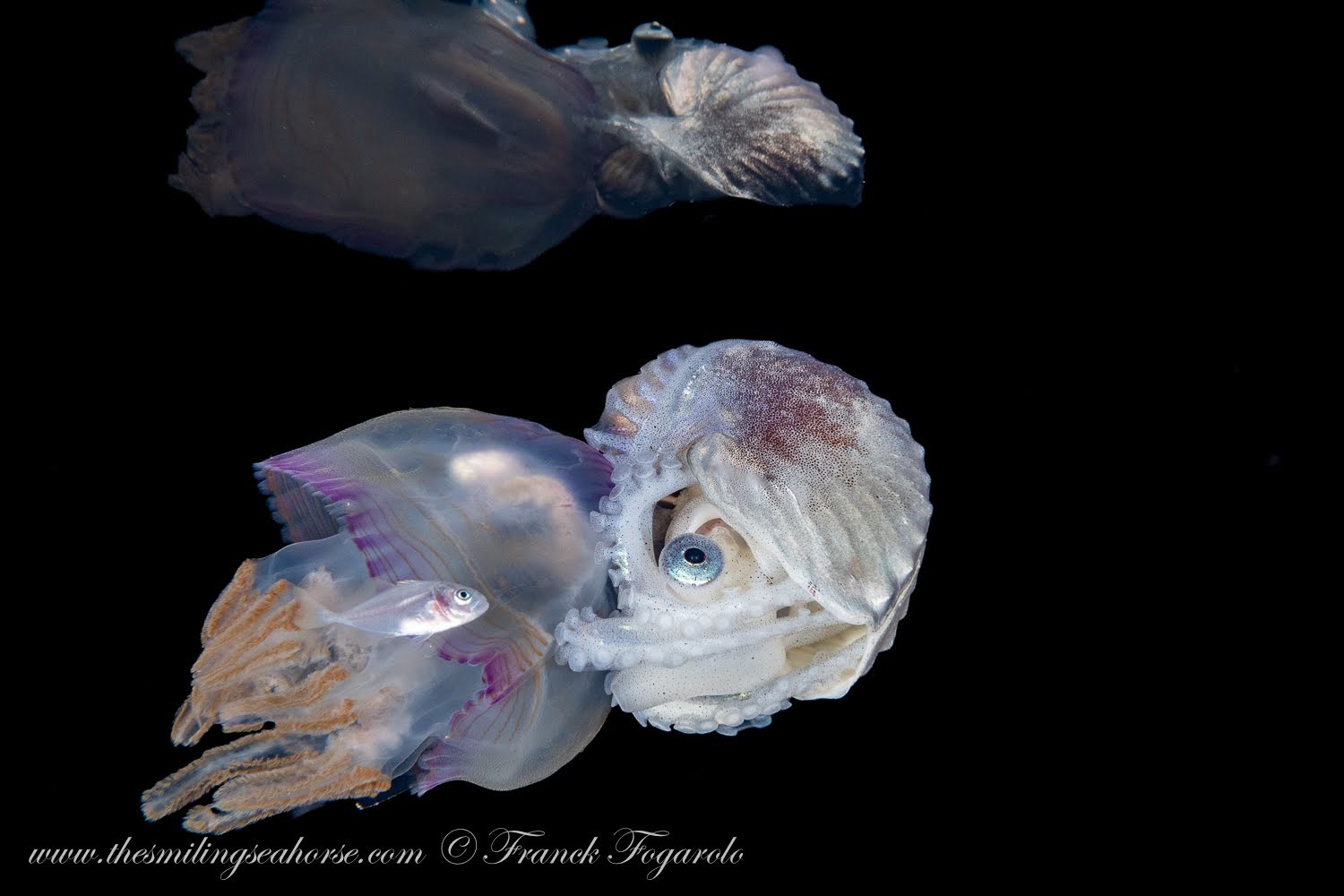
Blackwater Diving in the Andaman Sea, Thailand, also offers unique photographic opportunities. You could be one of the few divers to have ever observed and photographed a jellyfish, planktonic creature or larva before it disappears back into the night. Large specimens are relatively rare during Blackwater dives. But if you take the time to look carefully, you’ll discover an incredible diversity of shapes and sizes. You may encounter different juvenile stages of:- fish from the Andaman Sea;
- gastropods, such as snails and sea slugs;
- cephalopods, including tiny squid and octopuses sometimes smaller than your fingernail;
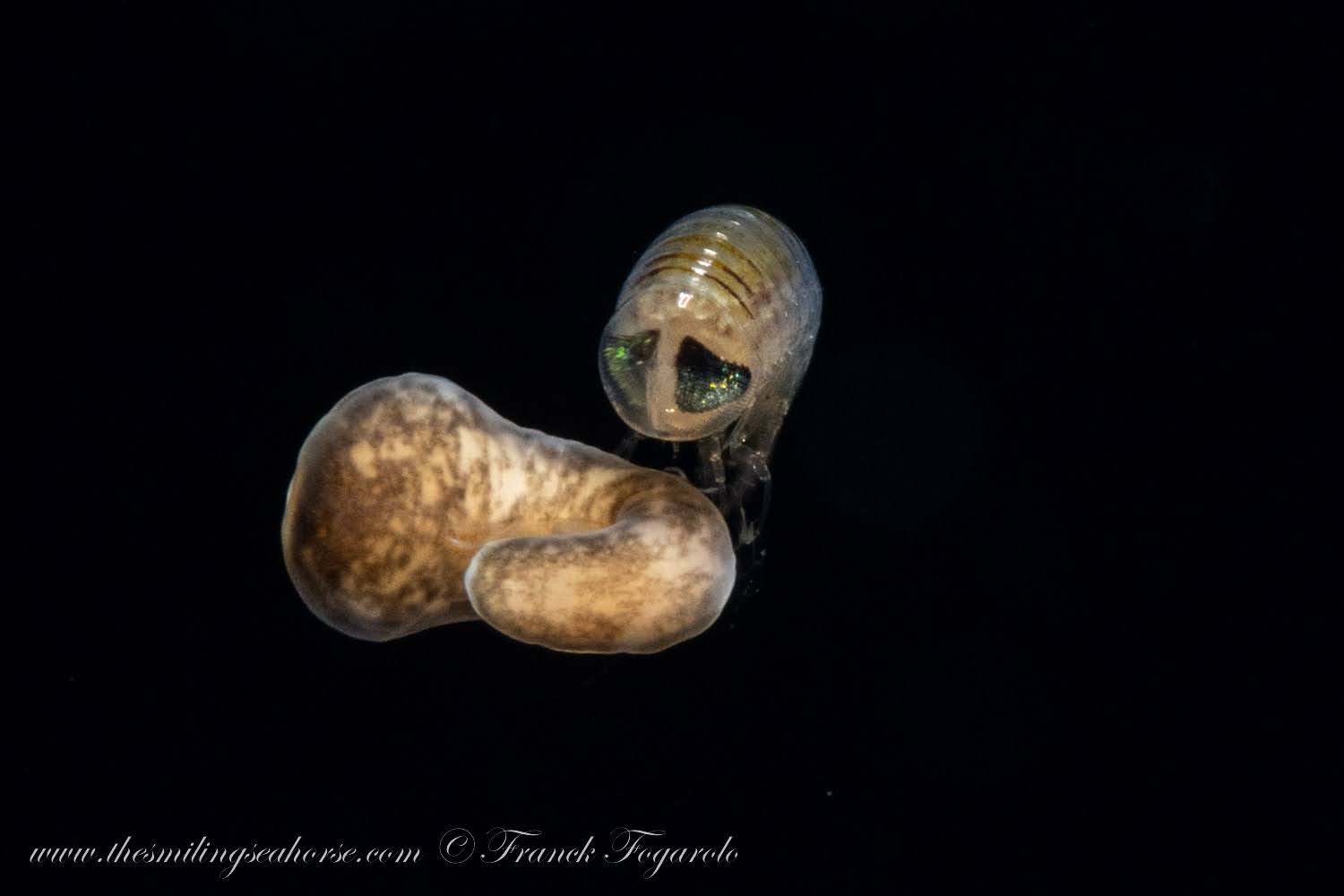
- crustaceans, including shrimp, crabs and tiny mantis shrimps.
Truly Exceptional Encounters
Every diver dreams of one day encountering an argonaut, a sailfish or a blanket octopus. But there are so many other amazing “little monsters” waiting to be discovered!The Fun of Searching… and Guessing
At first, you may find it difficult to identify the species you encounter. And that’s perfectly normal! Some juveniles can look completely different from their adult form, making them almost impossible to recognise underwater. But that’s also part of what makes Blackwater so much fun: once back on board, we look through the photos, compare our sightings and play the guessing game with our fellow divers.How do you set up for a Blackwater dive then?
The Principle
The idea behind Blackwater Diving is to dive above deep water, far from any reef, with no reference point other than a suspended line equipped with powerful lights.
To avoid being disturbed by other divers’ lights, it is best to dive in small groups. Divers generally explore in buddy pairs around the line, searching for fascinating marine creatures drifting through the darkness.
Our Blackwater Line
The line we use is 20 metres long and weighted. It is equipped with:
- a large, brightly lit surface buoy;
- powerful lights attached every 5 metres along the line.
The buoy is deliberately kept some distance away from the boat. Surface currents or wind can push the boat in one direction while divers, deeper underwater, drift in another.
The buoy is much less affected by these movements, making it a more stable and easier reference point for divers to follow.
Before Entering the Water
Once the line has been properly set up and deployed, we prefer to wait a few minutes before starting the dive.
This gives the lights time to attract the creatures rising from the depths towards the surface.
It is also the perfect time to review the dive plan, diver positions and equipment together before entering the water.
What Equipment Do You Need?
You will need the same basic equipment as for a regular night dive:
- a primary dive light;
- a backup light, essential for safety.
And for gadget enthusiasts, a laser pointer can also be very useful for getting your buddy’s attention when you spot something interesting!
Once everyone is ready, all that remains is to enter the darkness… and see what creatures come to meet you.
Dive Briefing for Blackwater diving
Good Preparation Is Essential
A Blackwater dive should be prepared in advance to ensure the best possible conditions and allow everyone to fully enjoy the experience.
One of the most important things to understand is the impact your movements can have on other divers and on the tiny creatures you have come to observe.
Move Your Light Carefully
If your light is moving in all directions, it can scare away some creatures… and end up shining directly into another diver’s eyes!
This is especially unpleasant during a night dive, when your pupils are fully dilated.
Move slowly and keep your light under control. Your buddy and the creatures around you will thank you for it!
Think in Three Dimensions
During a Blackwater dive, you also need to be aware of your three-dimensional space, particularly the movement of your bubbles.
Move slowly and avoid swimming underneath another diver. Your bubbles rise and create an upward current that can carry away all the tiny creatures in the water column.
Sharing Space and Depths
Dividing and assigning different depths to divers can be a great way to give everyone a little more space to observe and photograph.
This is something worth discussing during the briefing. Some divers may prefer to explore deeper than others.
If everyone wants to stay in roughly the same area, you can also agree on a dive plan and a rotation time around the central line.
My Advice After Many Blackwater Dives
In my experience, there is no real ideal depth for Blackwater diving.
What generally works best for me is to gradually move away from the other divers while regularly returning towards the central line to maintain my bearings and reconnect with the group.
In Blackwater, taking your time, staying aware of your surroundings and giving other divers enough space are all part of the experience.
Who is blackwater diving for?
Not Just for Photographers!
Blackwater dives offer incredible photographic opportunities, to the point that some underwater photographers sometimes think they are primarily about photography. I firmly believe that anyone passionate about the ocean can be amazed by a Blackwater dive, especially divers who enjoy macro or muck diving and searching for tiny creatures on sediment-covered seafloors.Good Buoyancy Control
You don’t need to be a professional diver to try Blackwater Diving. However, it is important to have good control of your neutral buoyancy. Unlike a regular dive, there is no bottom beneath you and very few, if any, visual references to instinctively tell you whether you are ascending or descending. This can be a little disorienting at first.Once You Have Mastered Your Buoyancy…
You might think that Blackwater is a particularly challenging, or even dangerous, type of diving. Yet once you have mastered your buoyancy, it is surprisingly simple and natural. You simply float in the middle of the water column and, when there is a current, let it carry you along. Even during a drifting Blackwater dive, you can sometimes feel as though the water around you is completely still. All that remains is to focus on what is happening around you… And enjoy the show!Diving Techniques to see more on your next Blackwater dive in Thailand or Myanmar
Rule #1: Take It Slow
Most of the creatures you encounter at night are very sensitive to movement. Approach them slowly and carefully… otherwise, they may disappear before you even have time to observe them!
Rule #2: Think in Three Dimensions
In Blackwater, you are no longer limited to the reef floor. Creatures can be anywhere around you — above, below or to either side. Think in three dimensions and take the time to look in every direction.
Rule #3: Move Your Light Slowly
To spot small creatures, move your light gently through the water column. A movement that is too fast can easily scare away whatever you are looking for.
Take your time, observe carefully… and let the little monsters come to you!
Now some tips for the underwater photographers on Blackwater dives!
What's the difference between Blackwater and Macro Photography?
A Different Way to Do Macro Photography
It’s true that the subjects are often a similar size, and you can use the same camera and lens to photograph them. But the behaviour of the marine life encountered during Blackwater dives makes the experience so much more exciting than photographing a nudibranch sitting quietly on a rock!Tiny and Translucent Subjects
Most of the creatures we encounter during Blackwater dives are larvae or very young individuals. They are often transparent or semi-transparent, making them particularly interesting to photograph… but also more challenging. To achieve good results, you will generally need more light and a smaller aperture to properly reveal the details and contours of these delicate subjects. But more light also brings its own challenge: backscatter. And this is where Blackwater photography becomes really interesting: you need to learn how to control your lighting so that you illuminate the subject without lighting up all the particles floating between you and your camera.How to get these wonderful Blackwater diving pictures?
Choosing Your Lens
For Blackwater photography, a 60mm macro lens combined with a crop-sensor camera makes an excellent setup. This combination offers a good balance of working distance, focusing speed and focal length, while remaining versatile enough to photograph the small subjects moving through the water column.Get Close to Your Subject
In Blackwater, it is particularly important to get as close to your subject as possible. The less water there is between your lens and the animal, the fewer particles there will be between them — and therefore the lower the risk of backscatter in your photos.Master Your Lighting
A focus light is very useful for helping your camera focus in the darkness. For illuminating your subject, however, two strobes generally produce better results. They allow you to light the subject from both sides and have better control over the lighting while reducing backscatter. In Blackwater photography, getting close and controlling your light are often the keys to a great photo.Intrigued? Join one of our special Burma cruises and experience up to 5 additional Blackwater dives!
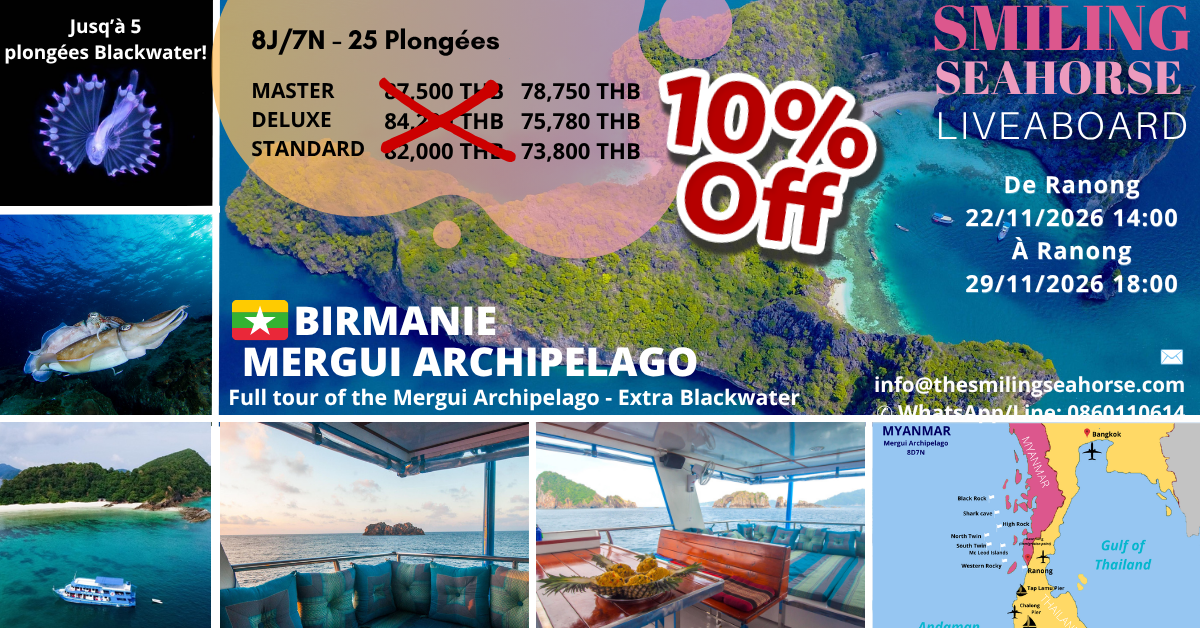
22 November 2026
8 Days / 7 Nights · 25 Dives
Departure: Ranong at 2:00 PM Return: Ranong at approximately 5:00–6:00 PM
Price per Diver
Prices valid from January 2026
-
Standard Cabin:
THB 82,000THB 73,800 -
Deluxe Cabin:
THB 84,200THB 75,780 -
Master Cabin:
THB 87,500THB 78,750

12 February 2028
8 Days / 7 Nights · 25 Dives
Departure: Ranong at 2:00 PM Return: Ranong at approximately 5:00–6:00 PM
Price per Diver
Prices valid from January 2026
- Standard Cabin: THB 82,000
- Deluxe Cabin: THB 92,600
-
Master Cabin: THB 96,300
The Smiling Seahorse now offers Blackwater diving on all cruises.


 Trustindex verifies that the original source of the review is Google.
 Trustindex verifies that the original source of the review is Google.
 Trustindex verifies that the original source of the review is Google.
 Trustindex verifies that the original source of the review is Google.
 Trustindex verifies that the original source of the review is Google.
 Trustindex verifies that the original source of the review is Google.
 Trustindex verifies that the original source of the review is Google.
 Trustindex verifies that the original source of the review is Google.
 Trustindex verifies that the original source of the review is Google.
 Trustindex verifies that the original source of the review is Google.


 Verified
 Verified
 Verified
 Verified
 Verified Verified
 Verified
 Verified Verified
 Verified