
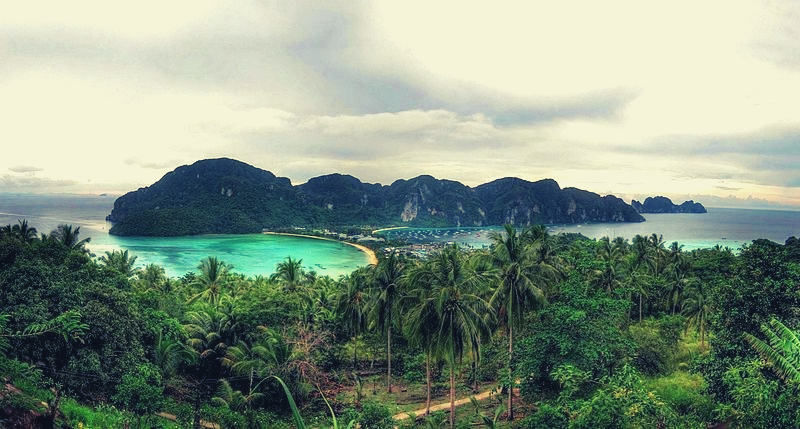
Koh Phi Phi is a group of islands in the Andaman Sea, in southern Thailand. The name Phi Phi (pronounced “phi-phi”) originates from Malay. The original name for the islands was Pulau Api-Api (‘the fiery isle’). The name refers to the Pokok Api-Api, or “fiery tree” (grey mangrove), which is found on the islands.
Koh Phi Phi Don is the largest and most populated island, where most of the hotels, restaurants, and bars are located.
Koh Phi Phi Leh is a smaller and uninhabited island, where the famous Maya Bay is situated. This bay was used as a filming location for the movie “The Beach,” starring Leonardo DiCaprio.
Other islands in the group include Koh Bida Nok, Koh Bida Nai, Koh Phai (Bamboo Island), and Koh Young (Mosquito Island), which offer excellent snorkeling and diving opportunities.
If you are looking for a diving paradise, look no further than Koh Phi Phi in Thailand. This stunning island group offers some of the best diving sites in the world. Whether you are a beginner or an expert, you will find something to suit your level and interest.
Everything you’d expect to see on a postcard from a tropical island, you can find all over the Phi Phi Islands… You can explore caves, wrecks, walls, and pinnacles and encounter sharks, turtles, rays, and fish of all shapes and sizes.
Koh Phi Phi is also a great place to relax and enjoy the beauty of nature, with white sandy beaches, lush green hills, crystal clear water, colorful coral reefs, abundant marine life, and friendly locals…
From February to May, you can enjoy the calmest, warmest, and clearest waters, with temperatures ranging from 84 to 86ºF/29 to 30°C and visibility up to 30 meters. This is the best time to see the colorful coral reefs and fish that inhabit the island.
From June to September, the waters are slightly cooler but still very comfortable at 82°F/28°C or above. Visibility drops to 10-15 meters, but this also attracts more plankton and bigger marine animals like manta rays and whale sharks. Currents are mild throughout the year, making diving easy and safe.
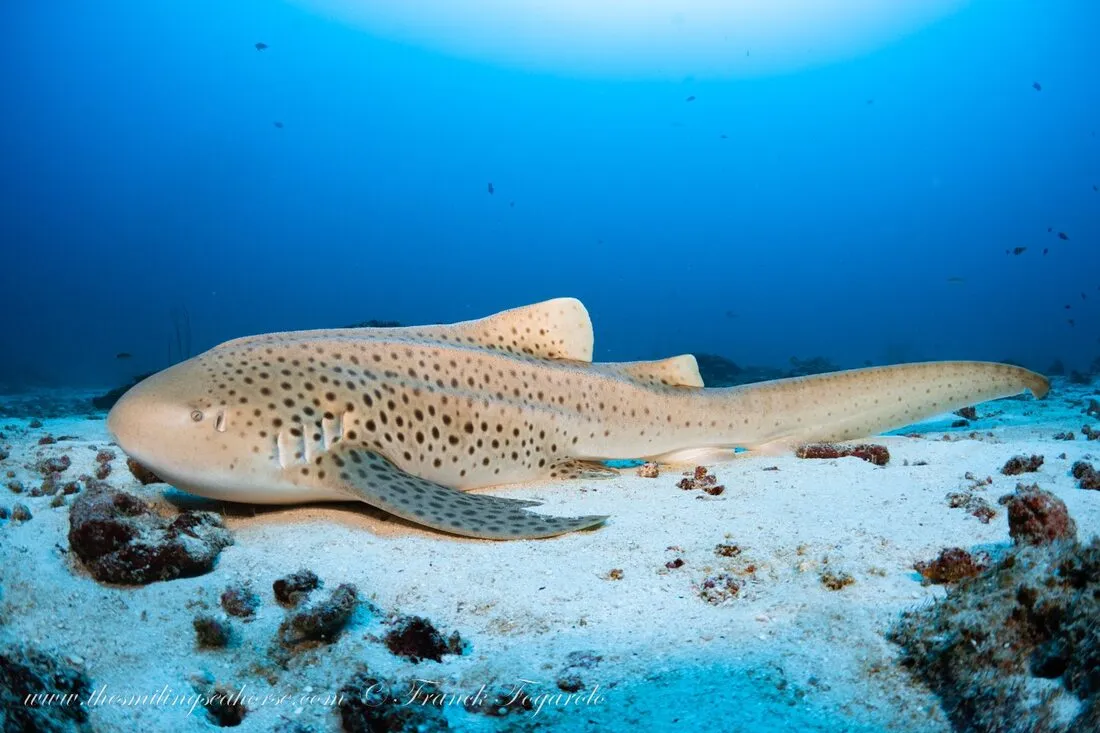
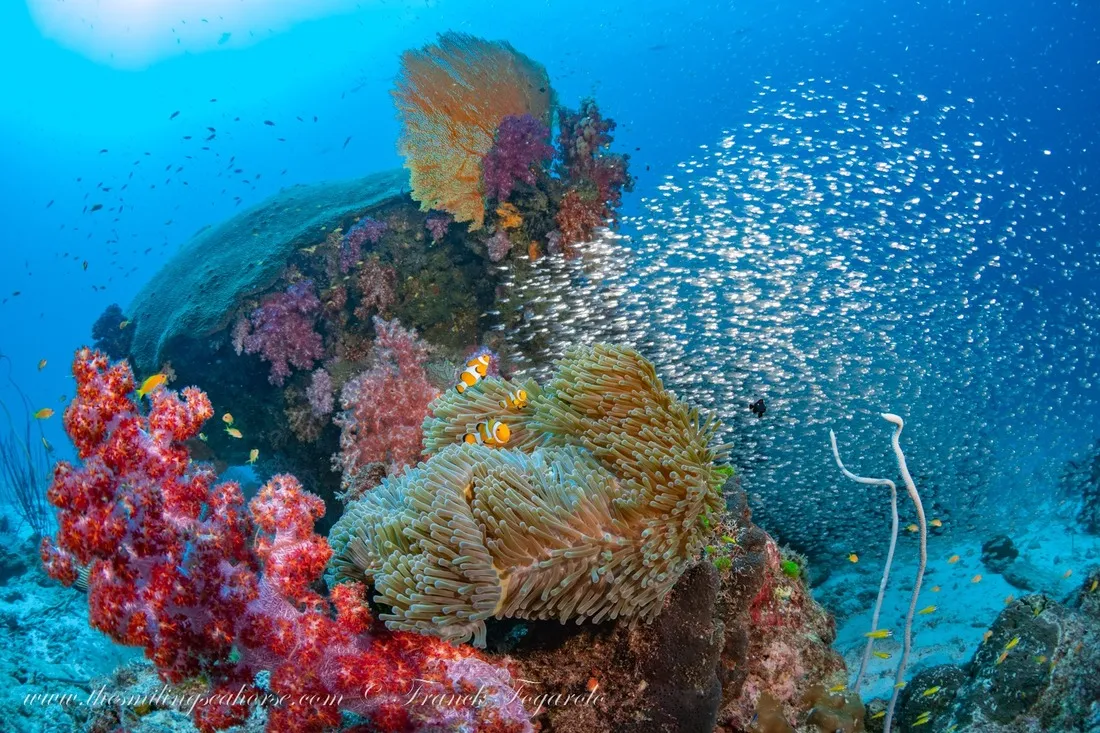
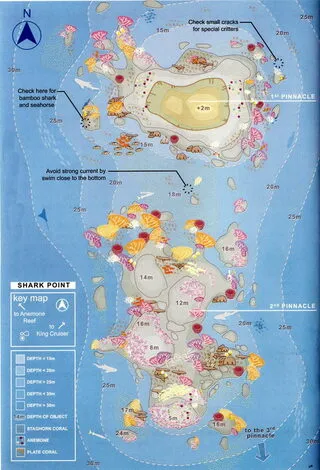
Shark Point dive site is a true gem of the Andaman Sea. Named for the frequent sightings of leopard sharks in the area, locals know it as Hin Mu Sang. Located just 27 km from Phuket, it’s situated near the Anemone Reef and King Cruiser wreck and is made up of three main pinnacles.
This site boasts the most diverse range of fish and corals among all Phuket and Phi Phi Islands dive sites. Each pinnacle is spaced 15-20 meters apart and is adorned with stunning purple and pink soft corals, as well as beds of table coral, staghorn coral, coral head, and huge sea fans. With an average depth of 15 meters and a maximum of 30 meters, there’s plenty to explore.
Divers typically start at one pinnacle and finish at the next, depending on the currents. With such a wealth of marine life, it’s almost impossible to cover all three pinnacles in just one dive. If you’re looking for an unforgettable underwater adventure, Shark Point is not to be missed.
Welcome to Shark Point, where divers can satisfy their craving for adventure and discover some of the most incredible marine life in the area. While the name of the site may suggest that spotting leopard sharks is the main attraction, there is so much more to experience.
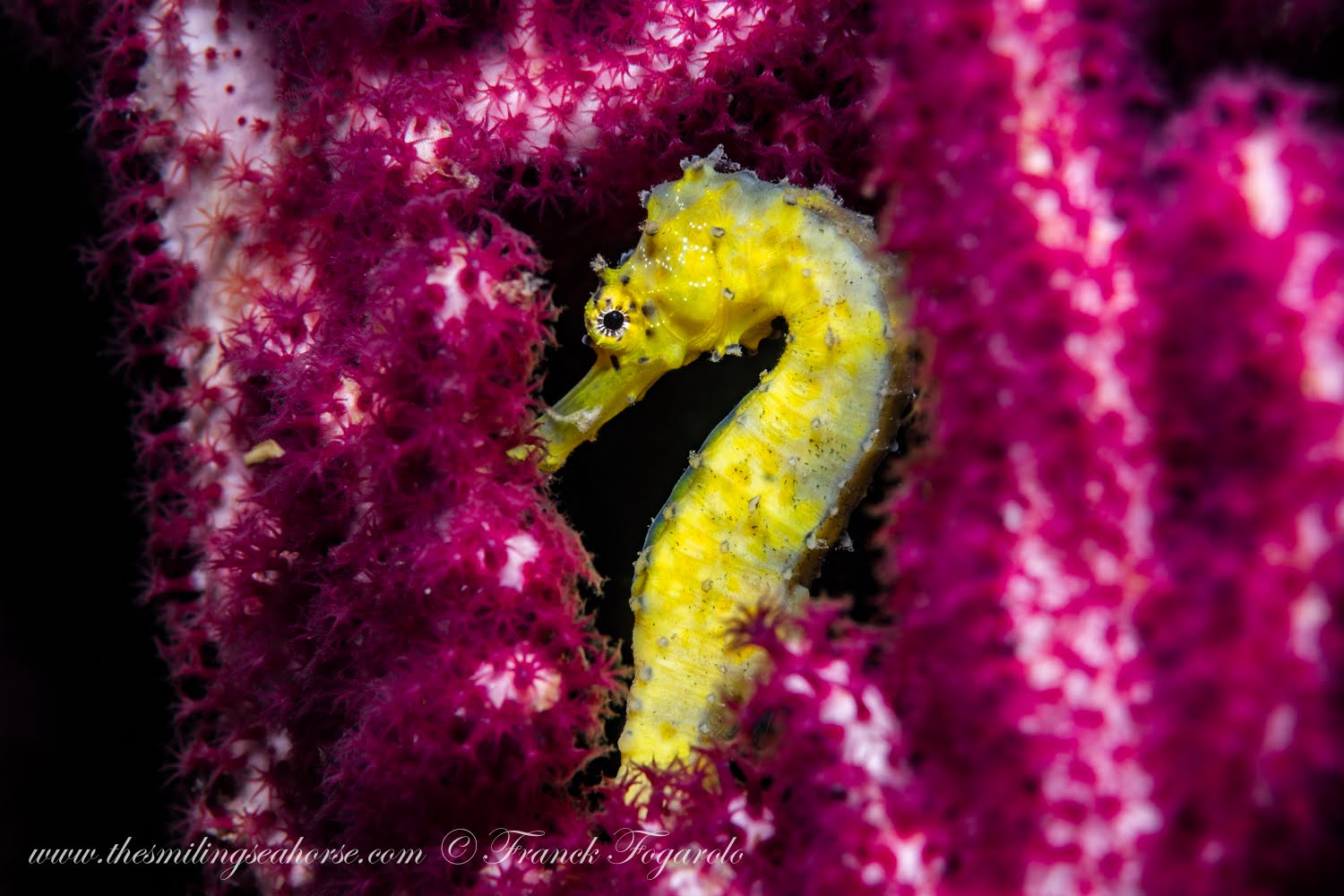
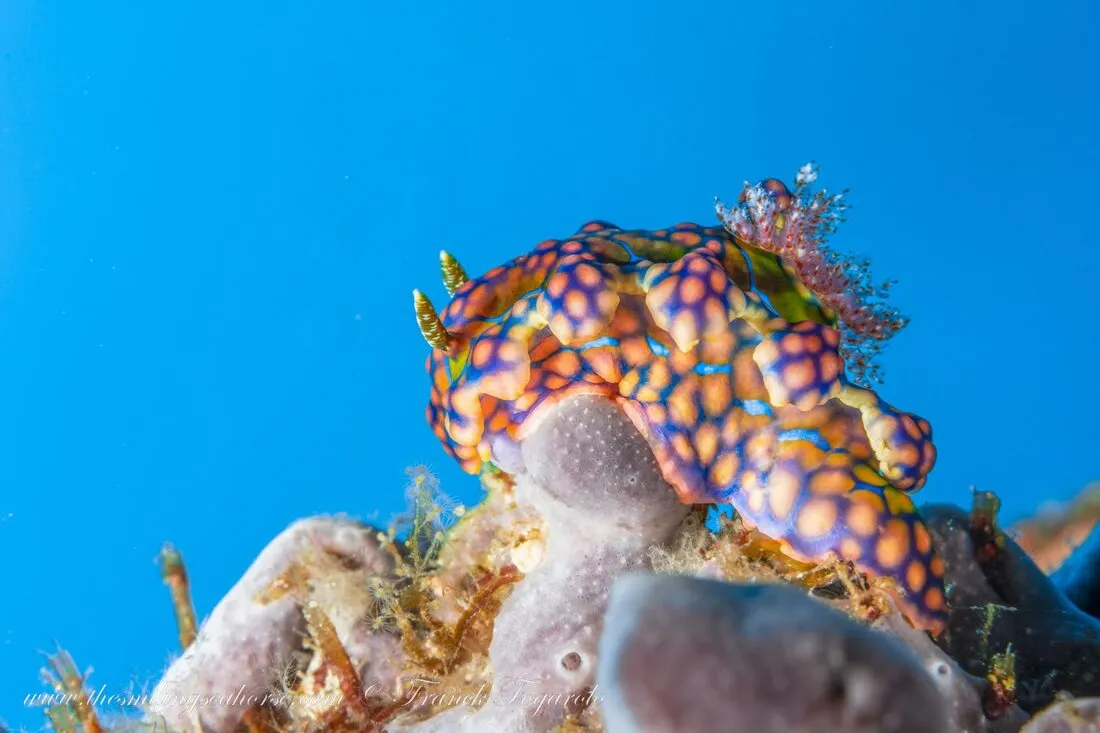
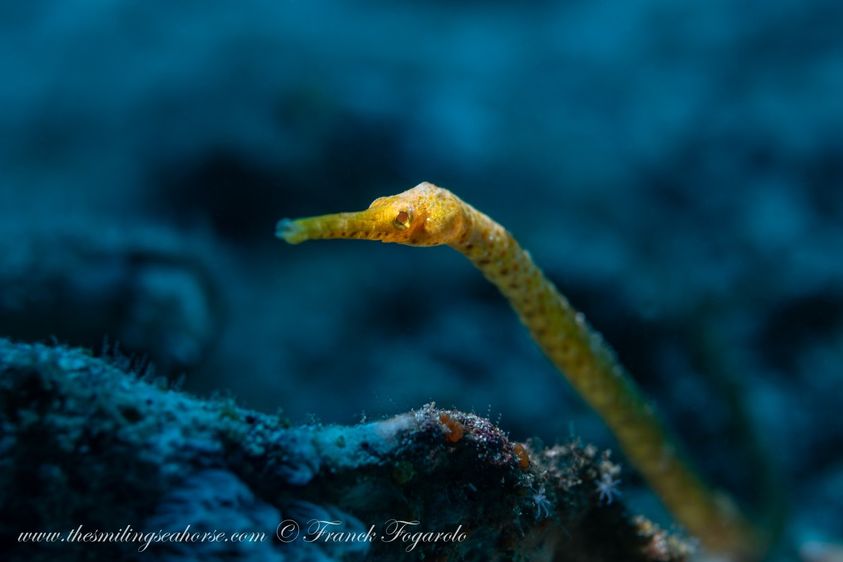
Swimming among the stunning sea fans and coral, divers may be surprised to find seahorses and ornate ghost pipefish. But that’s not all, as the site is also home to a variety of fascinating marine creatures such as scorpionfish, lionfish, pufferfish, and blue-ringed angelfish. For those who enjoy the smaller creatures of the ocean, don’t forget to keep an eye out for colorful nudibranchs, dancing shrimp, and boxfish hiding among the rocks and corals.
If you look up, you might catch a glimpse of schools of barracuda and yellowline snappers moving above the reef. With so much to discover, Shark Point is a must-visit destination for any diving enthusiast.
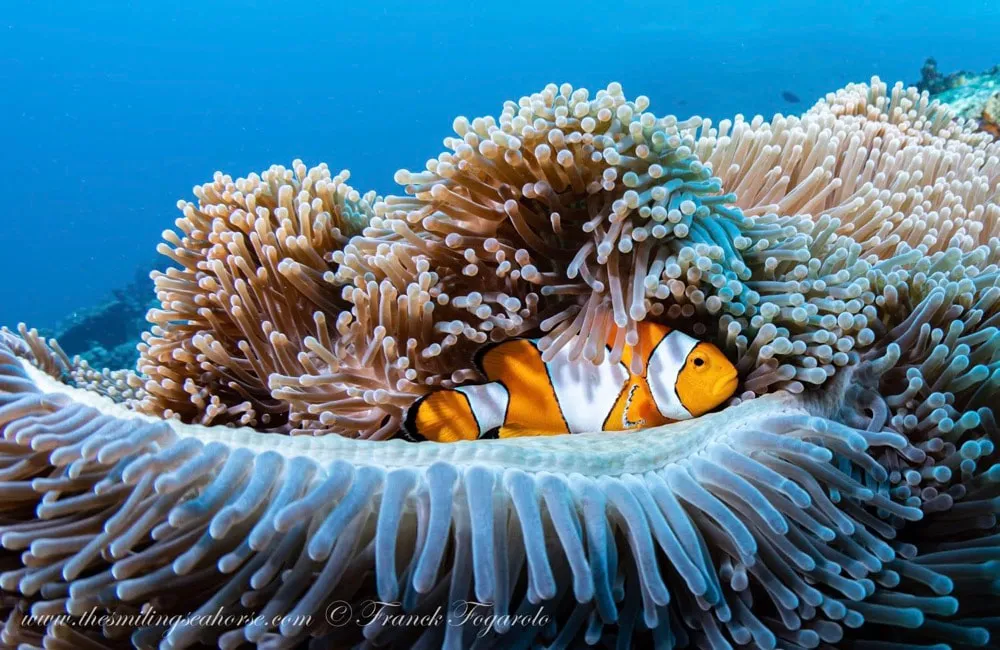
Beneath the surface of the Andaman Sea lies a mesmerizing underwater wonderland at Anemone Reef. Submerged beneath the waves, this pinnacle rises to 5 meters, earning its Thai name “Hin Jom.” Densely adorned with sea anemones, the pinnacle offers an awe-inspiring vista of the sea’s own living carpet.
With a north-south orientation and a sloped channel on the southern part, Anemone Reef boasts a depth range of 5 to 30 meters. As a result of the multitude, quality, and variety of marine life that resides amidst the beautiful coral and sea fans that adorn the pinnacle, Anemone Reef is the favored site for both divers and photographers alike.
Anemone Reef’s marine life is a true feast for divers and photographers alike. Anemonefish and clownfish are abundant and add a splash of color to the already vibrant environment. The pinnacle is also home to big schools of snapper that cloud the area, creating an impressive spectacle. Along with these, you may spot yellowtail barracuda, groupers, oriental sweetlips, juvenile harlequin sweetlips, scorpionfish, and soldierfish that dance among the corals and crevices. Leopard sharks, which may have escaped from the nearby famous dive sites, can also make a surprise appearance.
For those who love small critters, Anemone Reef has its share of exciting finds. Keep an eye out for tiger-tail seahorses and ornate ghost pipefish that can be found in the shallow areas near the mooring line. Nudibranchs and even anglerfish have also been known to make an appearance in this stunning dive site.
The King Cruiser Wreck: An Advanced Diver’s Delight
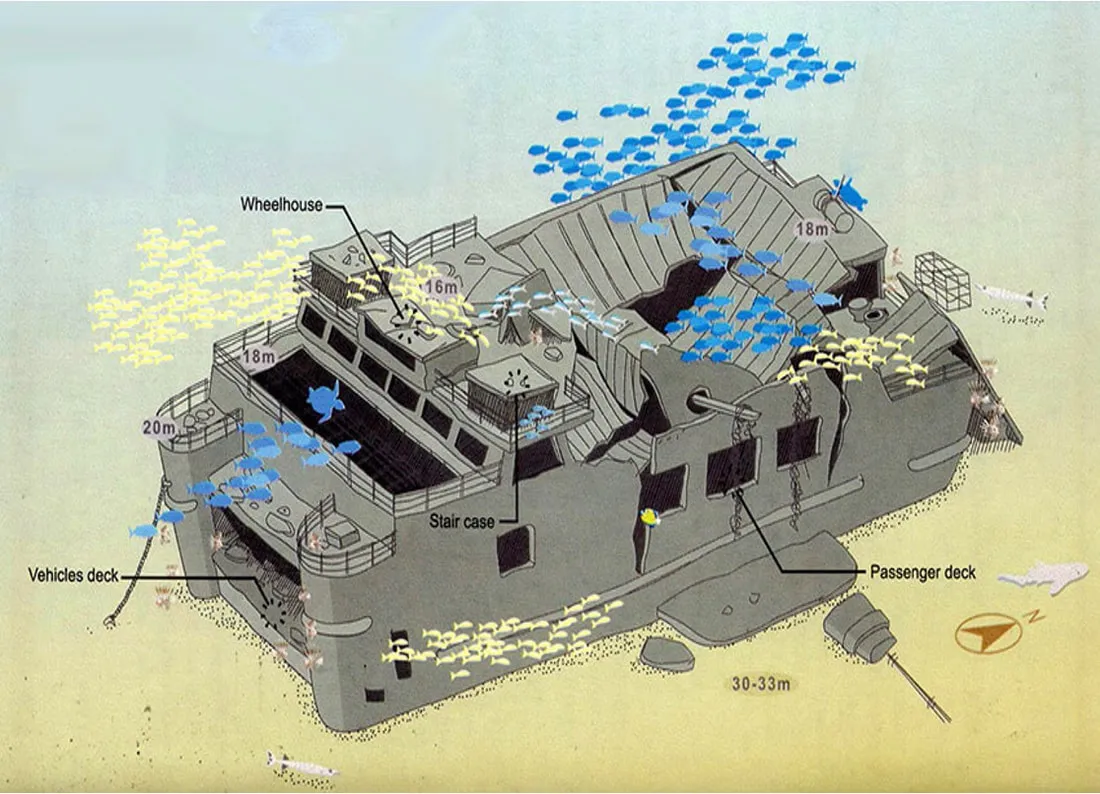
The King Cruiser Wreck is a fascinating dive site with an interesting history. Originally a car ferry, the boat sank in 1997 while carrying only foot passengers. Thankfully, there was no loss of life, as the boat sank slowly and several dive boats were around the area to help. The wreck now sits upright on its twin hulls, forming an artificial reef that attracts an abundance of marine life.
At 85 meters long, the wreck is not small, earning it the nickname “Thaitanic.” It’s worth diving more than once, as it’s impossible to see everything in just one dive. The maximum depth is over 30 meters, making it suitable only for advanced certified divers. The top of the wreck is at around 16 meters depth and is marked by a buoy. Divers should use the line attached near the front of the boat to descend and ascend safely.
While the car deck area was accessible in the first few years after the sinking, it has since collapsed, and penetration of the wreck is now prohibited.
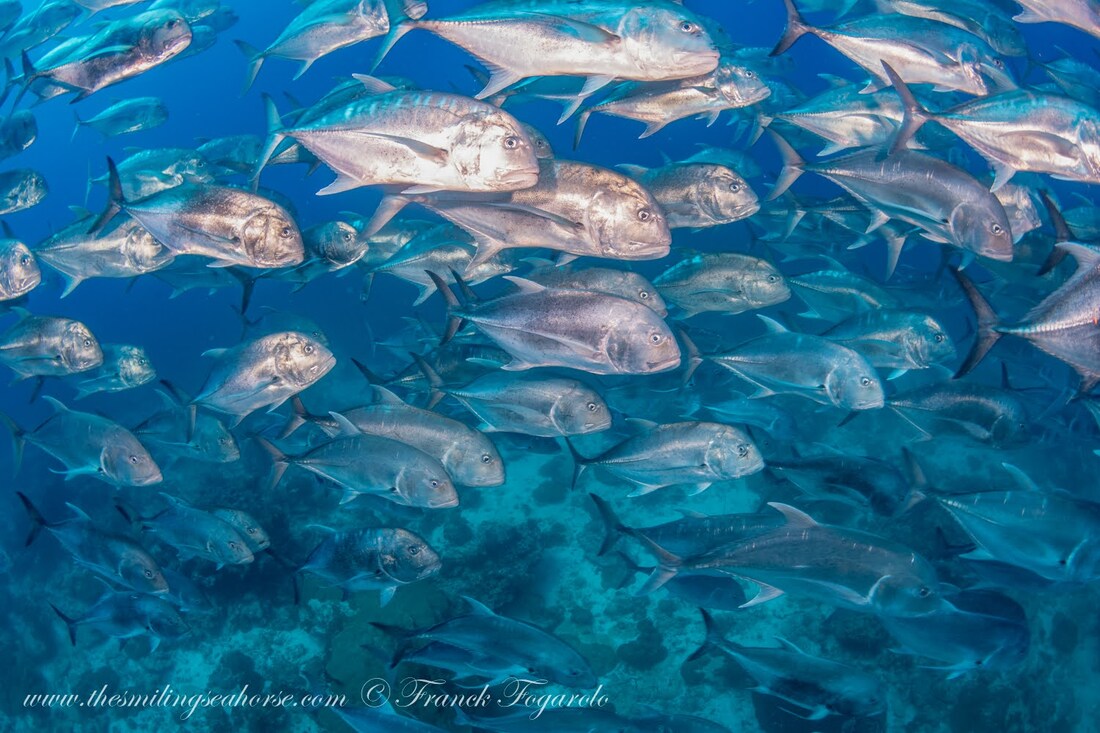
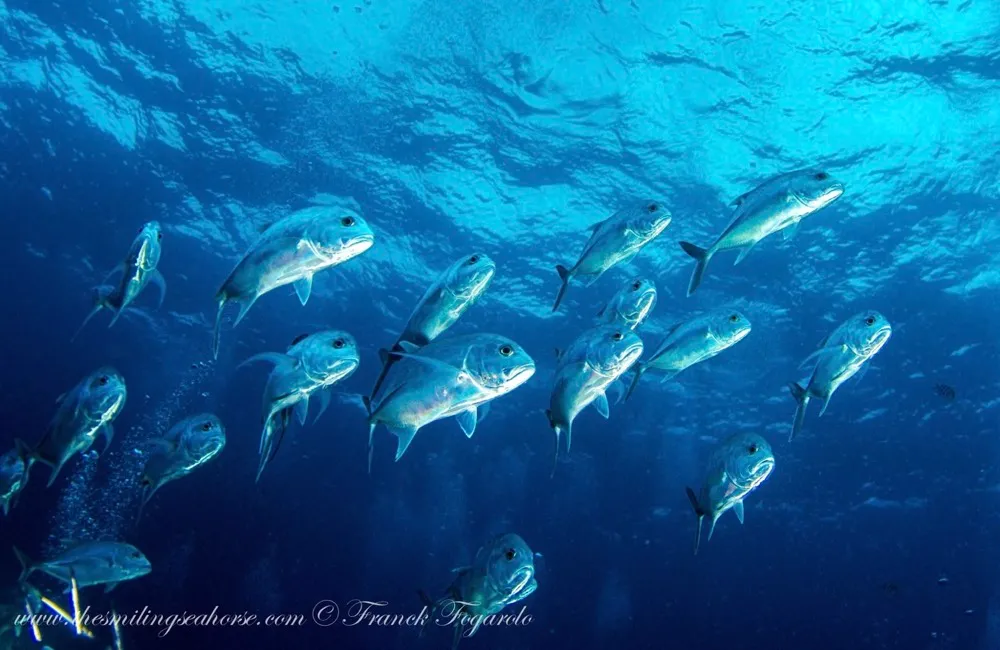
The area surrounding the King Cruiser wreck is teeming with marine life, making it a must-see for any diver. Schools of snappers, barracuda, fusiliers, rabbitfish, and goatfish are so abundant that they’ve become a bigger attraction than the wreck itself! With good visibility, the spectacle is simply breathtaking.
As you venture closer to the wreck, you may encounter bamboo or leopard sharks and even the occasional turtle. The wreck also serves as a landmark for nudibranchs, so keep your eyes peeled for these colorful creatures during your dive.
However, it’s crucial for divers to exercise caution and avoid touching anything or putting their hands on the wreck. The King Cruiser has become an artificial reef full of thriving marine life, and it’s important to preserve and protect its delicate ecosystem.
Overall, the King Cruiser Wreck is a unique dive site that offers a glimpse into the past while providing a home for a thriving community of marine life. It’s a must-visit destination for advanced divers looking for a new challenge.
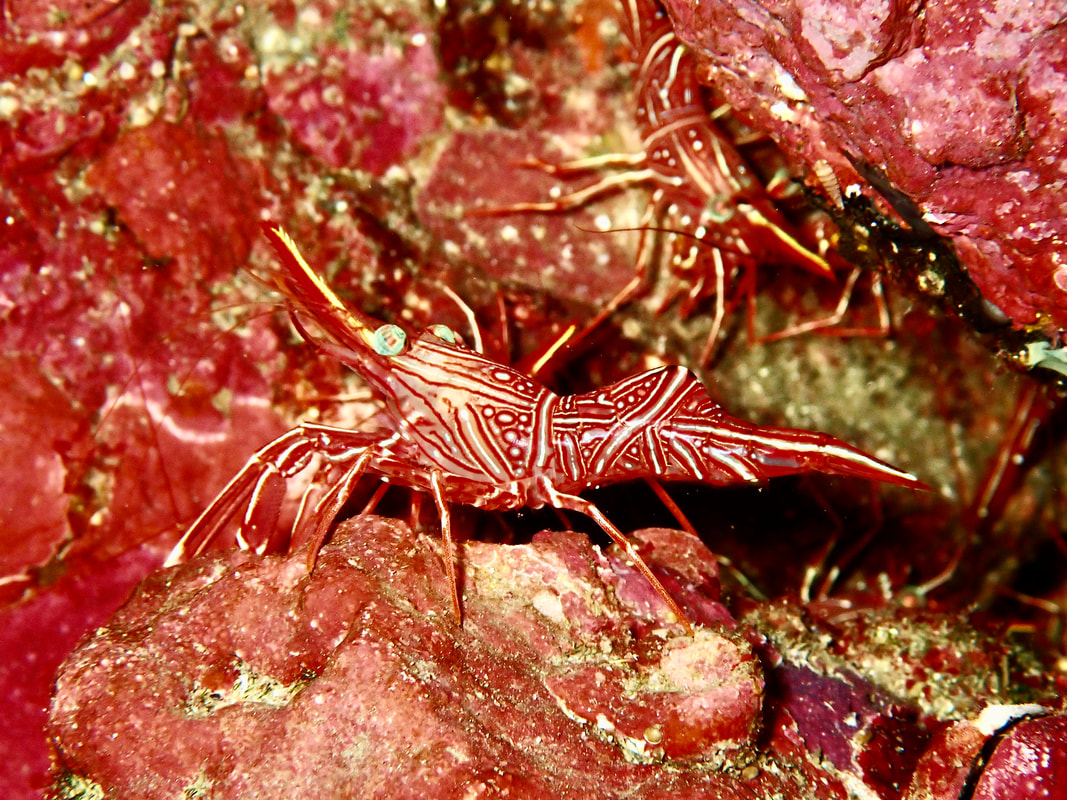
A good variety of small creatures makes this site a favorite for scuba diving activities. Tiger-tale seahorse, ornate ghost pipefish, and anglerfish are among the species frequently found along the wall. Dive slowly and check crevices in the wall or the sea fans, and you may spot them when they move.
The walls are also a paradise for macro photographers, as colorful nudibranchs, flatworms, tiny white eyes morays, and groups of 10 or more dancing shrimp are guaranteed to make an appearance. Do examine cracks and small crevices for giant morays, and enjoy the schools of yellow line snapper, trevally, and fusiliers that usually swim along the wall.
For those interested in bigger fish, look at the blue for great barracuda, and leopard sharks may also catch a few winks at the bottom of the wall.
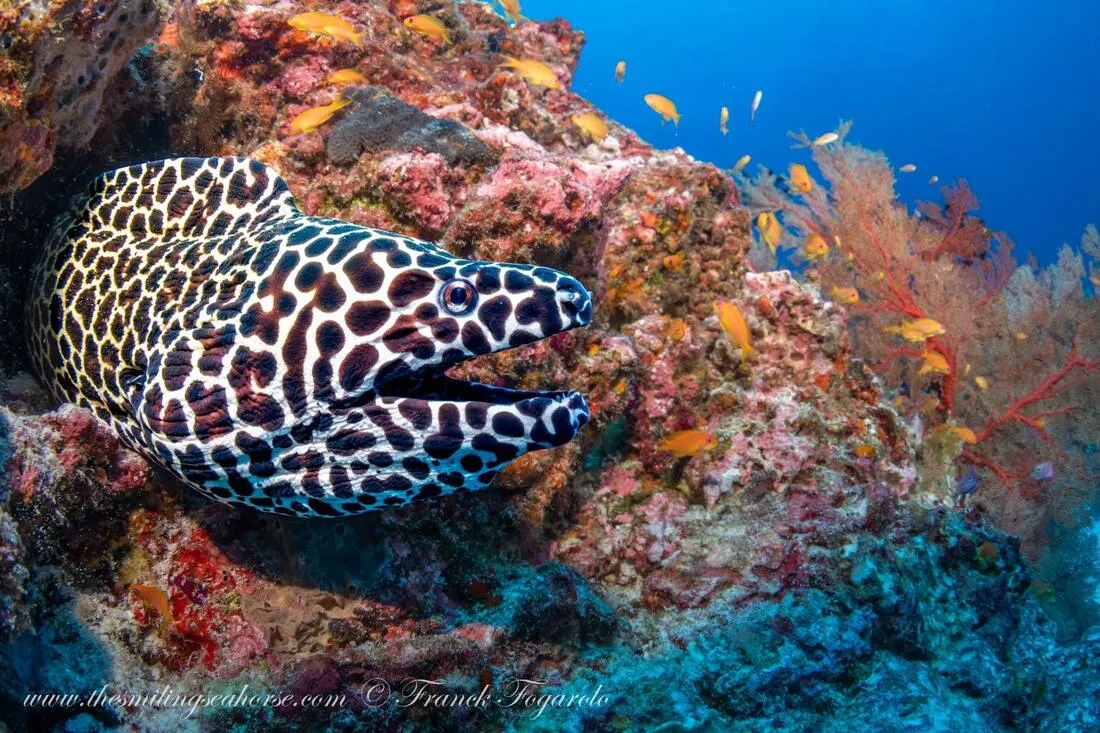
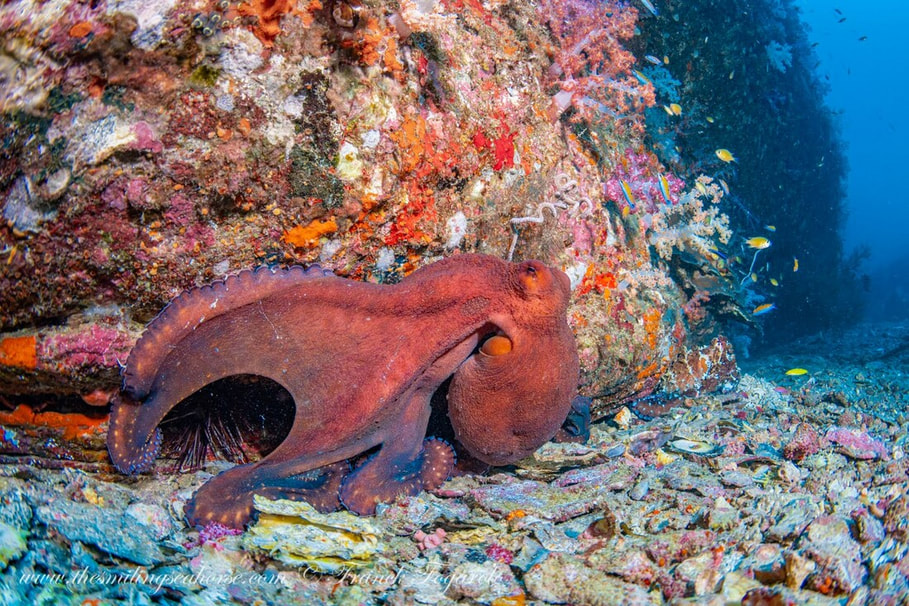
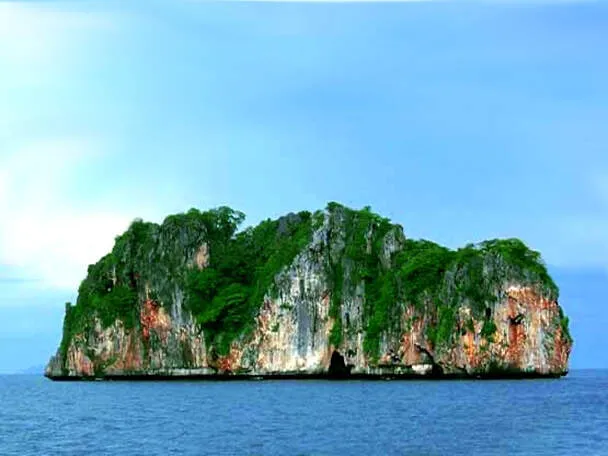
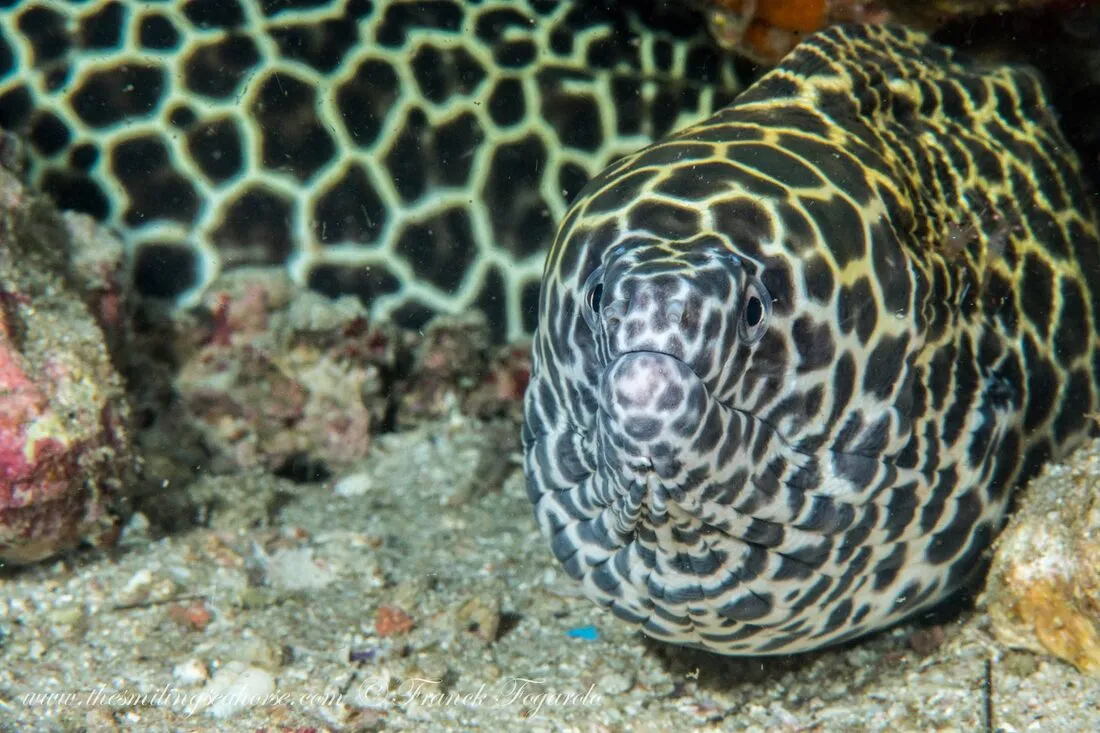
Koh Bida Nok offers a mesmerizing underwater world, boasting a diverse topography with sandy bottoms, sloping reefs, steep walls, small caves, large cracks, and an array of thriving hard and soft corals. The stunning snapper schools that extend over large sections of the reef are a true spectacle. Anemonefish, surgeonfish, butterflyfish, and a myriad of other vibrant tropical fish species also call this place home. The rare and elusive ghost pipefish can often be found in and around the impressive coral blocks, while blacktip reef sharks and rare leopard sharks gracefully cruise through the shallow reefs—a breathtaking sight accessible to all, even snorkelers. Keep your eyes peeled even more over the summer, as whale sharks make occasional appearances. Expect to see turtles, sea snakes, honeycomb moray eels, cuttlefish, and octopuses during your dive. As for the schooling fish, you may dive into the midst of giant snapper schools and be surrounded by thousands of these magnificent silver-gold fish.
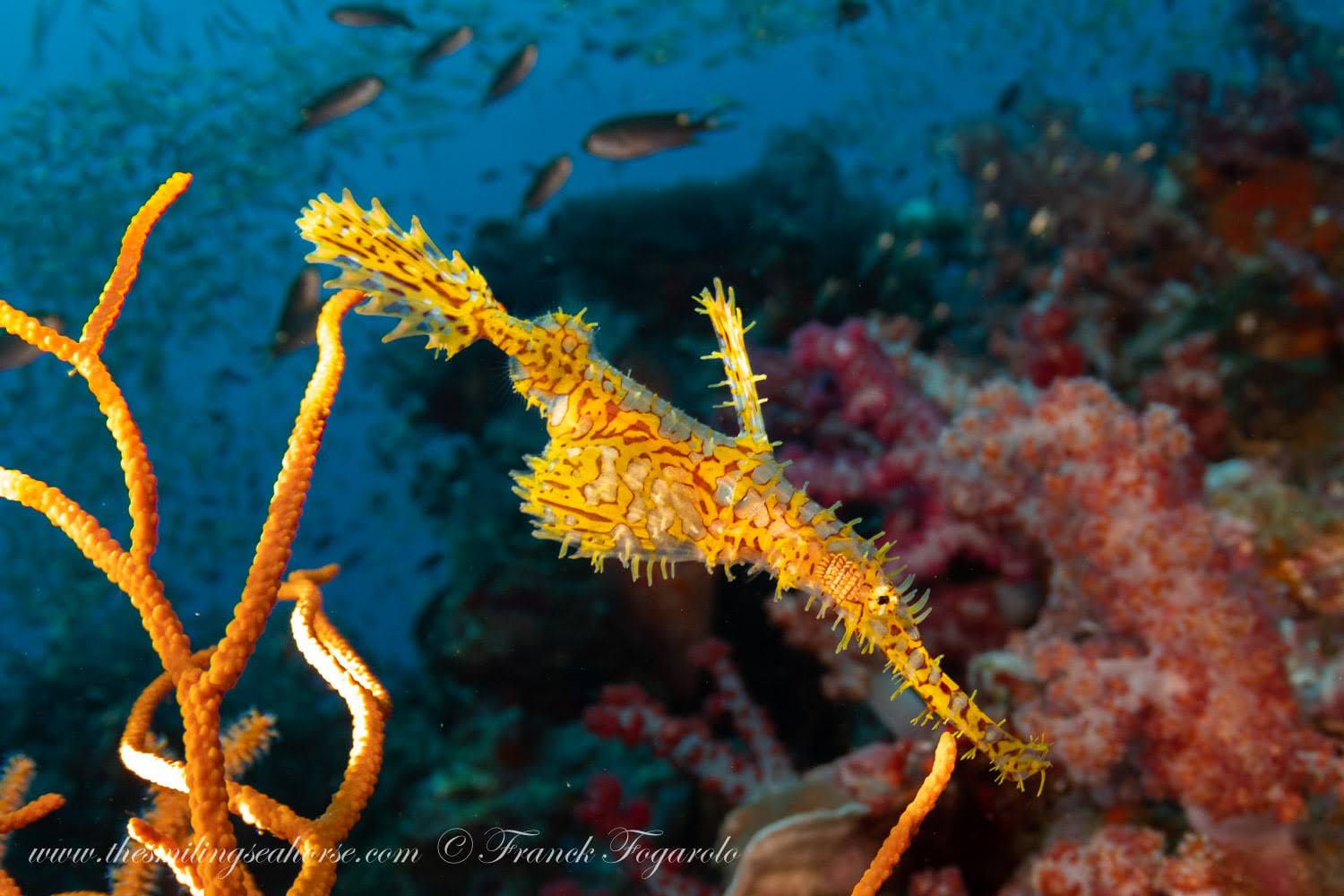
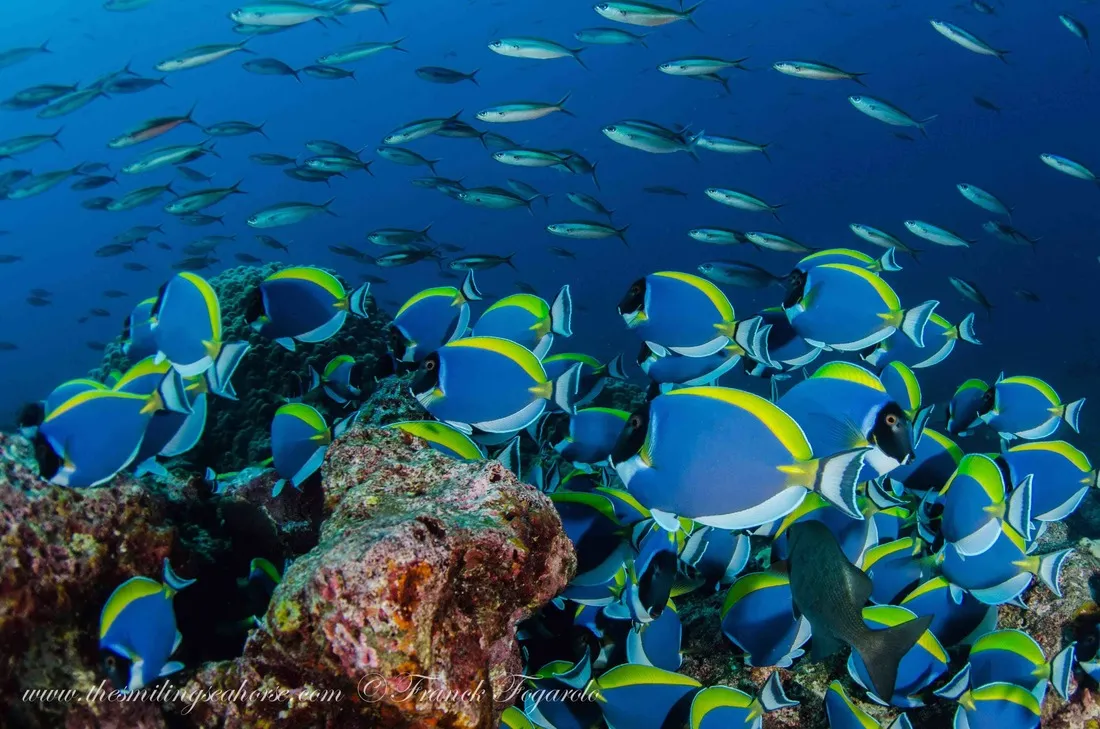
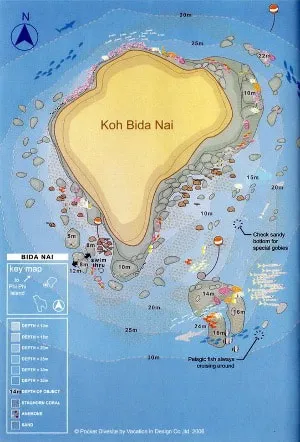
Ko Bida Nai’s rich underwater world is home to an abundance of marine life. Divers exploring the eastern side may be lucky enough to spot leopard sharks or black tip reef sharks. Glide along with graceful sea turtles, and watch schools of barracuda, trevally, snappers, and mackerel shimmer in the water near the east pinnacle. The area is also home to an array of fascinating creatures such as cuttlefish, honeycomb moray eels, sea snakes, and Kuhl’s stingrays. For those with an eye for the smaller things, there are numerous macro species to discover, including ghost pipefish, nudibranchs, and porcelain crabs.
Diving around Phuket, Thailand, is a bucket list experience for many scuba diving enthusiasts. The region boasts of warm, crystal-clear waters, an abundance of marine life, and stunning underwater landscapes. With numerous dive sites to explore, there is something for everyone, from beginner divers to the most experienced underwater photographers.
Whether you are looking to spot rare marine creatures, explore sunken wrecks, or simply soak in the beauty of the underwater world, Phuket has it all. In this blog post, we will have a closer look at some of the top dive sites around Phuket and what makes them so special. So, get ready to strap on your scuba gear and dive into the adventure of a lifetime.
Koh Racha Yai, or “the chief”, is a beautiful island close to Phuket that offers good value for money to lovers of small fish to admire in snorkelling.
It is easily and quickly accessible from Chalong or Rawai, south of Phuket (as is Coral Island). It is located 30 minutes from Phuket, Chalong Bay, by boat. Racha Island also has five beaches.
Racha Yai is surrounded by a reef colonized by hard corals. The fishes are numerous: sergeant majors, rabbit fishes, fusiliers, lutjans, trumpet fishes, barracudas, box fishes, balloon fishes, and many others. There are also some more unusual species, such as syngnathus and mantis shrimps. The visibility is generally very good all year round with little current.
Koh Racha Yai has crystal-clear waters and small white sand beaches. The island is very popular with divers, with some sites for experienced divers and many others for beginners.
The east coast of Koh Racha Yai offers shallow bays that are well protected during the rainy season. Visibility sometimes reaches 25–30 meters and regularly averages 15–20 meters throughout the year.
Composed mainly of white sandy bottom and dotted with coral reefs, it slopes slightly, and the bays often protect divers from strong currents. This combination makes Racha Yai Island ideal for beginners and occasional divers. There are also deeper reefs and some wrecks that are suitable for more experienced divers
Dive Sites info
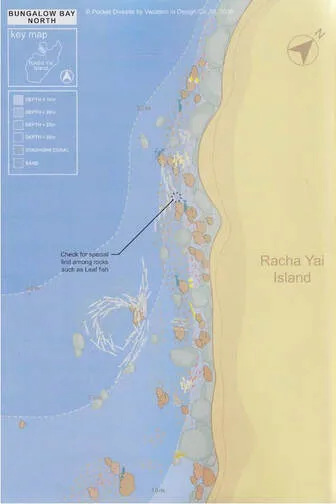
Bungalow Bay is a sheltered, curved bay offering excellent diving on both sides, making it a versatile dive site for recreational divers and training dives alike. With relatively shallow areas, gentle reef slopes, and plenty of marine life, it is an enjoyable site for divers of different experience levels.
The northern side of the bay features a gently sloping reef covered with staghorn corals and scattered rock outcrops. The reef ranges from around 5 to 22 metres deep, gradually giving way to a sandy bottom. This area offers a relaxed profile with plenty of opportunities to explore the coral formations and search for smaller reef creatures.
On the southern side, extensive fields of staghorn and pore corals cover the reef. Several large granite boulders rise along the edge of the island, creating additional habitats for fish and other marine life. The combination of coral gardens, rocky formations, and sandy areas makes Bungalow Bay an interesting site to explore at different depths.
Bungalow Bay is home to a wide variety of Andaman Sea reef fish, including parrotfish, snappers, groupers, angelfish, butterflyfish, and colourful basslets. In the shallower sections, keep an eye out for shrimpfish, which can occasionally be seen swimming together in small groups.
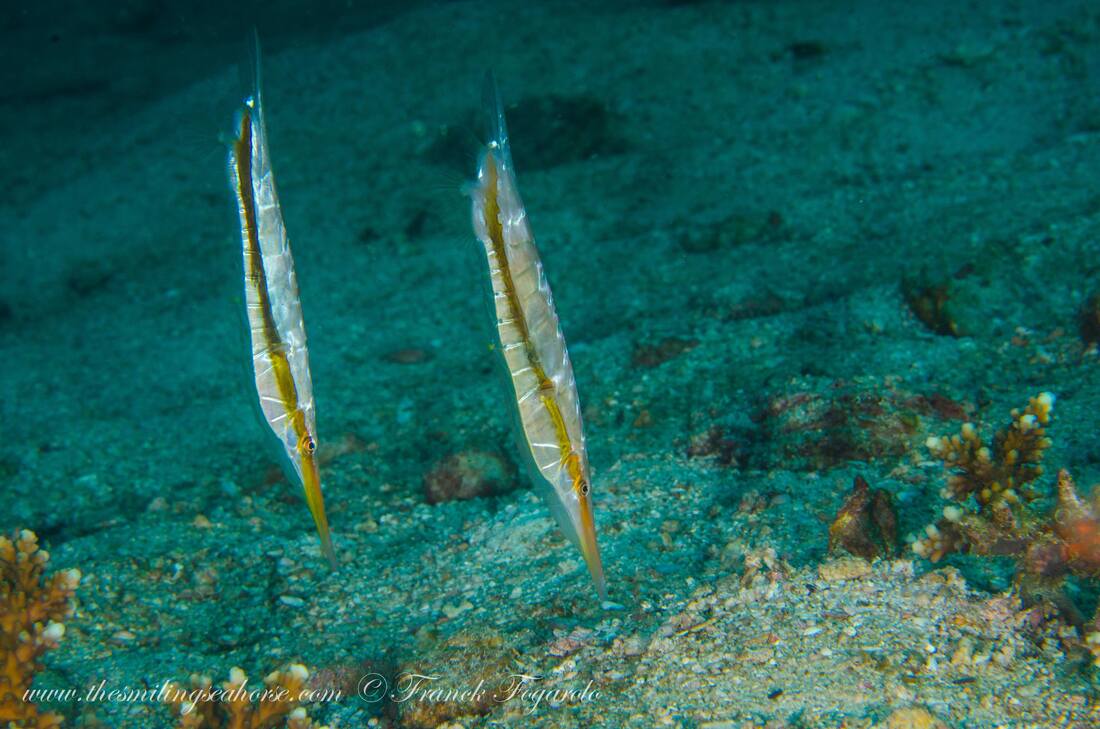
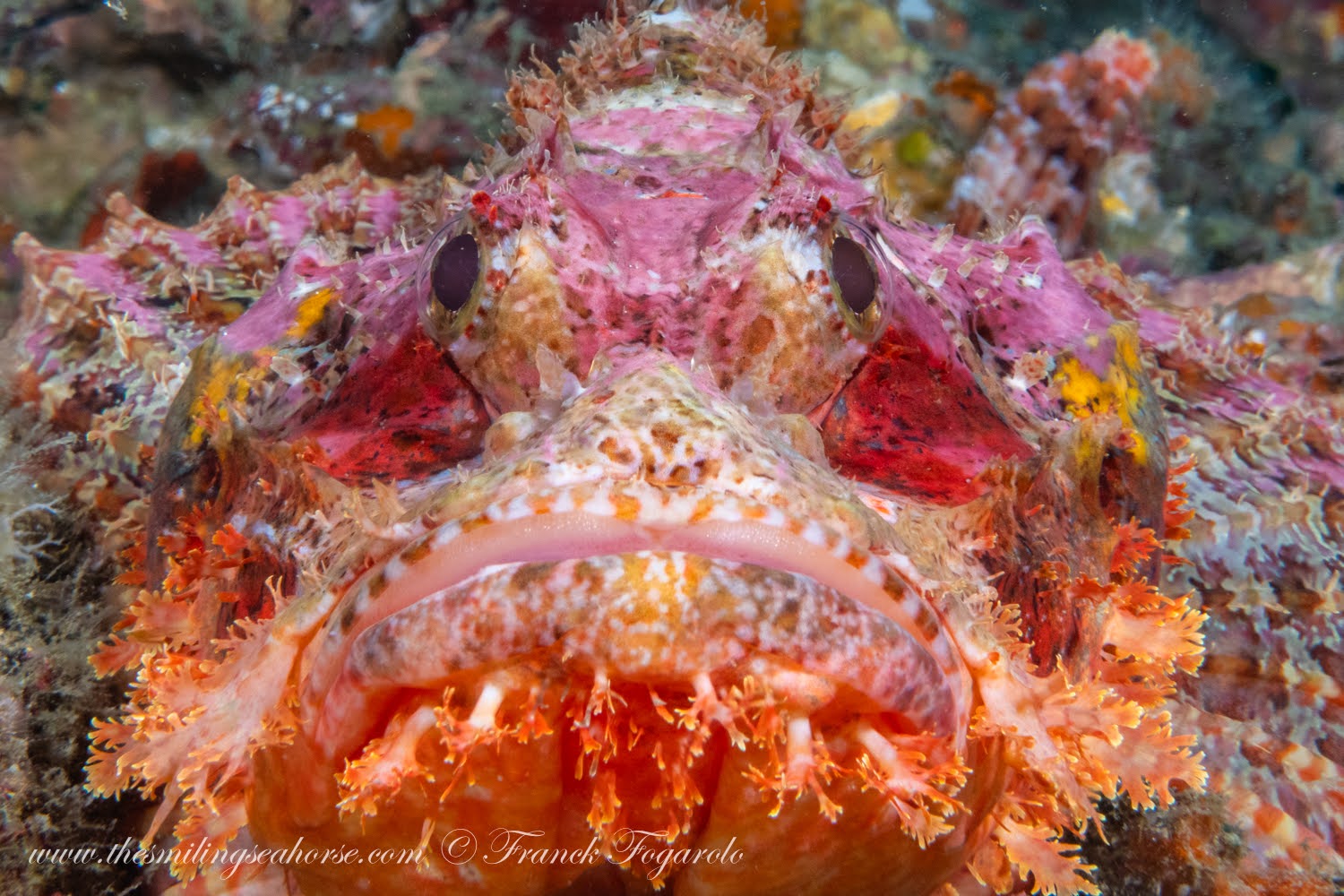
Patient divers may also discover some of the bay’s more unusual residents, including leaf scorpionfish, razor fish, and ghost pipefish, often well camouflaged among the corals and reef structures.
The site can also offer encounters with sea turtles and giant moray eels, making it particularly enjoyable for beginners and photographers. On occasion, whale sharks may also pass through the area, adding an unforgettable highlight to a dive at Bungalow Bay.
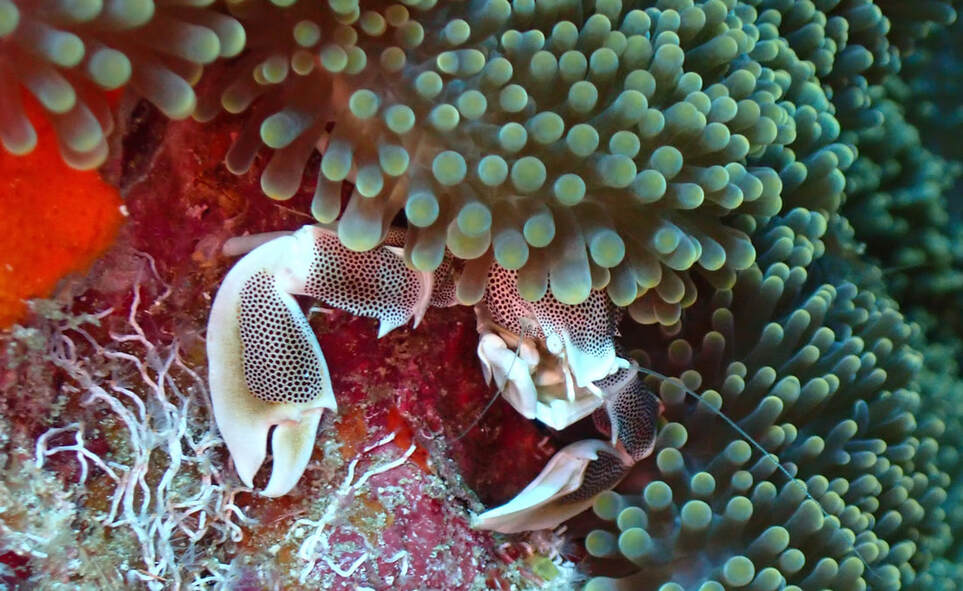
Siam Bay, on the northern side of Racha Yai Island, is a sheltered dive site with an average depth of around 12 to 18 metres. Its relatively calm conditions, moderate depths and easy underwater terrain make it an excellent choice for beginners and training dives.
The bay is surrounded by scattered hard coral formations, creating a colourful habitat for reef fish and smaller marine creatures. Along the eastern edge of the island, several large underwater pinnacles rise from the seabed, adding variety to the dive and providing additional shelter for marine life.
With its relaxed profile and accessible depths, Siam Bay is an enjoyable site for both newly certified divers and more experienced divers who want a slower-paced exploration of the reef.
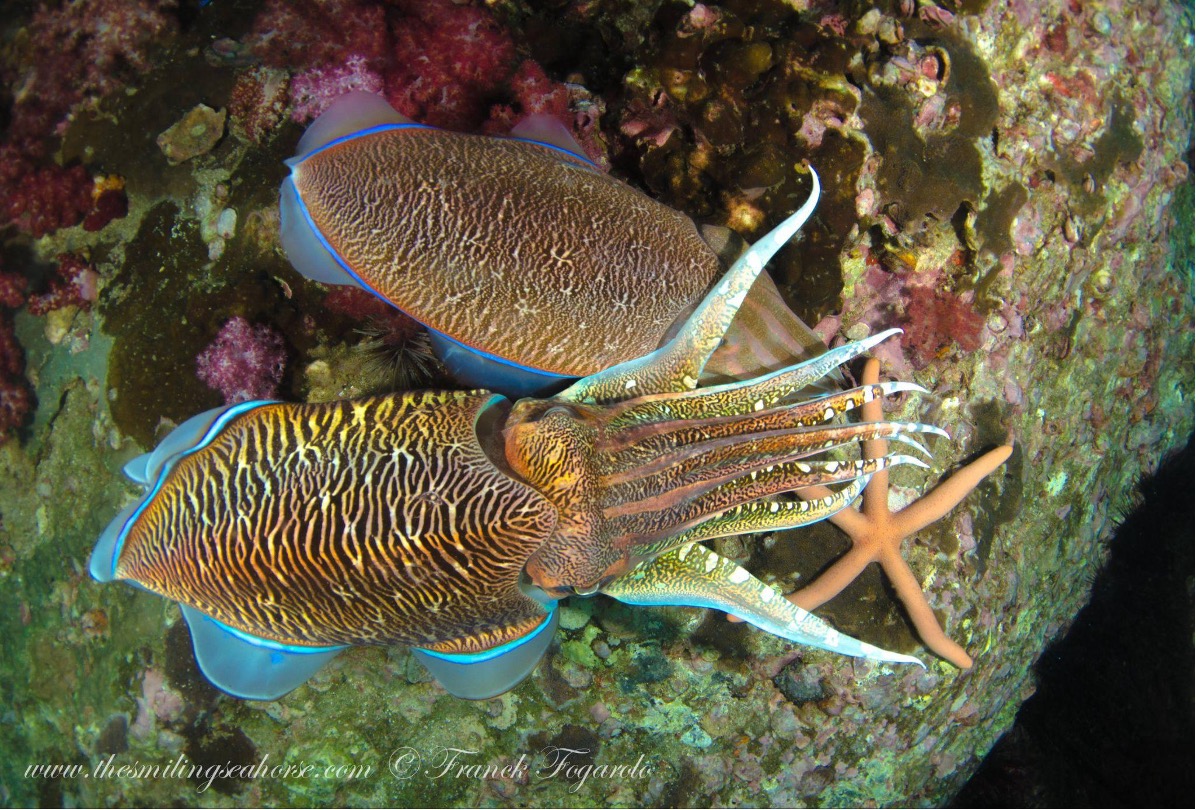
The coral reef is home to a variety of colourful reef fish, including parrotfish, butterflyfish and basslets. On the sandy bottom, divers can often spot cuttlefish and Kuhl’s stingrays resting or searching for food.
Siam Bay becomes particularly interesting after sunset. During night dives, the reef comes alive with an impressive variety of small creatures, making it a rewarding site for macro photographers. Look closely around the coral heads, crevices, and feather stars for tiny crabs, shrimps, and other nocturnal marine life that can be difficult to spot during the day.
For divers who enjoy searching for small and unusual creatures, a night dive at Siam Bay can reveal a completely different side of the reef.
Racha Yai Island’s boat wrecks in bays 1 and 2 are a popular attraction for divers of all levels.
Here are some more details about each wreck:
Old Sail Boat Wreck
The Old Sailboat Wreck, located in the northern part of Bay 1, is a fantastic spot for observing marine life. Despite being in bad condition, it attracts large schools of snappers and glass fish and is home to giant moray eels and great barracudas. Ornate ghost pipefish and Jenkins rays have also been spotted around the wreck. Keep an eye out for shrimp and other creatures hiding in the nooks and crannies.
Harruby Wreck
The Harruby Liveaboard is situated between Bays 1 and 2 and is accessible for all levels of certified divers. The wreck is in excellent condition and is the best site for wreck penetration in the area. Schools of batfish and barracuda are frequently seen, and scorpionfish and bannerfish also call the wreck home. Keep an eye out for ornate ghost pipefish and nudibranch, and don’t miss the snake eels that can be spotted in the sand near the wreck.
Old Fishing Boat
The old Thai wooden fishing boat is located further east of Harruby and is rapidly deteriorating. Despite this, it is still an interesting site to explore. The wreck is deeper, with the top at about 24 metres, and contains a lot of common reef fish. It has an eerie feel and makes for great underwater photography opportunities, but it is not safe to penetrate due to its poor condition.
Marla’s Mystery
Marla’s Mystery is a barge wreck that was purposely sunk about 150 metres east of the center of Bays 1 and 2. It is lying at about 34 metres and is not often dived, making it a difficult site to locate. This site is for experienced divers only, and prior notification should be given if you wish to dive this wreck.
Bay 1–2, also known as Staghorn Reef, offers two distinct areas of reef with different depths and underwater landscapes. The site is suitable for a range of divers, from those exploring the shallower coral gardens to experienced divers looking for deeper reef and wreck diving.
Bay 1 has a small, easily overlooked beach and a gently sloping reef extending along the bay. Scattered pore coral heads cover much of the area, with patches of staghorn coral adding variety to the reef. The reef begins at around 5 metres and gradually descends to approximately 20 metres, where it meets the sandy bottom. The relatively shallow profile makes Bay 1 a relaxed area for exploring coral and marine life.
Bay 2 is home to the largest beach and gives the site its nickname, Staghorn Reef. The reef is characterised by abundant coral heads and extensive branching staghorn corals. Starting at around 12 metres, the reef slopes gradually down to approximately 30 metres, offering deeper sections for experienced divers to explore.
The reef is home to a variety of colourful Andaman Sea reef fish, including parrotfish, snappers, groupers, angelfish, butterflyfish and basslets. Look closely around the reef and you may spot trumpetfish swimming alongside groupers, creating interesting encounters for underwater photographers.
For advanced divers, the deeper section offers the opportunity to explore a wreck at around 25 metres. The wreck provides shelter for larger marine life, including giant moray eels and batfish, and adds another dimension to the dive.
With shallow coral gardens, deeper reef and a wreck to explore, Bay 1–2 offers plenty of variety and can be enjoyed by divers with different experience levels.
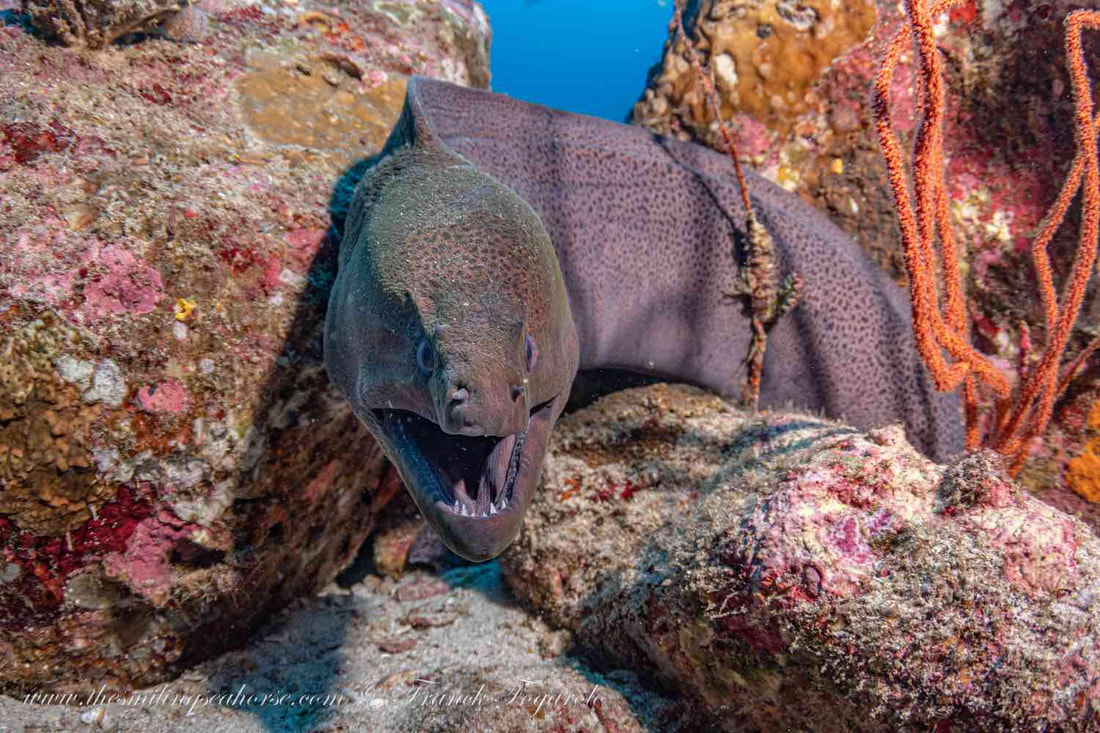
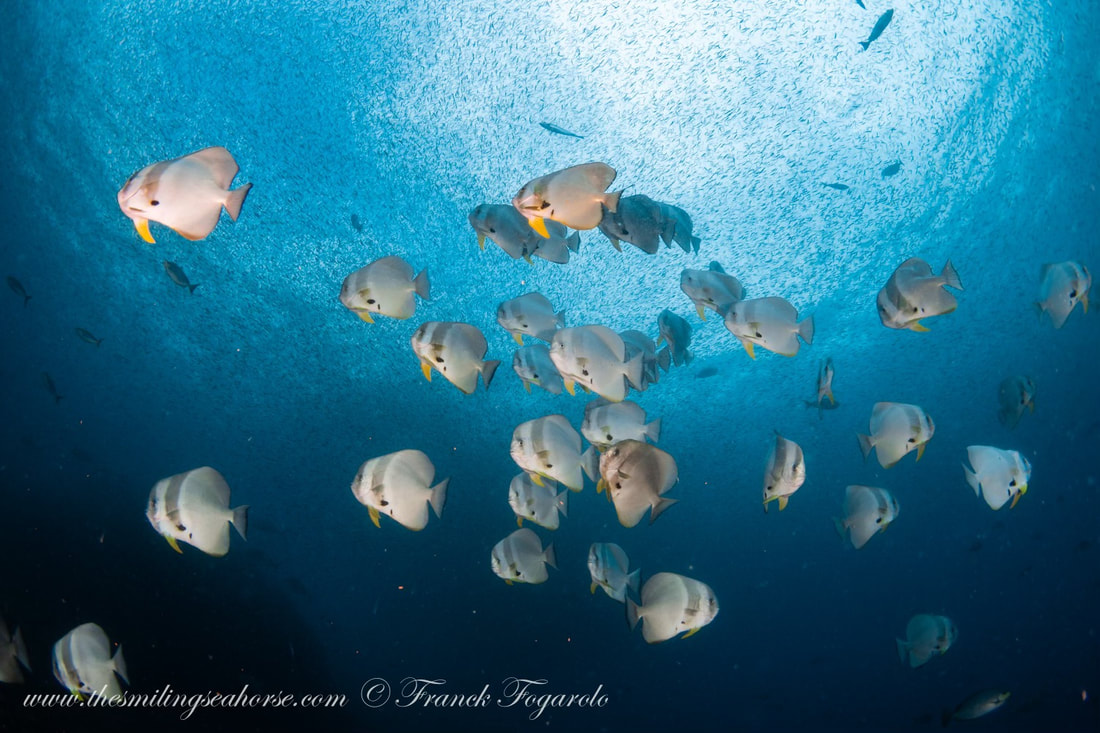
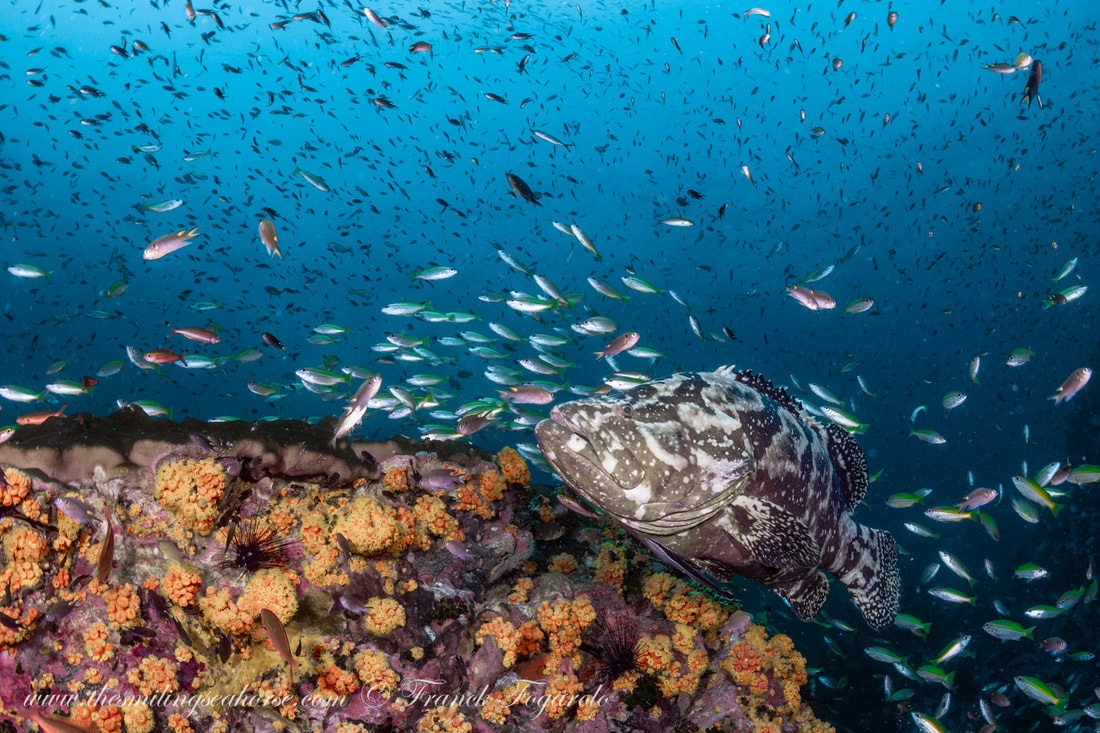
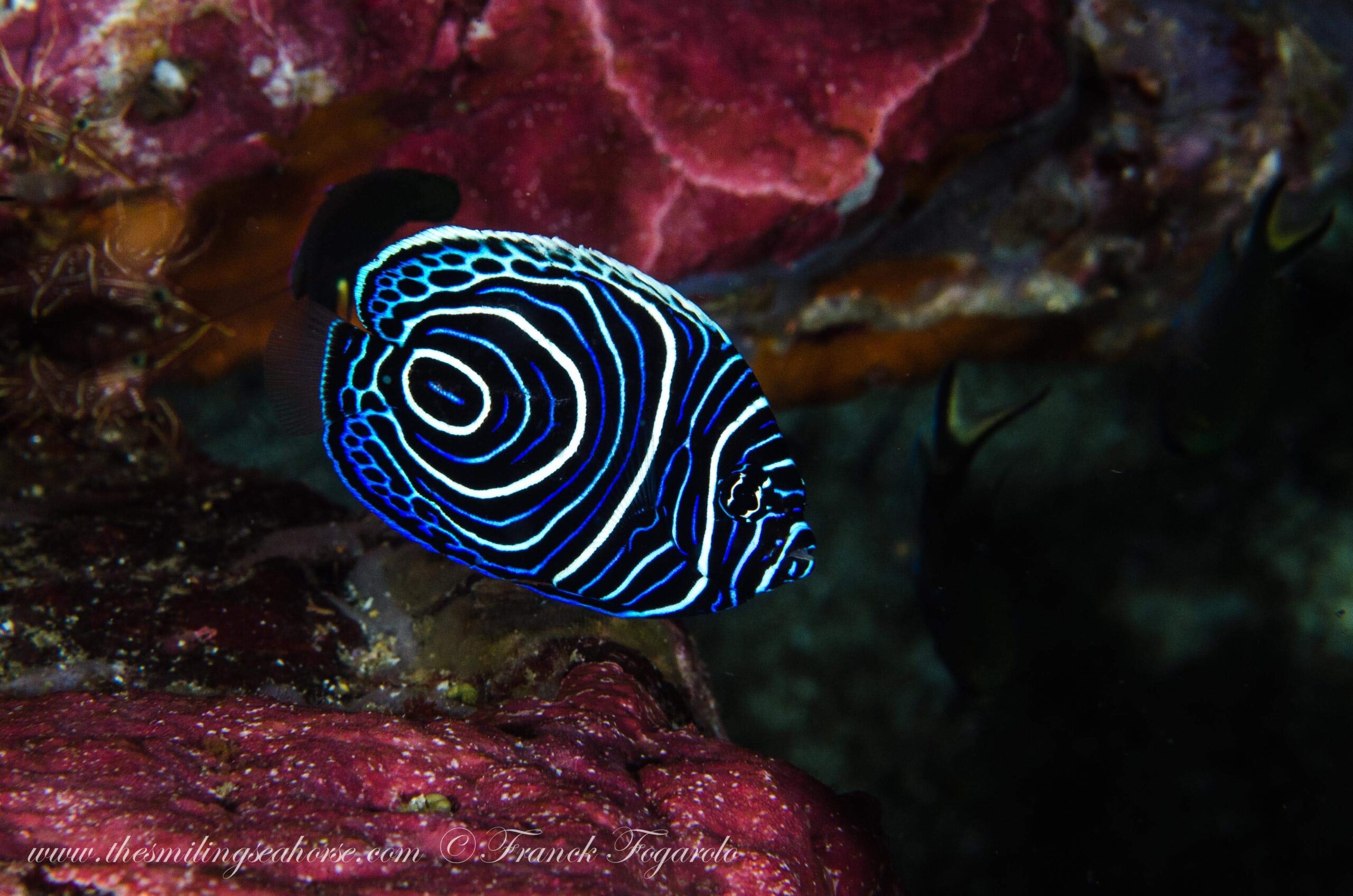
Bay 3, also known as Lucy’s Reef, offers a very different underwater landscape from the neighbouring bays. The reef is characterised by a mixture of rocky areas and scattered pore corals, with a distinctive rocky ridge marking the southern end of the reef.
As you explore the site, the transition from hard coral and rocky seabed to a predominantly sandy bottom is an easy way to recognise that you have entered Bay 3. Beyond a few patches of pore coral and scattered coral heads in the shallower areas, much of the bay is covered by sand, creating a different habitat and making the site particularly interesting for divers who enjoy searching for smaller marine life.
As with the other dive sites around the island, parrotfish, snappers, groupers, angelfish, butterflyfish, and basslets are commonly seen around Lucy’s Reef. Cornetfish are also regularly spotted cruising above the reef and sandy areas.
The sandy bottom and coral crevices provide shelter for a variety of smaller creatures. Boxfish and bluespotted boxfish are common in this area, while patient divers may find boxer shrimp and dancing shrimp hiding deep inside cracks, crevices, and pore corals.
Look closely among the coral and rubble, and you may also discover ghost pipefish, expertly camouflaged among the fronds and often easy to overlook.
Lucy’s Reef is a rewarding site for divers who enjoy taking their time and looking beyond the larger reef fish to discover the fascinating macro life of the Andaman Sea.
Bay 4–5, also known as Waterfall Wall, brings divers back to a more developed hard-coral reef after the predominantly sandy landscape of Bay 3. The reef has a steeper slope and supports a greater variety of coral formations, making it a colourful and interesting site to explore.
Waterfall Wall can be thought of as a smaller version of Staghorn Reef, with extensive branching corals complemented by a wider variety of hard corals and sea anemones. The combination of coral-covered slopes, sandy patches, and reef structures creates plenty of places to explore and search for marine life.
Divers should take particular care with the current at Waterfall Wall. The current can be complex and may suddenly change direction around the middle section of the reef. As conditions can vary during the dive, this site is best explored with appropriate guidance and good awareness of the current.
The reef is home to many familiar Andaman Sea reef fish, including parrotfish, snappers, groupers, angelfish, and butterflyfish.
The sandy bottom can reveal some more unusual encounters. Lucky divers may spot a thornback boxfish or the remarkable seamoth, both of which are masters of camouflage and easy to overlook.
Away from the reef, look into the blue for large schools of yellowtail barracuda. Bigeye trevally can also gather in impressive schools close to the reef, creating spectacular encounters as they move through the water.
In the shallower sections near the reef, divers may occasionally encounter reef sharks cruising along the coral slope.
With its diverse hard corals, schooling pelagic fish, and changing currents, Waterfall Wall offers a dynamic dive with plenty to discover.
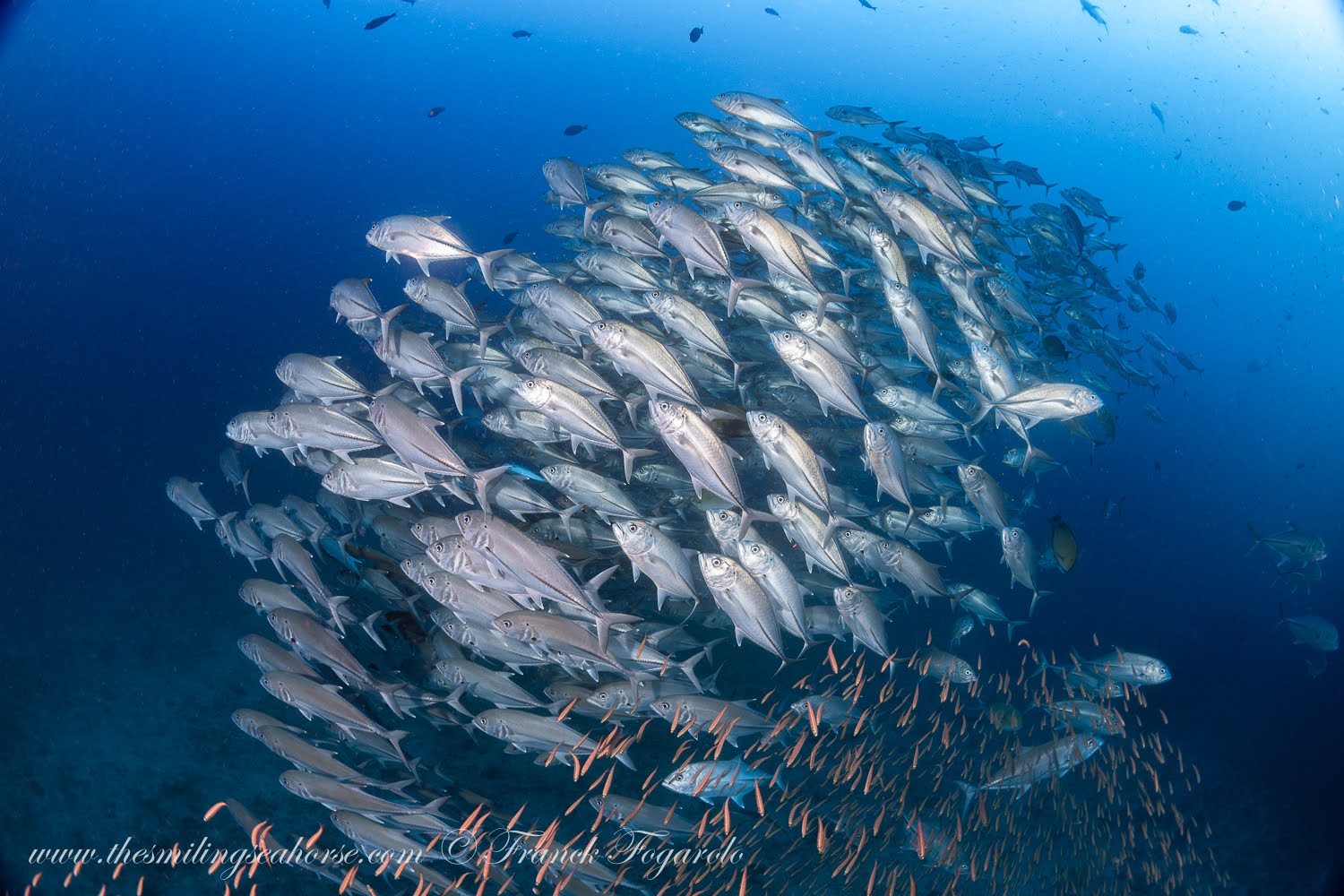
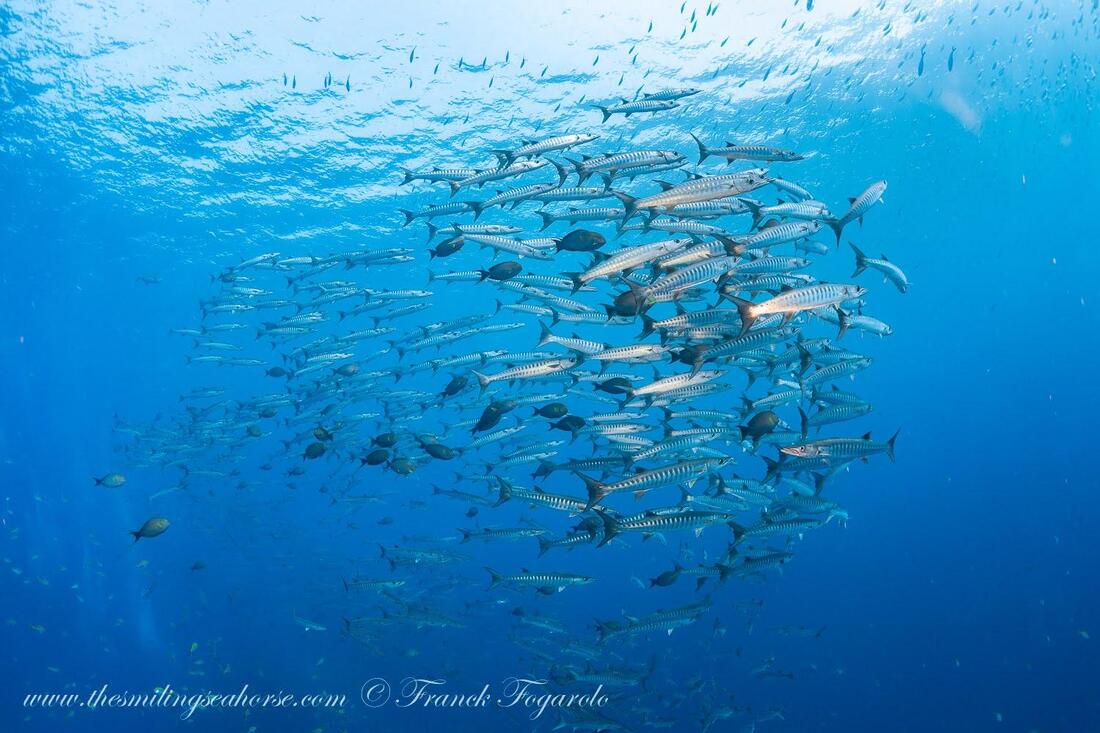
Racha Noi is a must-visit destination for divers looking for a unique and exhilarating experience. The dive sites offer a variety of underwater landscapes, including rock formations, coral gardens, and deep drop-offs. With its pristine waters and rich marine life, Racha Noi is the perfect location for all levels of divers.
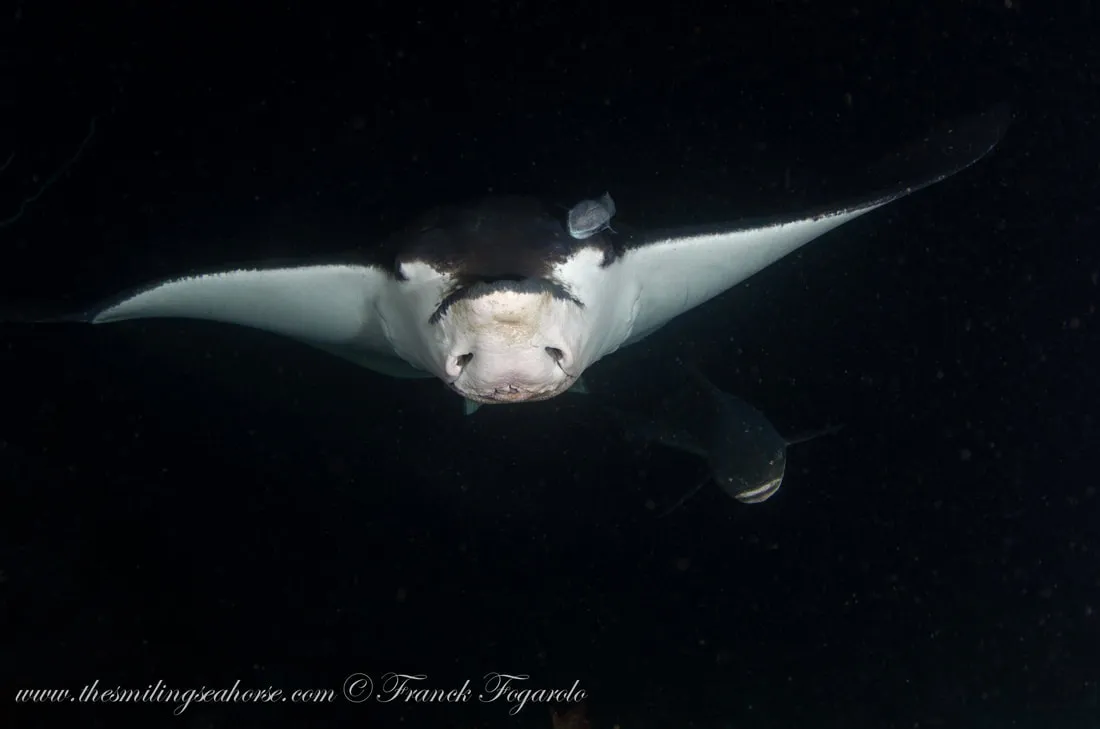
For those seeking a thrilling adventure, the southern tip of Racha Noi is a great spot to encounter giant manta rays. However, due to the depth and strong currents, this area is only recommended for experienced divers.
One of the most exciting aspects of Racha Noi is the outstanding visibility, which can reach up to 30 meters. This makes it a perfect destination for underwater photography and videography enthusiasts.
Whether you are a beginner or an experienced diver, Racha Noi offers a range of dive sites to suit all levels. It is also an ideal place to learn to scuba dive and obtain your PADI certification.
Don’t miss out on the opportunity to explore the underwater world of Racha Noi, where you can witness some of the most amazing marine life in the Andaman Sea.
Dive Sites info
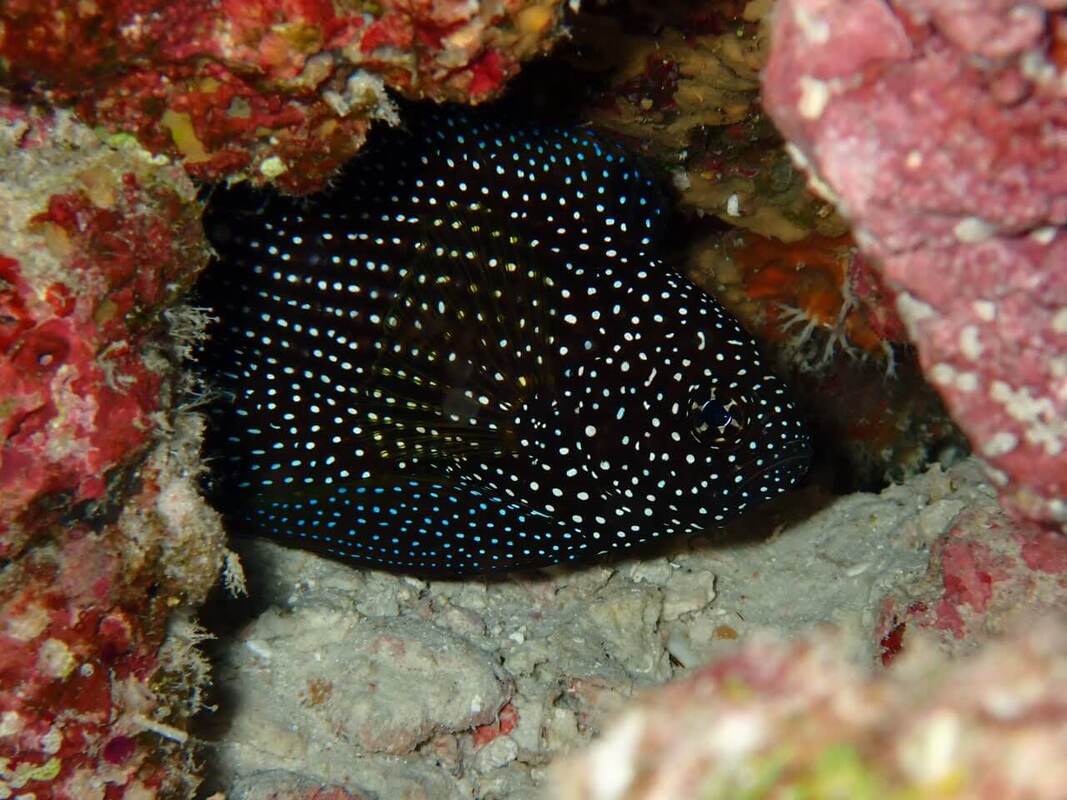
Home Run Reef is a long, sloping hard-coral reef and an excellent site for divers who enjoy drift diving. Much of the reef is covered with staghorn, branching and pore corals, with scattered rocks adding variety to the underwater landscape.
The steepest section of the reef lies at around 12 to 15 metres, before continuing down through depths of approximately 15 to 25 metres and eventually giving way to a gently sloping sandy bottom.
Because of the prevailing current, a one-way drift dive is usually the most practical and enjoyable way to explore Home Run Reef. Rather than swimming against the current, divers can relax and let the water carry them along the reef while taking in the coral formations and marine life.
The reef is home to a variety of colourful reef fish, including parrotfish, butterflyfish, and basslets. Look carefully among the coral branches and rocky formations for some of the site’s more unusual residents.
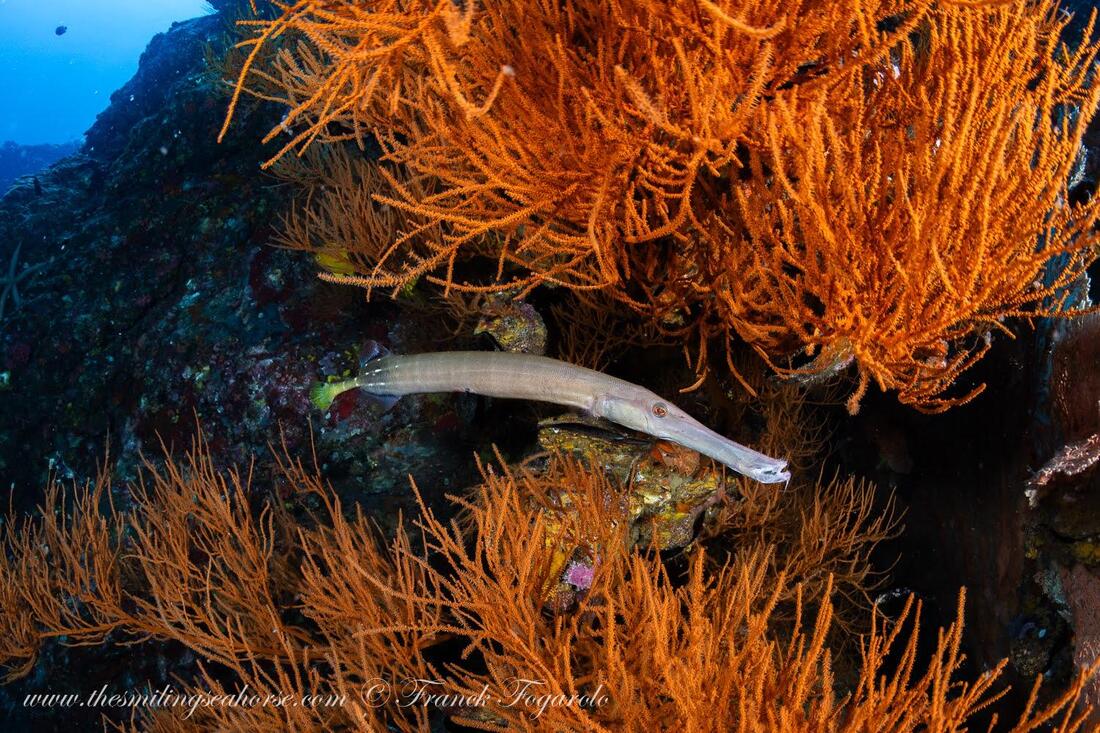
Cometfish can sometimes be found sheltering in cavities or tucked between the branches of staghorn coral. Trumpetfish and cornetfish are also frequently seen close to the reef, where their slender bodies and camouflage allow them to blend almost perfectly with the coral.
Great barracuda are another regular sighting at Home Run Reef and may be seen cruising along the reef or passing through the blue.
For keen-eyed divers, there is plenty to discover closer to the bottom. Check beneath rocks and around small crevices for reef octopuses and sea snakes, which can be surprisingly well camouflaged.
With its sloping coral reef, flowing current, and abundant marine life, Home Run Reef is a particularly rewarding site for drift-diving enthusiasts.
South Tip lies at the southernmost point of Racha Noi Island and is one of the area’s more challenging and rewarding dive sites. The site is relatively small and is dominated by impressive granite boulders, with the reef dropping dramatically into deeper water.
The northern section of the site sits at around 15 to 18 metres, while the seabed descends to more than 60 metres towards the south. On the western side, the granite slope is relatively gentle, while the eastern side is steeper and more exposed.
Hard and soft corals grow across the rocky formations, including fire corals and sea fans, adding colour and texture to the dramatic underwater landscape.
South Tip is not suitable for beginners or intermediate divers. Currents here can be strong, complex and sometimes extreme, with conditions changing quickly around the tip of the island.
Because of these challenging conditions, South Tip cannot always be included in the regular daily dive schedule. When conditions are suitable, however, experienced divers can enjoy an exhilarating dive in one of Racha Noi’s most exposed and spectacular locations.
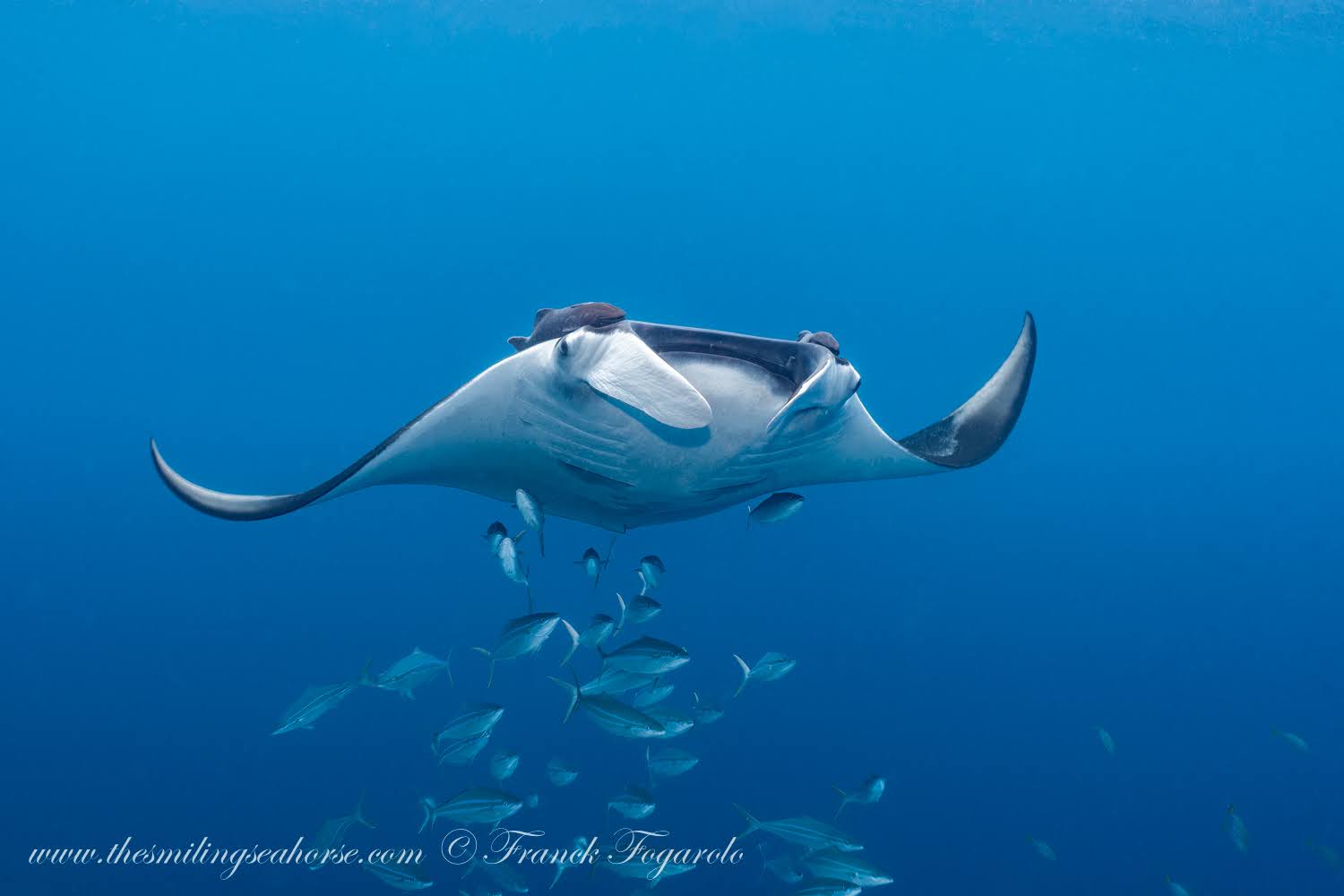
The main attraction at South Tip is undoubtedly the possibility of encountering manta rays. These graceful giants are regularly seen in the area, with encounters particularly common between February and April.
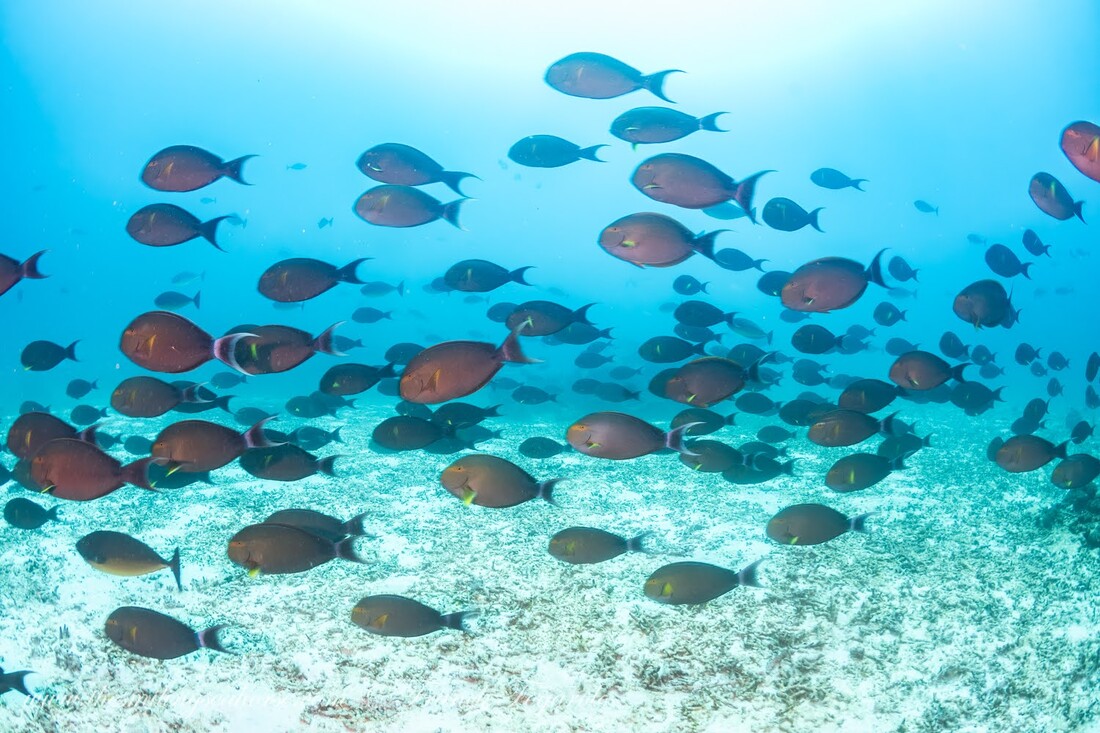
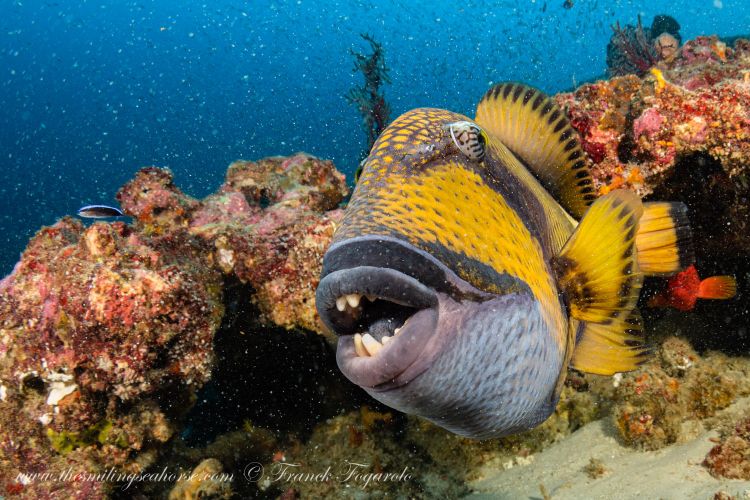
The rocky reef also attracts large schools and individual surgeonfish, unicornfish, triggerfish and damselfish, while great barracuda are another regular sighting.
Leopard sharks are occasionally seen in the area, although encounters are less common.
With its dramatic granite formations, deep blue water, powerful currents, and regular manta ray encounters, South Tip is a dive for experienced divers looking for adventure and big-animal encounters.
Banana Bay, on the eastern side of Racha Noi Island, is thought to take its name from the abundance of banana trees growing along the shore. Above and below the water, it is a relaxed and scenic dive site, with a gently sloping reef that offers plenty to explore.
The dive begins in a shallow, flat area between approximately 3 and 10 metres, making it particularly accessible for newer divers and an enjoyable place to explore at a leisurely pace. From there, the hard-coral reef gradually slopes down to around 25 to 30 metres.
Much of the reef is covered by extensive staghorn coral, interspersed with patches of fine, white sand. The contrast between the branching coral and sandy areas creates an attractive underwater landscape and provides shelter for a wide variety of marine life.
The staghorn coral is home to colourful fusiliers, triggerfish, butterflyfish, and basslets, which can often be seen moving above the reef.
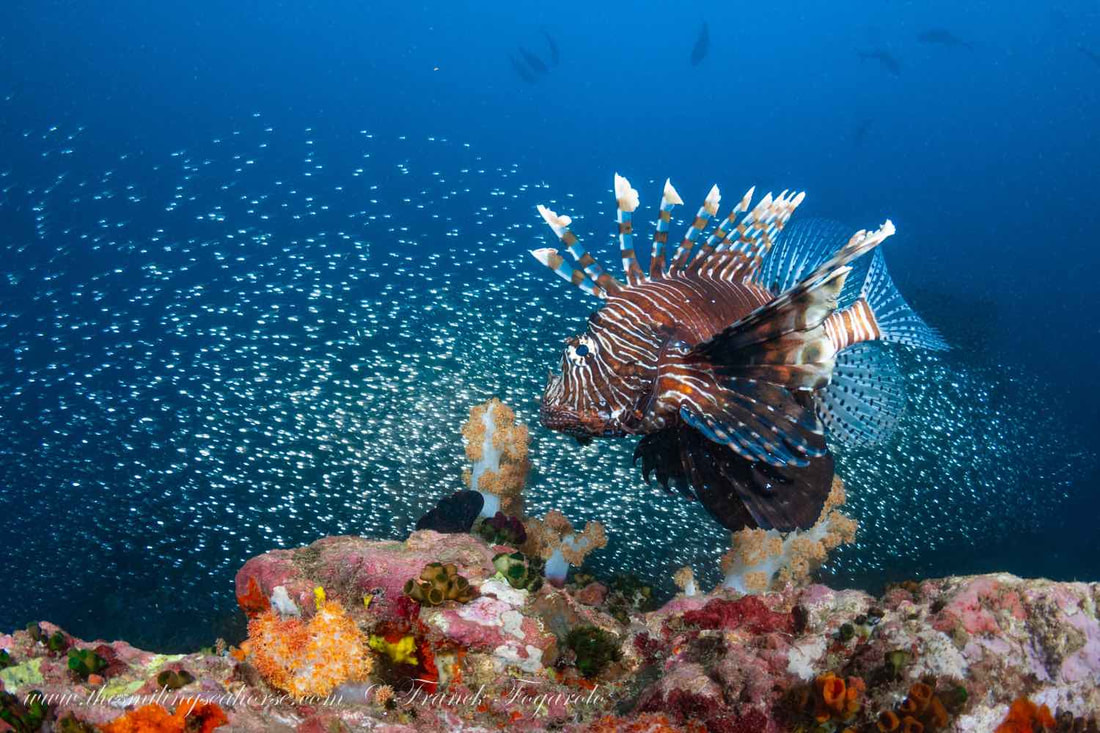
The shallow sections are particularly interesting for spotting larger reef creatures. Keep an eye around the coral and rocks for giant moray eels, reef octopuses, black-and-white snappers, lionfish, and scorpionfish. Sea snakes may also be encountered as they move across the reef and sandy bottom.
For macro enthusiasts, the staghorn gardens are well worth exploring carefully. Nudibranchs can often be found crawling across the coral, offering plenty of opportunities for close-up photography.
And don’t forget to look away from the reef and into the blue water. Banana Bay is also a place where lucky divers may encounter manta rays passing through the area—an unforgettable sight when these graceful giants appear above the reef.
With its shallow coral gardens, gentle slopes, and varied marine life, Banana Bay is an easy-going dive site with the potential for some very special encounters.
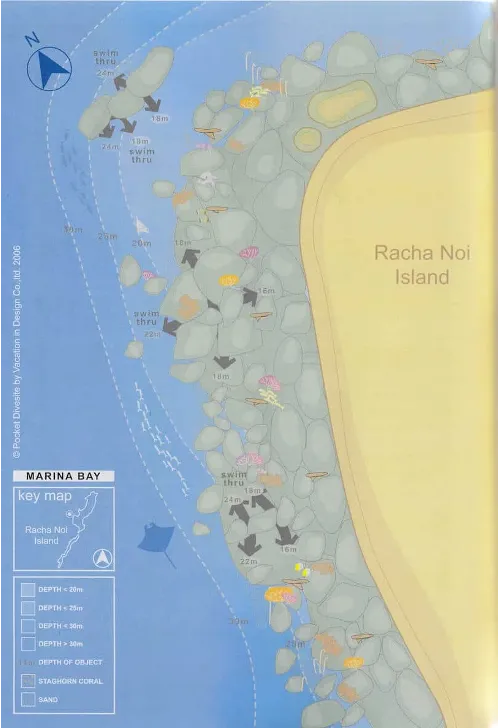
Marina Rock, on the western side of Racha Noi Island, is a dramatic granite dive site where large rock formations are covered in a rich variety of corals. Leather corals, sea fans, sea whips, fire corals, and hard corals such as pore corals create a colourful underwater landscape across the reef.
The dive can begin over the sandy bottom at around 18 metres, or closer to the southern side of the bay, where enormous granite boulders rise from the seabed and slope down to approximately 35 to 40 metres.
One of the highlights of Marina Rock is its network of swim-throughs. These passages wind between and through the granite formations, offering an exciting way to explore the reef while revealing different angles of the underwater landscape.
The coral-covered rocks attract a wide variety of reef fish, including parrotfish, snappers, angelfish, butterflyfish, and schools of neon fusiliers.
The sandy bottom is also worth exploring. Look for bluespotted stingrays resting on the sand and pairs of scissortail gobies hovering just above their burrows.
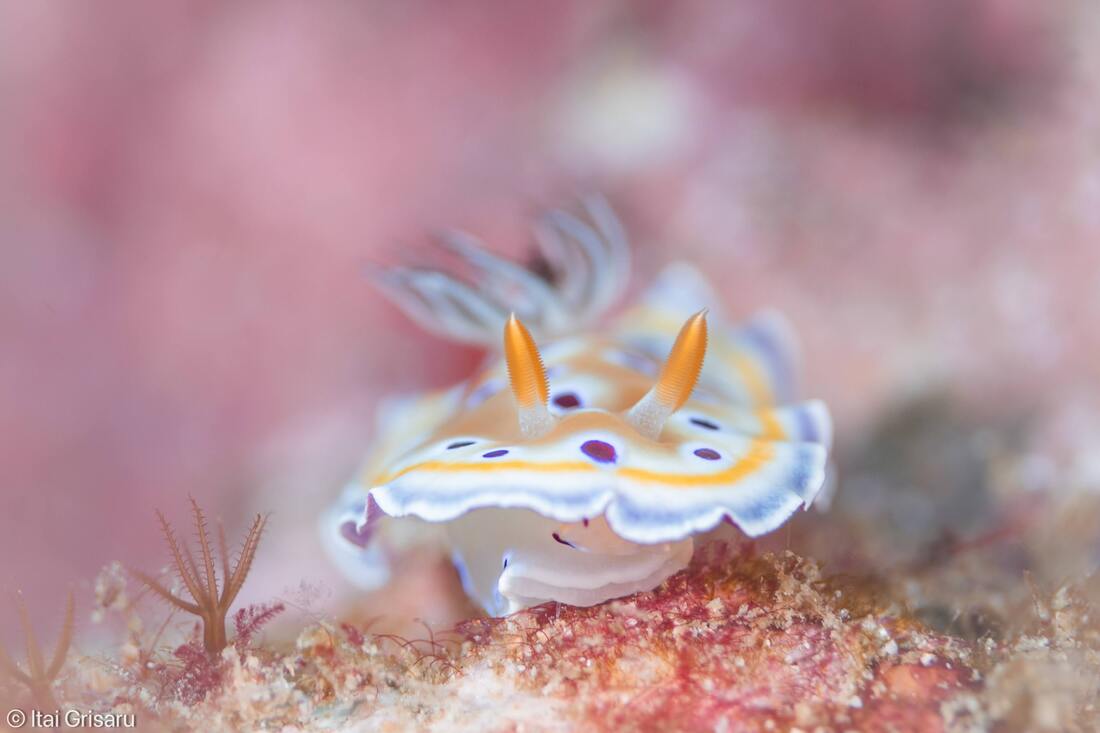
Take your time around the granite formations and inspect the corals and crevices for smaller creatures. Nudibranchs and pipefish can sometimes be found hiding among the reef, rewarding divers who slow down and look closely.
In the deeper blue water beyond the reef, there is always the possibility of a memorable encounter with a manta ray.
With its towering granite boulders, colourful corals, swim-throughs, and varied marine life, Marina Rock is a fascinating site for divers who enjoy exploring underwater topography as much as looking for marine life.
Located on the southeastern side of Racha Noi Island, Racha Noi Bay is easily recognised by the small islet just offshore. At low tide, a narrow sand ridge connecting the islet to the main island becomes visible, giving the bay its distinctive appearance.
The shallow coral gardens at the northern and southern ends of the bay are particularly well suited to snorkelling and relaxed shallow-water exploration. As the reef descends, the coral gradually gives way to a sandy bottom at around 12 metres.
Deeper sections reveal a completely different underwater landscape. Below approximately 30 metres, rocky formations are covered with impressive sea fans and sea whips, creating a dramatic backdrop and providing shelter for a variety of marine life.
Racha Noi Bay is known for its diverse marine life, with plenty to discover from the shallow coral gardens to the deeper rocky areas. Alongside the usual reef fish, divers may encounter scorpionfish, garden eels, eagle rays, and milkfish.
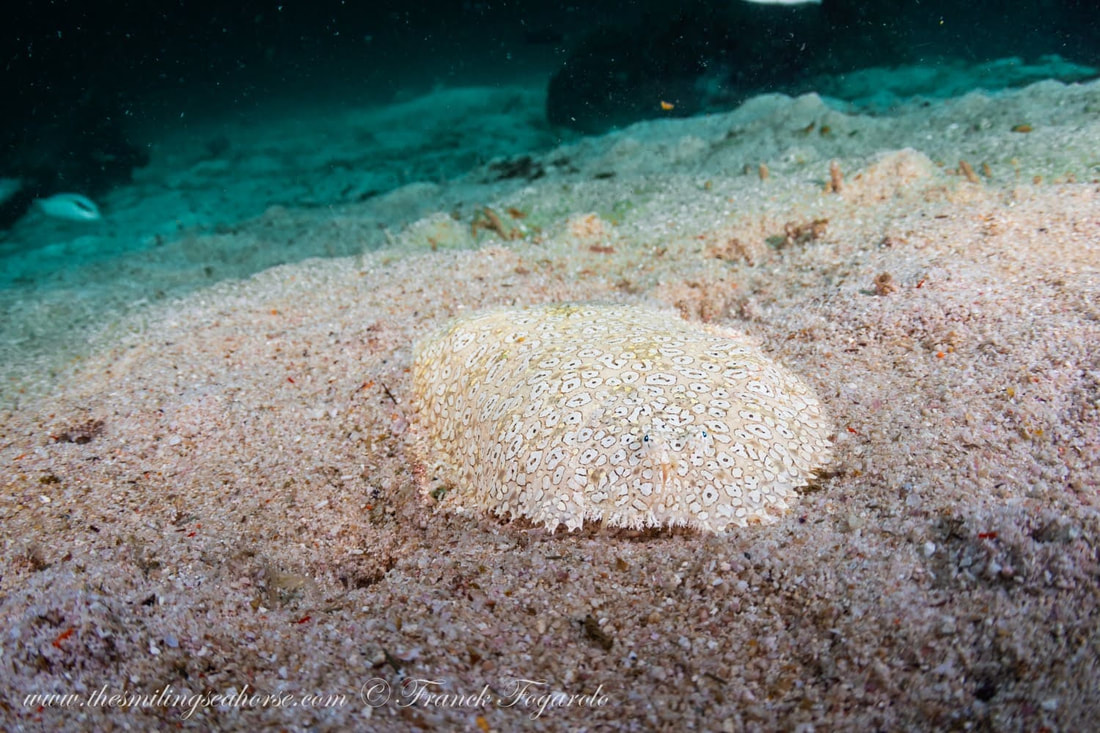
The sandy bottom is particularly rewarding for divers who enjoy searching for well-camouflaged creatures. Look carefully for cuttlefish, flounders, and pipefish, which can be remarkably difficult to spot against the seabed.
When conditions are calm, it is also worth looking away from the reef and into the deep blue water. Lucky divers may encounter larger pelagic species such as leopard sharks, manta rays, and, occasionally, whale sharks passing through the area.
With its shallow coral gardens, sandy slopes, dramatic deep-water formations, and diverse marine life, Racha Noi Bay offers a fascinating range of underwater environments in a single dive site.
EXCELLENT Based on 93 reviews
 Posted on Google
 Magda KapustaMy diving cruise with The Smiling Seahorse was absolutely fantastic from start to finish. Everything was extremely well organized and seamless, making the entire vacation completely stress-free and enjoyable. The crew was exceptional — professional, friendly, attentive, and always making sure everyone felt comfortable and safe. The food was amazing throughout the trip, with great variety and quality at every meal. The boat itself is excellent: very comfortable, well maintained, and thoughtfully designed for divers. The cabins are spacious and comfortable, and the common areas are very well organized, giving everyone plenty of space to relax between dives. What truly made the experience unforgettable was the incredible selection of dive spots. Every dive offered something special, with beautiful marine life, stunning coral reefs, and perfectly planned itineraries. Overall, this was a full enjoyment vacation and one of the best liveaboard experiences I’ve had. I highly recommend The Smiling Seahorse to anyone looking for a perfectly organized diving adventure with a fantastic crew and unforgettable diving.Posted on Google
 Laura ForsythAnother vote for the Smiling Seahorse - it's a very good boat. Purpose built for serious diving, the thought and care put into it by its owner and crew really shows. Everything you need is available, easy to access, well maintained and functional, without anything extraneous or funky. There is a devotion to diving, to underwater photography, to the marine life, to the history and natural history of the Similan Islands and Burma, to the guest experience and developing our skills. Our group did the week-long South to North Andaman Sea trip in January 2026, and each day was better than the one before. The diving is exceptional, with healthy corals and masses and masses of fish, even before we got to the climax of Richelieu Rock. They include an black water dive on each trip, a truly unique opportunity. We received tremendous support from the dive guides and the crew alike, who gracefully and respectfully accommodated everyone's needs. Even the little things - one of the deck crew noticed that the little strap connecting the dust cap to my regulator was close to breaking off and offered to repair it. He did a beautiful job and I'll be reminded of his generosity and kindness each time I dive that reg. Our guide, James, has years of experience, like many masters, conveyed his knowledge with simplicity and clarity (and humor - whew!). I became a better diver following his example. I keep remembering the happy anticipation of standing at the stern, all kitted up, waiting for the captain's signal to jump. Next trip - Burma. The cabins are simple and comfortable, although you may want to bring a pad if you're not a fan of firm beds. A/C and hot water in each cabin - all good. Everyone in our group, from the experts with many thousands of dives to the recently certified, to a couple of non-diving spouses, loved the Smiling Seahorse!Posted on Google
 Nadine FischerWe had an amazing time on the Smiling Seahorse liveaboard in Thailand. Everything was well organized, relaxed, and very professional. Our dive guide Julien was fantastic. He showed us beautiful dive sites and even pointed out tiny nudibranchs we would never have seen ourselves. His eye for detail made every dive special. The food was excellent, and the crew was incredibly friendly and helpful, especially when assisting with dive gear. Overall, a wonderful experience – It was our 2nd trip and we will definitely come again!Posted on Google
 Udi NehabAn Unforgettable Week Underwater! I just wrapped up a phenomenal week-long liveaboard trip in the Similan Islands with The Smiling Seahorse team, and I cannot recommend them enough. The dives were absolutely gorgeous, but what really set the experience apart was Julian’s amazing spotting skills—he has an incredible eye and made sure we didn't miss a thing. The entire crew was attentive, professional, and always right there to assist with all of our needs, making the whole week completely seamless. On top of the world-class diving, the food was fantastic. Everything was incredibly tasty, and they offered a great variety of dishes that really hit the spot after a long day in the water. Five stars across the board—if you're looking for a top-tier liveaboard operation, this is the team to go with!Posted on Google
 Tsachi YeshurunI went for a 9 day dive safari in Myanmar, the mergui archipelago, with the smiling seahorse. One of the unique experiences I had. My first (and second and third) Blackwater dive, dives I will never forget. The staff are wonderful, the dive guides are amazing, they actually care and put in a lot of extra effort and the ship crew were helpful and nice. I dove with Julian, the dive master, who I would dive with anywhere anytime, and we enjoyed the presence of camille, the owner, who lit up the place with her positive energies. I've been on fancier boats, but I enjoyed this one much better.Posted on Google
 Lee WaggenerSafe, clean, friendly staff always willing to help, easy on and off the boat, good dive sites. Guides are awesome. The dive crew very accommodating. Nice camera room. Keep the same tank entire trip. Some sites we went in small groups in a dingy. The return the dingy would slowly pull you back. Thankful we did nit have to struggle getting back in the dingy Some times we would just float back to the boat. We were divided into groups so everyone wasn’t getting ready at the same time. Plenty of food and snacks. Only complaint is the chairs and beds are hard as cement. Compared to the good stuff that was nothing. I would for sure go again.Posted on Google
 Ray BusardWe did seven days on the Smiling Seahorse level over. The crew the boat everything was amazing. The divers did 20+ dives and as a snooker we did four snorkels, which was totally unexpected and so delightful. Took us to some of the best Dive spots in the world and the pictures proved that’s true. The food on board was over the top!! I would recommend this trip to anybody around the world!Posted on Google
 ליאור ארדI just returned from a week-long liveaboard with the club, and the experience was simply outstanding. The entire team demonstrated high professionalism throughout, with in-depth safety briefings and modern, well-maintained equipment. A special thanks to our amazing dive guides: James, Velika, Katie, and Mint. Each of them brought great energy and uncompromising expertise. Thanks to them, we felt in safe hands during every dive, and they knew exactly how to lead us to the most beautiful spots in the pristine sites we visited. The boat was very comfortable, and the excellent food between dives rounded out the experience perfectly. This is without a doubt a top-tier diving club, and I highly recommend it to anyone looking for a week of peace and world-class diving!"Posted on Google
 Itai StadlerAn outstanding liveaboard experience from start to finish. The hospitality on The Smiling Seahorse is truly exceptional — warm, attentive, and genuine, making you feel welcome and taken care of at every moment. The dive sites were beautiful and well chosen, offering a great variety and excellent conditions. Each dive felt thoughtfully planned to maximize both safety and enjoyment. What really sets this liveaboard apart is the extraordinary professionalism of the crew and dive instructors. Their experience, calm approach, and attention to detail were evident throughout the trip. Briefings were clear and thorough, underwater guidance was excellent, and safety was always the top priority — without ever taking away from the fun. Highly recommended for anyone looking for high-quality diving combined with top-level service and professionalism. I would gladly dive with them again.Posted on Google
 Yossie BarIt was amazing!!! Katie the diving guide is absolutely magnificent, friendly, crazy in a good way... The team is just extraordinary! Humble, helping wherever they can, the food is delicious and also satisfying, the boys helps greatly every time you come up from a dive... The guides are funny and resourceful... It was really just a perfect time.
EXCELLENT Based on 227 reviews
 Posted on Tripadvisor
 Magda KFantastic ! My diving cruise with The Smiling Seahorse was absolutely fantastic from start to finish. Everything was extremely well organized and seamless, making the entire vacation completely stress-free and enjoyable. The crew was exceptional — professional, friendly, attentive, and always making sure everyone felt comfortable and safe. The food was amazing throughout the trip, with great variety and quality at every meal. The boat itself is excellent: very comfortable, well maintained, and thoughtfully designed for divers. The cabins are spacious and comfortable, and the common areas are very well organized, giving everyone plenty of space to relax between dives. What truly made the experience unforgettable was the incredible selection of dive spots. Every dive offered something special, with beautiful marine life, stunning coral reefs, and perfectly planned itineraries. Overall, this was a full enjoyment vacation and one of the best liveaboard experiences I’ve had. I highly recommend The Smiling Seahorse to anyone looking for a perfectly organized diving adventure with a fantastic crew and unforgettable diving.Posted on Tripadvisor
 ScenicPathA well-run boat with a fantastic crew and dive staff - highly recommended! Another vote for the Smiling Seahorse - a very good boat. Purpose built for serious diving, the thought and care put into it by its owner and crew really shows. Everything you need is available, easy to access, well maintained and functional, without anything extraneous or funky. There is a devotion to diving, to underwater photography, to the marine life, to the history and natural history of the Similan Islands and Burma, to the guest experience and developing our skills. Our group did the week-long South to North Andaman Sea trip in January 2026, and each day was better than the one before. The diving is exceptional, with healthy corals and masses and masses of fish, even before we got to the climax of Richelieu Rock. They include an black water dive on each trip, a truly unique opportunity. We received tremendous support from the dive guides and the crew alike, who gracefully and respectfully accommodated everyone's needs. Even the little things - one of the deck crew noticed that the little strap connecting the dust cap to my regulator was close to breaking off and offered to repair it. He did a beautiful job and I'll be reminded of his generosity and kindness each time I dive that reg. Our guide, James, has years of experience, like many masters, conveyed his knowledge with simplicity and clarity (and humor - whew!). I became a better diver following his example. I keep remembering the happy anticipation of standing at the stern, all kitted up, waiting for the captain's signal to jump. Next trip - Burma. The cabins are simple and comfortable, although you may want to bring a pad if you're not a fan of firm beds. A/C and hot water in each cabin - all good. Everyone in our group, from the experts with many thousands of dives to the recently certified, to a couple of non-diving spouses, loved the Smiling Seahorse!Posted on Tripadvisor
 izacassiaBest scuba diving Safari in Thailand These guys are incredible! 7 days of diving from the south to the north of the Andaman Sea. The staff are incredibly helpful and the food and atmosphere was great. Special thanks to Velika, our guide, that showed us many sea creatures from the micro (picachu) to the large (white tip shark). It was an adventure! Highly recommended.Posted on Tripadvisor
 yiftah sThe smiling seahorse experience Amazing crew, beautiful dives and unbelievable atmosphere... Had the best two weeks of my life! ❤️❤️❤️Posted on Tripadvisor
 Udi NAn Unforgettable Week Underwater! I just wrapped up a phenomenal week-long liveaboard trip in the Similan Islands with The Smiling Seahorse team, and I cannot recommend them enough. The dives were absolutely gorgeous, but what really set the experience apart was Julian’s amazing spotting skills—he has an incredible eye and made sure we didn't miss a thing. The entire crew was attentive, professional, and always right there to assist with all of our needs, making the whole week completely seamless. On top of the world-class diving, the food was fantastic. Everything was incredibly tasty, and they offered a great variety of dishes that really hit the spot after a long day in the water. Five stars across the board—if you're looking for a top-tier liveaboard operation, this is the team to go with!Posted on TripadvisorAlon kedarמעל ומבר צללתי אתם באירגון של buddy divers היה נפלא מעל ומעבר לציפיות. הארגון היה מעולה, הצוות מקצועי, תומך ועוזר כל הדרך מלבישת הסנפירים לפני ועד עזרה בכל צורך. תודה גדולה למדריכת צלילה בשם ג׳וי היה נהדר. אלוןPosted on Tripadvisor
 Oren KWonderful experience with the Smiling Seahorse After 9 wonderful days of a diving safari in Myanmar on the Smiling Seahorse liveaboard, I have to say that it’s been a long time since I’ve come across people who are so professional at what they do. The dive guide team is top notch! The crew that takes care of the boat and the diving equipment is extremely professional, always thinking about every single detail and showing endless care for the guests. The boat feels very homely and warm, and it’s especially well suited for underwater photographers. Simply pure pleasure incredible diving, warmth, and love for the guests both above and below the water. Oren KidronPosted on Tripadvisor
 עדי אDon’t miss this liveaboard trip! The trip was amazing! I had so much fun and I really didn’t want it to end. Velica my guide was the nicest, so caring and professional and fun to dive with, and made me feel very safe. All the stuff was very friendly, professional and personal, and made the whole experience something I’ll never forget. The boat was comfortable and clean, the food was delicious, and the overall vibe on board was relaxed and fun. Beautiful dive sites and amazing dives. I highly recommend it for anyone looking for an unforgettable diving adventure. I would definitely dive with them again!Posted on TripadvisorYossie FeldmanAmazing experience, go!!! It was amazing!!! Katie the diving guide is absolutely magnificent, friendly, crazy in a good way... The team is just extraordinary! Humble, helping wherever they can, the food is delicious and also satisfying, the boys helps greatly every time you come up from a dive... The guides are funny and resourceful... It was really just a perfect time.Posted on Tripadvisor
 Are RAmazing company to go diving with. They picked us up at Koh Phayam even though they are based in Ranong, and helped us organize our transport onwards from Ranong after the trip. James organizes everything with a steady hand and a twinkle in the eye. You will not be bored during briefings on the smiling sea horse. Our guide, Veli Ka, was just amazing as well. So full of knowledge and safe and fun to dive with. All the crew were really nice - seems like a great work environment. The boat itself was really comfortable with a big lounge, sun deck, AC rooms with private bathrooms. Not crowded at all. The food was mouth watering as well. 5 stars!
Phuket is a great departure point to explore dive sites around Koh Phi Phi, Racha Yai, and Racha Noi and further afield to the rest of the Southern Andaman Sea.
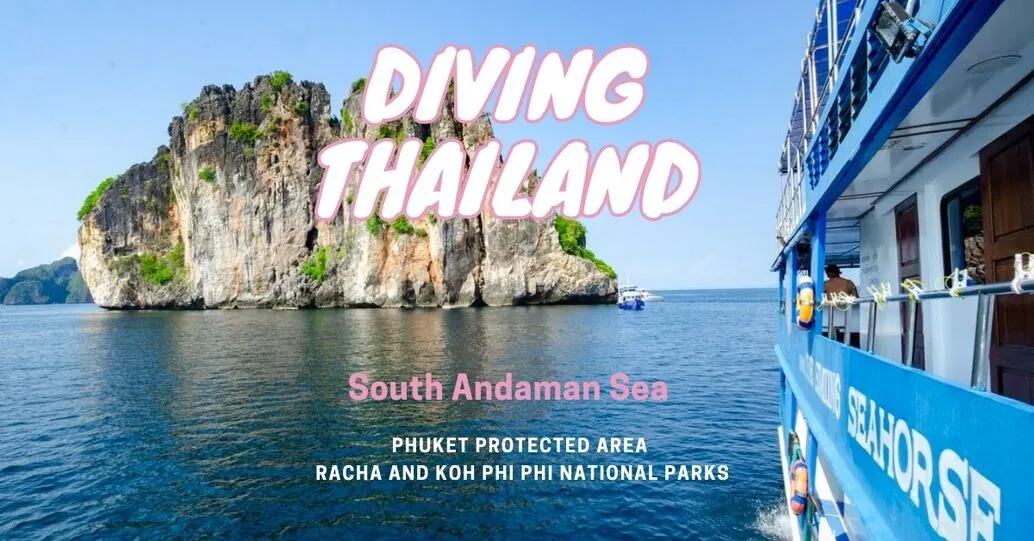
Diving around Phuket, Thailand is a bucket list experience for many scuba diving enthusiasts. The region boasts of warm, crystal-clear waters, an abundance of marine life, and stunning underwater landscapes. With numerous dive sites to explore, there is something for everyone, from beginner divers to the most experienced underwater photographers.
Whether you are looking to spot rare marine creatures, explore sunken wrecks or simply soak in the beauty of the underwater world, Phuket has it all. In this blog post, we will have a closer look at some of the top dive sites around Phuket and what makes them so special. So, get ready to strap on your scuba gear and dive into the adventure of a lifetime.
Shark Point dive site is a true gem of the Andaman Sea. Named for the frequent sightings of Leopard Sharks in the area, locals know it as Hin Mu Sang. Located just 27 km from Phuket, it’s situated near the Anemone Reef and King Cruiser wreck, and is made up of three main pinnacles.
This site boasts the most diverse range of fish and corals among all Phuket and Phi Phi Islands dive sites. Each pinnacle is spaced 15-20 meters apart, and is adorned with stunning purple and pink soft corals, as well as beds of table coral, staghorn coral, coral head, and huge sea fans. With an average depth of 15 meters and a maximum of 30 meters, there’s plenty to explore.
Divers typically start at one pinnacle and finish at the next, depending on the currents. With such a wealth of marine life, it’s almost impossible to cover all three pinnacles in just one dive. If you’re looking for an unforgettable underwater adventure, Shark Point is not to be missed.
Marine Life
Welcome to Shark Point, where divers can satisfy their craving for adventure and discover some of the most incredible marine life in the area. While the name of the site may suggest that spotting Leopard sharks is the main attraction, there is so much more to experience.
Swimming among the stunning sea fans and coral, divers may be surprised to find Seahorses and ornate Ghost Pipefish. But that’s not all, as the site is also home to a variety of fascinating marine creatures such as Scorpionfish, Lionfish, Pufferfish, and Blue-ringed Angelfish. For those who enjoy the smaller creatures of the ocean, don’t forget to keep an eye out for colourful Nudibranchs, dancing Shrimps, and Boxfish hiding among the rocks and corals.
If you look up, you might catch a glimpse of schools of Barracuda and Yellow line Snappers moving above the reef. With so much to discover, Shark Point is a must-visit destination for any diving enthusiast.
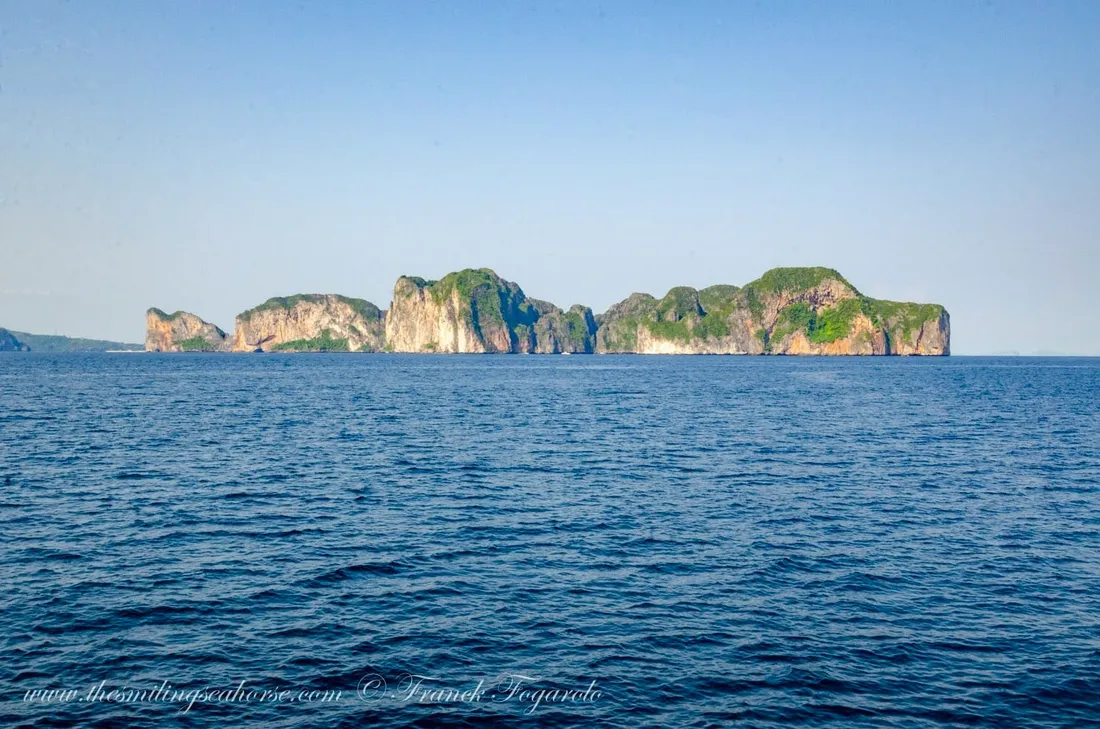
Koh Phi Phi is a group of islands in the Andaman Sea, in southern Thailand. The name Phi Phi (pronounced “phi-phi”) originates from Malay. The original name for the islands was Pulau Api-Api (‘the fiery isle’). The name refers to the Pokok Api-Api, or “fiery tree” (grey mangrove) which is found on the islands.
Koh Phi Phi Don is the largest and most populated island, where most of the hotels, restaurants and bars are located.
Koh Phi Phi Leh is a smaller and uninhabited island, where the famous Maya Bay is situated. This bay was used as a filming location for the movie “The Beach” starring Leonardo DiCaprio .
Other islands in the group include Koh Bida Nok, Koh Bida Nai, Koh Phai (Bamboo Island) and Koh Young (Mosquito Island), which offer excellent snorkeling and diving opportunities.
If you are looking for a diving paradise, look no further than Koh Phi Phi in Thailand. This stunning island group offers some of the best diving sites in the world. Whether you are a beginner or an expert, you will find something to suit your level and interest.
Everything you’d expect to see on a postcard from a tropical island, you can find all over the Phi Phi Islands… You can explore caves, wrecks, walls, and pinnacles, and encounter sharks, turtles, rays, and fish of all shapes and sizes.
Koh Phi Phi is also a great place to relax and enjoy the beauty of nature, with white sandy beaches, lush green hills, crystal clear water, colourful coral reefs, abundant marine life and friendly locals…
From February to May, you can enjoy the calmest, warmest and clearest waters, with temperatures ranging from 84-86ºF/29-30°C and visibility up to 30 meters. This is the best time to see the colourful coral reefs and fish that inhabit the island.
From June to September, the waters are slightly cooler, but still very comfortable at 82°F/28°C or above. Visibility drops to 10-15 meters, but this also attracts more plankton and bigger marine animals like manta rays and whale sharks. Currents are mild throughout the year, making diving easy and safe.
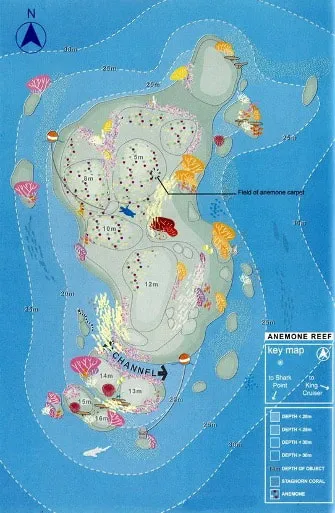
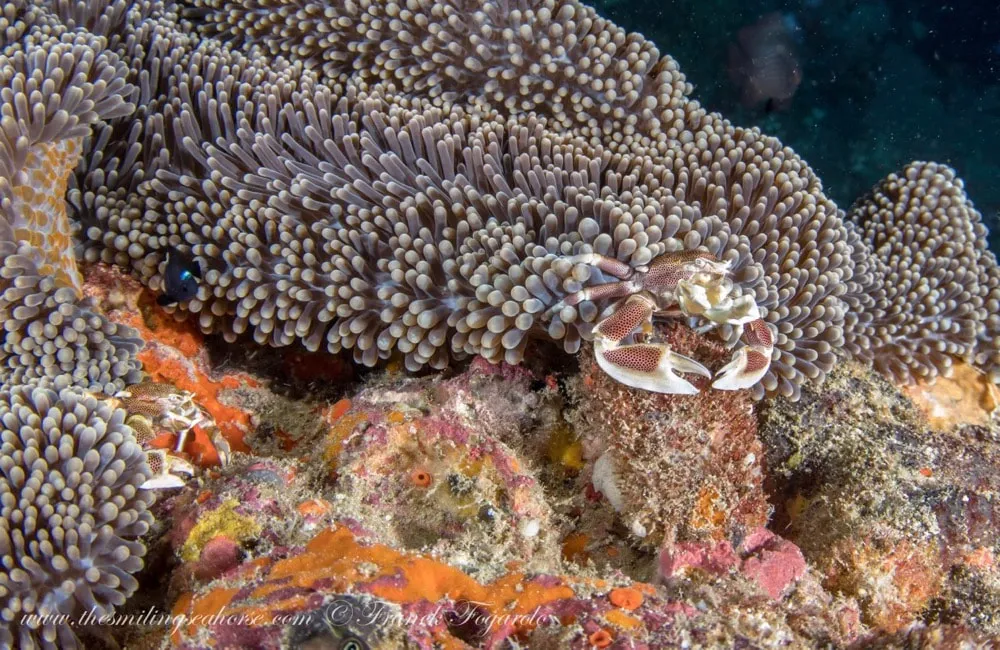
Beneath the surface of the Andaman Sea lies a mesmerizing underwater wonderland at Anemone Reef. Submerged beneath the waves, this pinnacle rises to 5 meters , earning its Thai name “Hin Jom”. Densely adorned with sea anemones, the pinnacle offers an awe-inspiring vista of the sea’s own living carpet.
With a north-south orientation and a sloped channel on the southern part, Anemone Reef boasts a depth range of 5 to 30 meters. As a result of the multitude, quality, and variety of marine life that resides amidst the beautiful coral and sea fans that adorn the pinnacle, Anemone Reef is the favoured site for both divers and photographers alike.
Marine Life
Anemone Reef’s marine life is a true feast for divers and photographers alike. Anemonefish and clownfish are abundant and add a splash of color to the already vibrant environment. The pinnacle is also home to big schools of snapper that cloud the area, creating an impressive spectacle. Along with these, you may spot yellowtail barracuda, groupers, oriental sweetlips, juvenile harlequin sweetlips, scorpionfish, and soldierfish that dance among the corals and crevices. Leopard Sharks, which may have escaped from the nearby famous dive sites, can also make a surprise appearance.
For those who love small critters, Anemone Reef has its share of exciting finds. Keep an eye out for tiger-tail seahorses and ornate ghost pipefish that can be found in the shallow areas near the mooring line. Nudibranchs and even anglerfish have also been known to make an appearance in this stunning dive site.
The King Cruiser Wreck: An Advanced Diver’s Delight
The King Cruiser Wreck is a fascinating dive site with an interesting history. Originally a car ferry, the boat sank in 1997 while carrying only foot passengers. Thankfully, there was no loss of life, as the boat sank slowly and several dive boats were around the area to help. The wreck now sits upright on its twin hulls, forming an artificial reef that attracts an abundance of marine life.
At 85 meters long, the wreck is not small, earning it the nickname “Thaitanic.” It’s worth diving more than once, as it’s impossible to see everything in just one dive. The maximum depth is over 30 meters, making it suitable only for advanced certified divers. The top of the wreck is at around 16 meters depth and is marked by a buoy. Divers should use the line attached near the front of the boat to descend and ascend safely.
While the car deck area was accessible in the first few years after the sinking, it has since collapsed, and penetration of the wreck is now prohibited.
Marine life
The area surrounding the King Cruiser wreck is teeming with marine life, making it a must-see for any diver. Schools of snappers, barracuda, fusiliers, rabbitfish and goatfish are so abundant that they’ve become a bigger attraction than the wreck itself! With good visibility, the spectacle is simply breathtaking.
As you venture closer to the wreck, you may encounter bamboo or leopard sharks, and even the occasional turtle. The wreck also serves as a landmark for nudibranchs, so keep your eyes peeled for these colourful creatures during your dive.
However, it’s crucial for divers to exercise caution and avoid touching anything or putting their hands on the wreck. The King Cruiser have become an artificial reef full of thriving marine life, and it’s important to preserve and protect its delicate ecosystem.
Overall, the King Cruiser Wreck is a unique dive site that offers a glimpse into the past while providing a home for a thriving community of marine life. It’s a must-visit destination for advanced divers looking for a new challenge.
Marine life
A good variety of small creatures make this site a favourite for scuba diving activities. Tiger-tale seahorse, ornate ghost pipefish and anglerfish are among the species frequently found along the wall dive slowly and check crevices in the wall or the sea fans, and you may spot them when they move.
The walls are also a paradise for macro photographers, as colourful nudibranchs, flatworms, tiny white eyes morays and group of 10 or more dancing shrimp are guaranteed to make an appearance. Do examine cracks and small crevices for giant morays, and enjoy the schools of yellow line snapper, trevally and fusiliers that usually swim along the wall.
For those interested in bigger fish, look at the blue for great barracuda and leopard shark may also catch a few winks at the bottom of the wall.
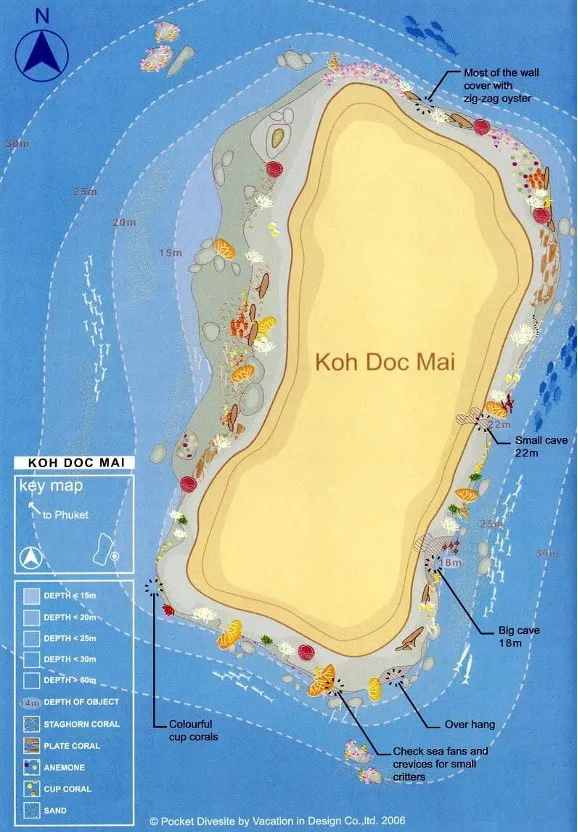
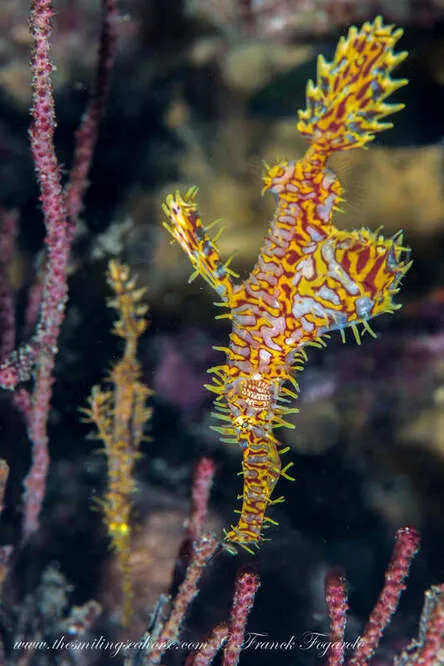
Marine life
Koh Bida Nok offers a mesmerizing underwater world, boasting a diverse topography with sandy bottoms, sloping reefs, steep walls, small caves, large cracks, and an array of thriving hard and soft corals. The stunning snapper schools that extend over large sections of the reef are a true spectacle. Anemonefish, surgeonfish, butterflyfish, and a myriad of other vibrant tropical fish species also call this place home. The rare and elusive ghost pipefish can often be found in and around the impressive coral blocks, while blacktip reef sharks and rare leopard sharks gracefully cruise through the shallow reefs – a breathtaking sight accessible to all, even snorkelers. Keep your eyes peeled even more over the summer, as whale sharks make occasional appearances. Expect to see turtles, sea snakes, honeycomb moray eels, cuttlefish, and octopuses during your dive. As for the schooling fish, you may dive into the midst of giant snapper schools and be surrounded by thousands of these magnificent silver-gold fish.
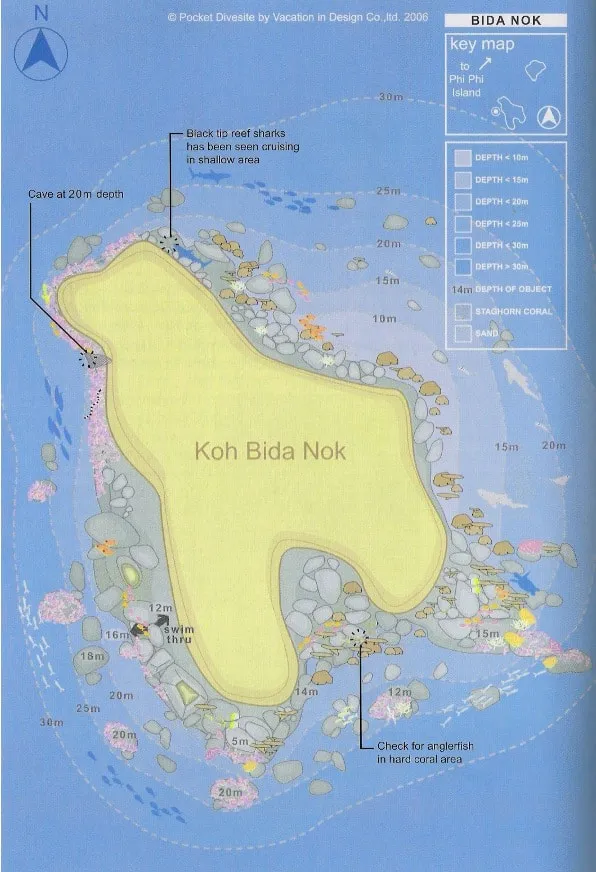
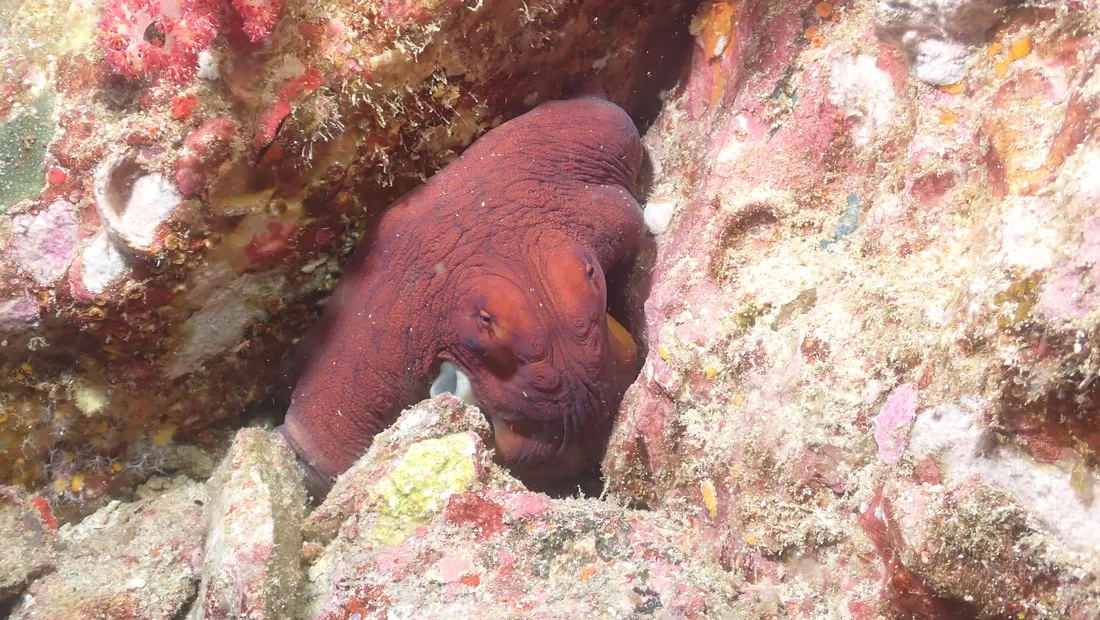
Marine life
Ko Bida Nai’s rich underwater world is home to an abundance of marine life. Divers exploring the eastern side may be lucky enough to spot leopard sharks or black tip reef sharks. Glide along with graceful sea turtles, and watch schools of barracuda, trevally, snappers, and mackerel shimmer in the water near the east pinnacle. The area is also home to an array of fascinating creatures such as cuttlefish, honeycomb moray eels, sea snakes, and Kuhl’s stingrays. For those with an eye for the smaller things, there are numerous macro species to discover, including ghost pipefish, nudibranchs, and porcelain crabs.
Bungalow Bay, located on the western side of Racha Yai Island, is a popular dive site during the high season when easterly weather is prevalent. Its location provides protection from the elements, making it an ideal spot for beginners to learn to dive and explore the underwater world. The picturesque site features plenty of white sand, making it perfect for training and practising skills.
Accessible by day trip boat from Chalong pier, Phuket, the site is divided into north and south sides, both offering similar features. While not the most stunning dive site in the area, Bungalow Bay boasts a diverse range of marine life. Those who enjoy searching for small creatures will find ornate and seagrass ghost pipefish, along with rare nudibranchs that aren’t found anywhere else in the region.
The sandy bottom of the bay is home to Kuhls stingrays, flounder, and cuttlefish, while larger octopuses are often spotted. Common reef fish such as snappers, goatfish, barracuda, lionfish, scorpionfish, and surgeonfish can be seen swimming around the area. Whether you’re a scuba diver or a snorkeler, Bungalow Bay is a must-visit dive site on Racha Yai Island.
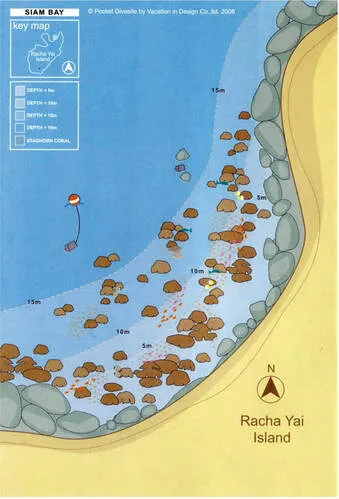
Siam Bay, the northernmost bay of Racha Yai Island, boasts an array of fascinating underwater features for divers and snorkelers alike. With its rocky edges and sandy center covered with hard coral patches, it is an excellent training and beginners’ dive site, popular year-round due to its protection from both easterly and westerly winds.
The bay features unique man-made monuments, including two elephants and a temple gate guarded by a mythical giant sentry called Yak, believed to ward off evil spirits. These statues, located between 18 and 20 meters, serve as a starting point for diving and are easily identifiable through a mooring line.
Siam Bay is home to a variety of marine life, including Kuhl’s Stingrays and peacock flounder, as well as parrotfish, triggerfish, butterfly fish, barracuda, turtles, octopuses, and cuttlefish. Divers may also spot rare species like large stonefish, flathead crocodile fish, and colourful nudibranchs, so stay alert while exploring the bay’s depths.
Overall, Siam Bay is a fantastic site for both diving and snorkeling, offering an easy and enjoyable experience for beginners and experts alike. It’s a perfect location to complete your PADI Open Water Course while taking in the beautiful underwater scenery.
Koh Raya Yai, or “the chief”, is a beautiful island close to Phuket that offers good value for money to lovers of small fish to admire in snorkelling.
It is easily and quickly accessible from Chalong or Rawai, south of Phuket (as is Coral Island). It is located 30 minutes from Phuket, Chalong Bay, by boat. Racha Island also has five beaches.
Racha yai is surrounded by a reef colonized by hard corals. The fishes are numerous: sergeant majors, rabbit fishes, fusiliers, lutjans, trumpet fishes, barracudas, box fishes, balloon fishes and many others. There are also some more unusual species, such as syngnathus and mantis shrimps. The visibility is generally very good all year round with little current.
Koh Racha Yai has crystal clear waters and small white sand beaches. The island is very popular with divers, with some sites for experienced divers and many others for beginners.
The east coast of Koh Racha Yai offers shallow bays that are well protected during the rainy season. Visibility sometimes reaches 25–30 meters, and regularly averages 15–20 meters throughout the year.
Composed mainly of white sandy bottom and dotted with coral reefs, it slopes slightly, and the bays often protect divers from strong currents. This combination makes Racha Yai Island ideal for beginners and occasional divers. There are also deeper reefs, and some wrecks that are suitable for more experienced divers
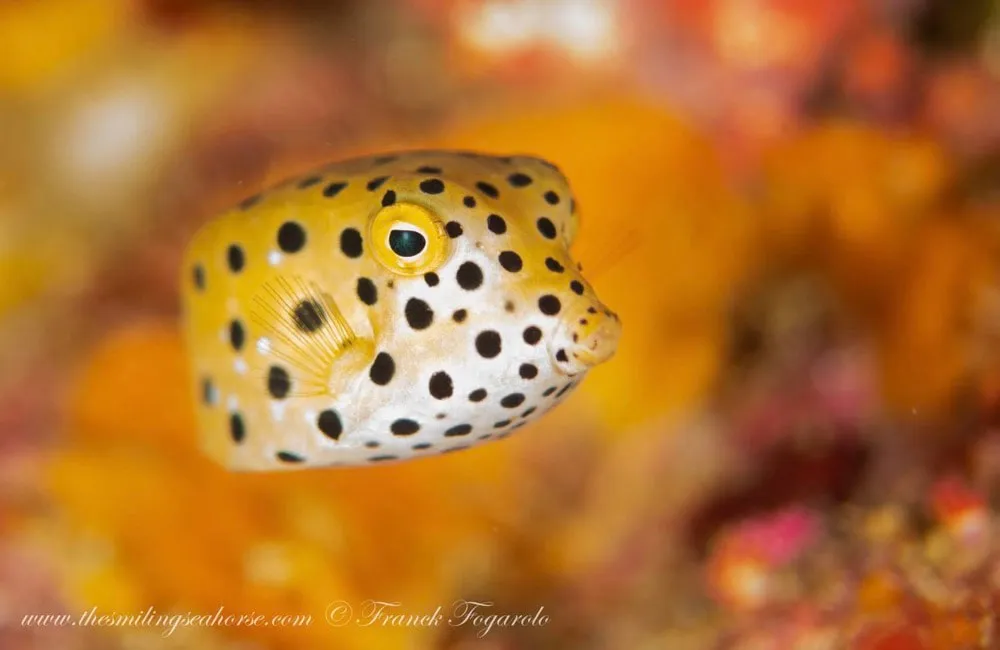
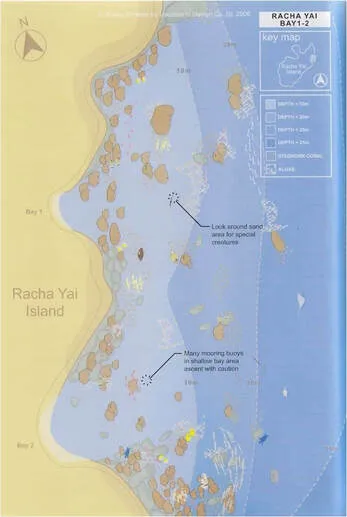
Located in the northeast area of Racha Yai Island, bays 1 and 2 are the most popular dive sites in the region, attracting both divers and snorkelers alike. With a sandy floor that gently slopes from just a few meters to around 25 meters, this site is perfect for beginners and training dives, and a great place to start your PADI Open Water Course.
Although the site suffered coral bleaching due to an extended period of unusually warm weather a few years ago, there is still an impressive array of marine life to be found here. Four wrecks provide a fascinating opportunity for exploration, and divers can expect to see a good range of moray eels, including clouded morays, fimbrilated morays, and giant morays. Kuhl’s Rays and Blue Spotted Rays, as well as Peacock Flounder, and barracuda are also common sightings.
In addition, turtles, cuttlefish, and large reef octopus can be frequently sighted, and lucky divers may even catch a glimpse of Manta Rays. Although the hard corals, such as staghorn coral, have been depleted in recent years, the site remains a wonderful location to observe marine life.
The good visibility and shallow waters, combined with the diverse range of marine species, make this site one of the best in the region for snorkelers as well.
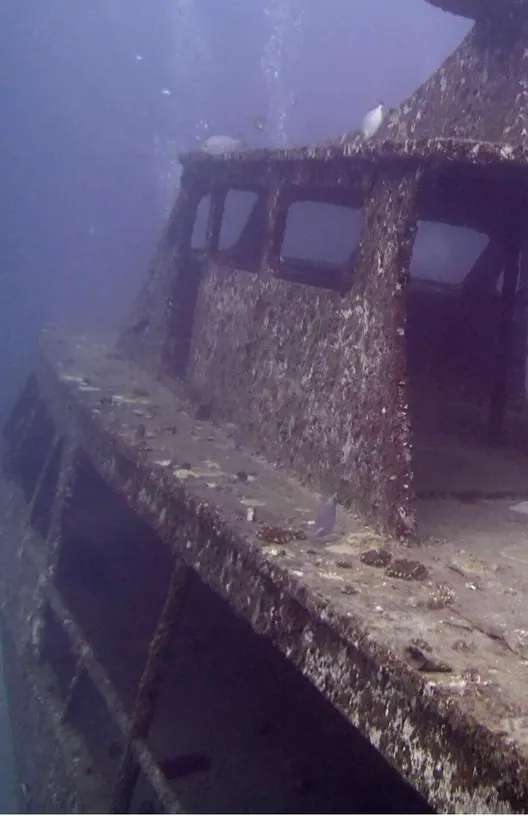
Racha Yai Island’s boat wrecks in bays 1 and 2 are a popular attraction for divers of all levels.
Here are some more details about each wreck:
Old Sail Boat Wreck
The Old Sail Boat Wreck, located in the northern part of Bay 1, is a fantastic spot for observing marine life. Despite being in bad condition, it attracts large schools of snappers and glass fish, and is home to giant moray eels and great barracudas. Ornate ghost pipefish and Jenkins rays have also been spotted around the wreck. Keep an eye out for shrimp and other creatures hiding in the nooks and crannies.
Harruby Wreck
The Harruby Liveaboard is situated between Bays 1 and 2 and is accessible for all levels of certified divers. The wreck is in excellent condition and is the best site for wreck penetration in the area. Schools of batfish and barracuda are frequently seen, and scorpionfish and bannerfish also call the wreck home. Keep an eye out for ornate ghost pipefish and nudibranch, and don’t miss the snake eels that can be spotted in the sand near the wreck.
Old Fishing Boat
The old Thai wooden fishing boat is located further east of Harruby and is rapidly deteriorating. Despite this, it is still an interesting site to explore. The wreck is deeper, with the top at about 24 metres, and contains a lot of common reef fish. It has an eerie feel and makes for great underwater photography opportunities, but it is not safe to penetrate due to its poor condition.
Marla’s Mystery
Marla’s Mystery is a barge wreck that was purposely sunk about 150 metres east of the center of Bays 1 and 2. It is lying at about 34 metres and is not often dived, making it a difficult site to locate. This site is for experienced divers only, and prior notification should be given if you wish to dive this wreck.
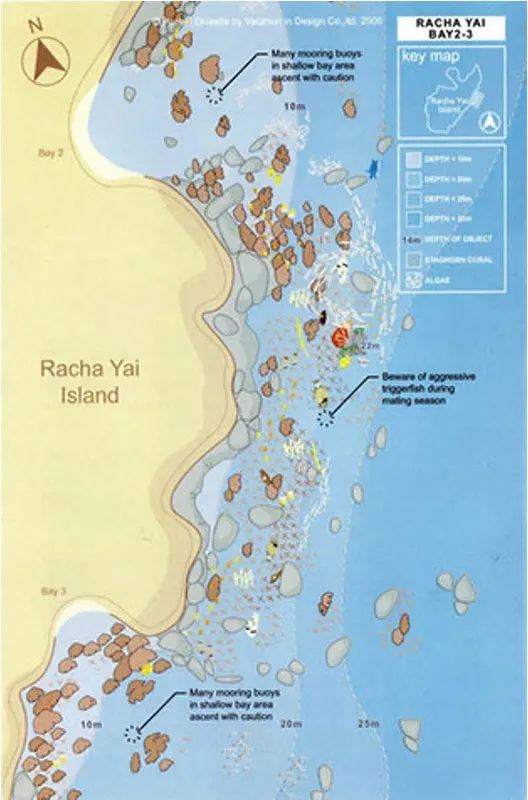
Staghorn Reef is a beautiful dive site located between Bay 2 and Bay 3 on the east side of Racha Yai Island. Although this site suffered from coral bleaching in 2010, new patches of staghorn coral are now forming and the site is showing signs of recovery.
Despite not being as frequently dived, Staghorn Reef remains a popular spot for marine life enthusiasts, with large pharaoh cuttlefish and octopus frequently sighted. Divers should be cautious of strong currents, particularly when tides are rising and currents are heading north. It’s essential to stay within the safety limits and avoid drifting too far out to sea.
Although there is less coral than before, the reef still contains some soft anemone corals, providing a beautiful backdrop for underwater photographers. The site’s calm and shallow waters make it an excellent place for all PADI courses, from beginners to advanced divers.
Siam Bay, the northernmost bay of Racha Yai Island, boasts an array of fascinating underwater features for divers and snorkelers alike. With its rocky edges and sandy center covered with hard coral patches, it is an excellent training and beginners’ dive site, popular year-round due to its protection from both easterly and westerly winds.
The bay features unique man-made monuments, including two elephants and a temple gate guarded by a mythical giant sentry called Yak, believed to ward off evil spirits. These statues, located between 18 and 20 meters, serve as a starting point for diving and are easily identifiable through a mooring line.
Siam Bay is home to a variety of marine life, including Kuhl’s Stingrays and peacock flounder, as well as parrotfish, triggerfish, butterfly fish, barracuda, turtles, octopuses, and cuttlefish. Divers may also spot rare species like large stonefish, flathead crocodile fish, and colourful nudibranchs, so stay alert while exploring the bay’s depths.
Overall, Siam Bay is a fantastic site for both diving and snorkeling, offering an easy and enjoyable experience for beginners and experts alike. It’s a perfect location to complete your PADI Open Water Course while taking in the beautiful underwater scenery.
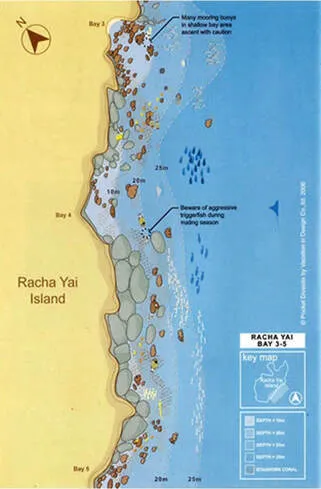
Bays 3 and 5 are hidden gems of Racha Yai Island’s southeast end, waiting to be explored by adventurous divers. Although not as well-known as some of the other dive sites on the island, these bays have started to gain popularity due to their unique features.
The shallow waters at the start of the dive allow for a leisurely descent before reaching the fascinating rock formations that drop away to about 30 meters and beyond. These formations offer divers a stunning landscape to explore, with vibrant marine life hiding in the crevices and ledges. As the coral ends around the 18 – 20 meters mark, the rocky terrain is a great alternative to traditional coral reefs, and visibility is often clearer here thanks to the lack of general activity on the sites.
While diving in Bays 4 and 5, divers might be lucky enough to spot magnificent Manta rays or majestic Eagle rays gliding through the waters. Even if these creatures don’t make an appearance, the unique geological formations and diverse array of marine life make these bays well worth a visit.
Bays 4 and 5, and Home Run Reef. These sites offer a range of experiences suitable for all levels of divers and snorkelers. Whether you are interested in exploring wrecks, swimming with colourful fish, or marvelling at the beauty of coral reefs, Racha Yai has something to offer.
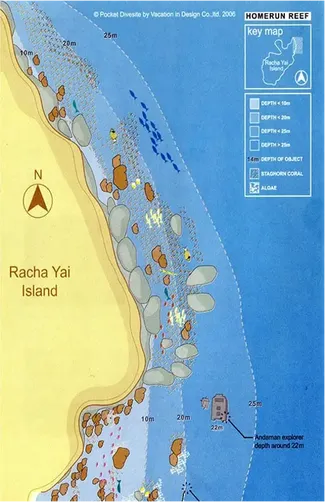
Homerun Reef is a popular last dive of the day, as it offers a stunning dive along the north side of Racha Yai Island, leading back towards Chalong Bay. The site is suitable for all levels of divers, including beginners, but can be challenging at times due to the strong currents heading north.
The reef is predominantly made up of hard corals such as staghorn, branch, and pore coral, providing a beautiful underwater landscape for divers to explore. As you descend from 5 meters, the reef slopes down to 20 meters before becoming a sandy bottom.
The schools of snappers and goatfish are a highlight of this dive, including the two-spot and yellow snapper. You might also encounter trumpet and cornet fish during your dive. Keep your eyes peeled for large rays and Leopard sharks that have been spotted here, and the exciting recent appearance of Blacktip reef sharks.
Overall, Homerun Reef is a must-dive site for any scuba enthusiast visiting Racha Yai Island, offering an unforgettable underwater experience with stunning marine life and fascinating coral formations.
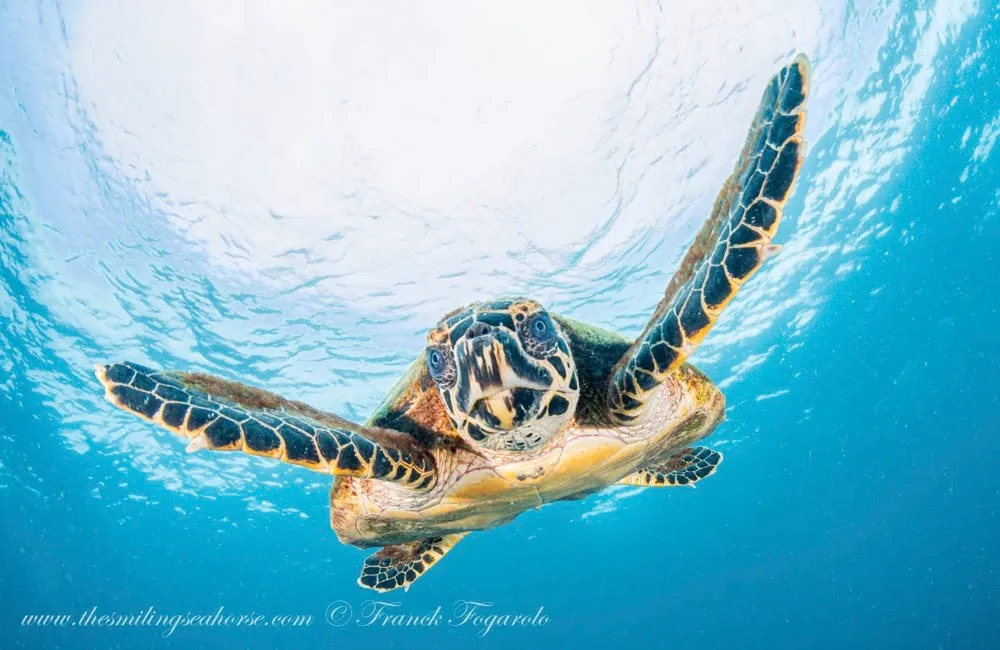
Racha Noi is a must-visit destination for divers looking for a unique and exhilarating experience. The dive sites offer a variety of underwater landscapes, including rock formations, coral gardens, and deep drop-offs. With its pristine waters and rich marine life, Racha Noi is the perfect location for all levels of divers.
For those seeking a thrilling adventure, the southern tip of Racha Noi is a great spot to encounter giant Manta rays. However, due to the depth and strong currents, this area is only recommended for experienced divers.
One of the most exciting aspects of Racha Noi is the outstanding visibility, which can reach up to 30 meters. This makes it a perfect destination for underwater photography and videography enthusiasts.
Whether you are a beginner or an experienced diver, Racha Noi offers a range of dive sites to suit all levels. It is also an ideal place to learn to scuba dive and obtain your PADI certification.
Don’t miss out on the opportunity to explore the underwater world of Racha Noi, where you can witness some of the most amazing marine life in the Andaman Sea.
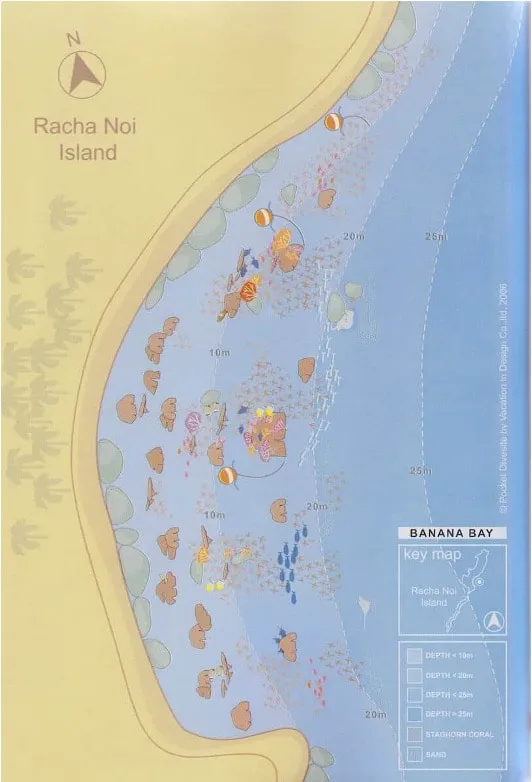
Situated on the eastern side of Racha Noi, Banana Bay is a stunning dive site that offers something for everyone. Named after the banana trees that line the bay, it boasts powdery white sands, turquoise waters, and lush greenery that make it a true tropical paradise. This site is ideal for both scuba divers and snorkelers and offers excellent photographic opportunities.
With several mooring lines, diving begins in the shallow water and gradually slopes down to 25 metres, making it a perfect site for beginners and training dives. The coral is primarily hard coral, but recent regeneration of staghorn coral gives hope for its return to its former glory.
One of the highlights of Banana Bay is the massive schools of barracuda that often number close to 1000. The clear waters and direct sunlight make for a surreal experience diving among these inquisitive fish. Additionally, there is an abundance of reef fish such as lizard fish, fusiliers, butterfly fish, damsels, and red tooth trigger fish.
While rare, leopard sharks have been known to make appearances, and blacktip reef sharks have been recently spotted in abandoned fishing nets. Cuttlefish, moray eels, and manta rays are also frequently seen in the area.
Overall, Banana Bay is a must-visit dive site for divers of all levels, offering both breathtaking views and fascinating marine life to explore.
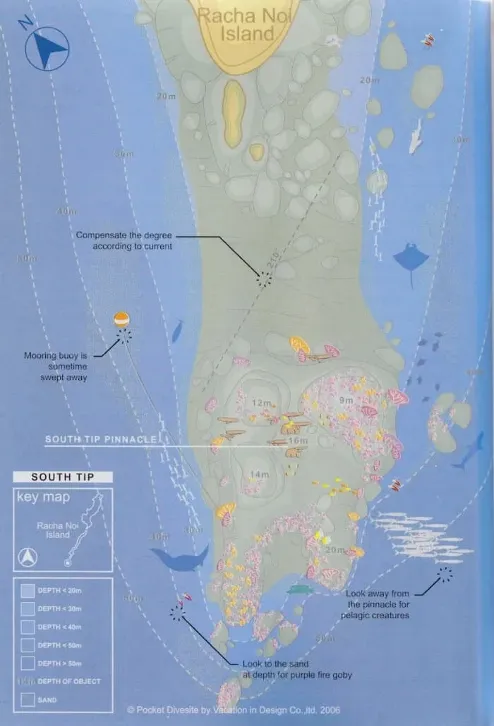
Located on the southernmost tip of Racha Noi, South Tip is renowned for being the best site in the Phuket day trip area to witness the majestic Manta rays. It is also the site we choose to dive on the last day of our dive cruises when we go from Similan to Phuket.
South Tip is quite a small site dominated by large granite boulders that start at around 14 metres and go beyond 40 metres. This site is prone to strong currents, and there is no protection from the island, which means waves can be an issue when the sea is not at its calmest. If the sea is a bit wavy, it may be best to relocate it to the nearby Racha Noi Bay.
Due to the difficulty of the dive and strong currents, this site is recommended for experienced and advanced divers only. But the rewards are worth it, especially during the winter months, when Manta rays sightings are most common.
The rocky reef is covered with soft corals, sea whips, and an array of marine life, including unicorn fish, surgeon fish, and the occasional school of Chevron Barracuda.
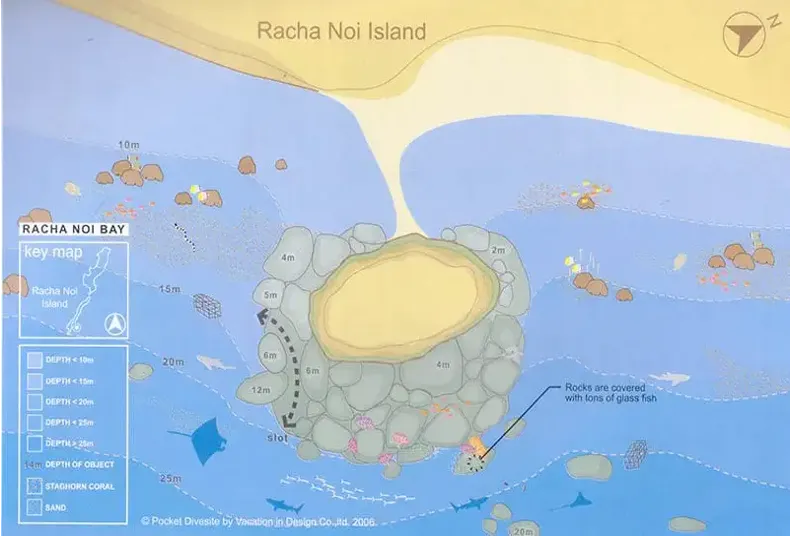
Marita’s Rock and Marina Bay are two stunning dive sites located close to each other, making it possible to explore both in one dive. The dive sites are adorned with soft corals and Gorgonian Sea Fans that provide a vibrant and colorful underwater scenery, with visibility ranging from 10-30+ meters. The impressive boulder formations found here create opportunities for swim-throughs, canyons, and small caverns to explore.
While the current inside Marina Bay is typically mild, it can be very strong outside the bay, especially at Marita’s Rock. As such, Marita’s Rock is recommended for experienced divers only, due to its strong currents. Racha Noi is the last dive site before the Andaman Sea, which means that the dive sites around the island start to get deep. This makes for some great opportunities to spot large pelagic fish such as Tuna, Barracuda, and Trevallies.
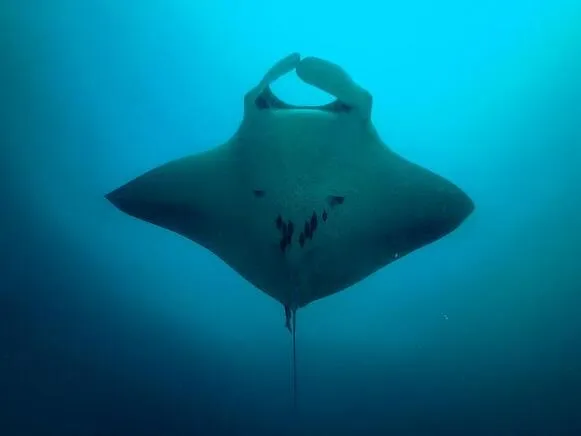
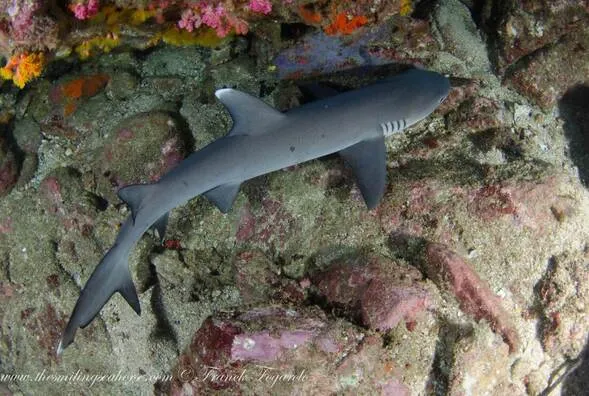
Manta Rays are frequently spotted at both dive sites, along with occasional sightings of Whale Sharks, Blacktip and Whitetip Reef Sharks. Keep your eyes open and be prepared for an incredible underwater adventure
Explore the Surin Islands, Richelieu Rock and the Similan Islands.
Prices in Thai baht (THB), per diver. The 10% discount is already applied.