
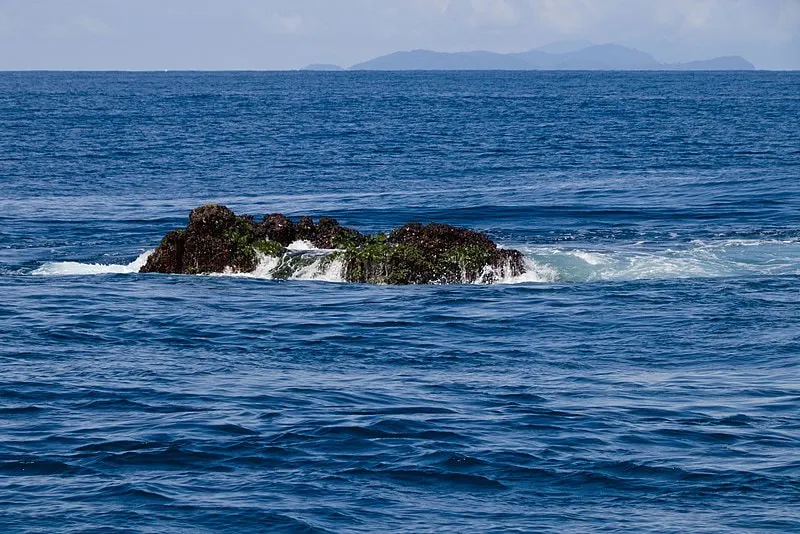
A small rock in the middle of the Indian Ocean, Richelieu Rock made it to the top 10 dive sites in the world, and for a reason: divers here are spoilt between big and small wonders…
The horseshoe-shaped reef discovered by Jacques-Yves Cousteau was named by the famous French pioneer diver after its purple soft corals… diverse marine life…
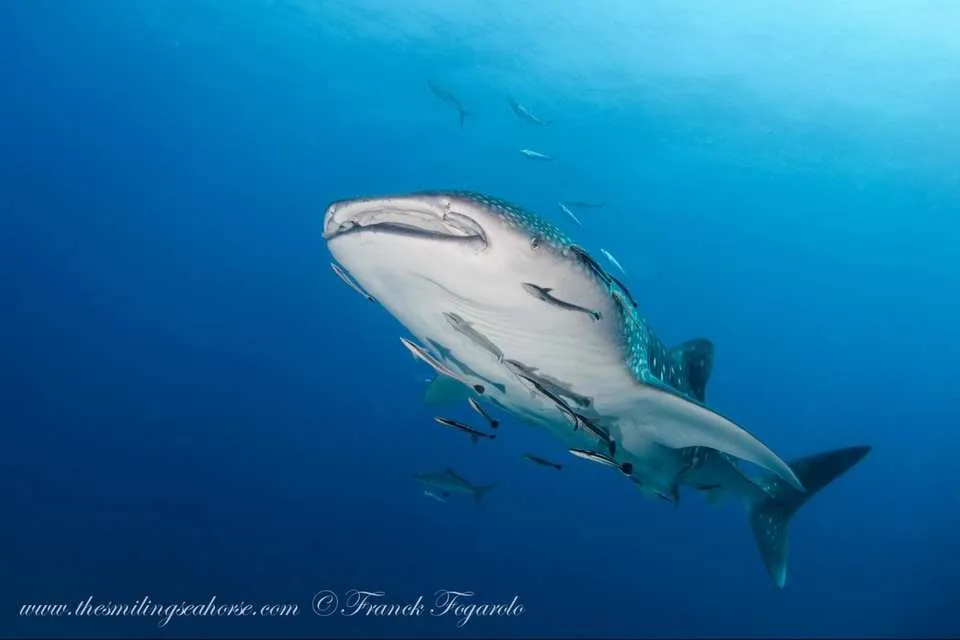
Look up, or in the blue, and you might encounter the biggest fish on the planet, the mysterious whale shark, and its popular cousin, the giant oceanic manta ray. You can also very often sight schools of barracudas hovering above the reef, reef sharks coming out briefly from the deep, potato groupers hiding in caves, or giant morays sticking out from a rock.
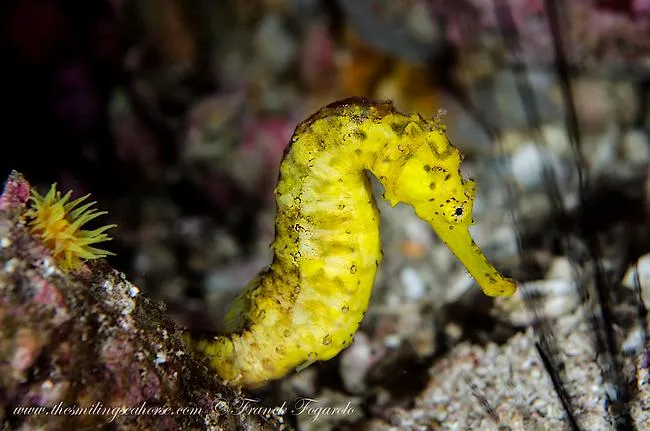
But Richelieu Rock is also a paradise for underwater photographers focusing on macro life; look well in the soft coral and sea fans for a spectacular array of small critters like seahorses, pipefish, ghost pipefish, harlequin shrimp, frogfish, and nudibranchs of all shapes and colors.
Of course all the marine life in between can also be spotted in Richelieu Rock, from the popular clownfish defending fiercely their anemone to mating cuttlefish and all the colorful coral fishes you can expect in the top dive sites of the Indian Ocean.
Due to the currents sweeping over this pinnacle, there’s not so much hard coral but plenty of soft coral in vivid colors. The currents can be strong, but it’s easy enough to find shelter on one side of the pinnacle or another. The dive site is too big to be explored in a single dive, and most liveaboards will include at least 2 dives here.
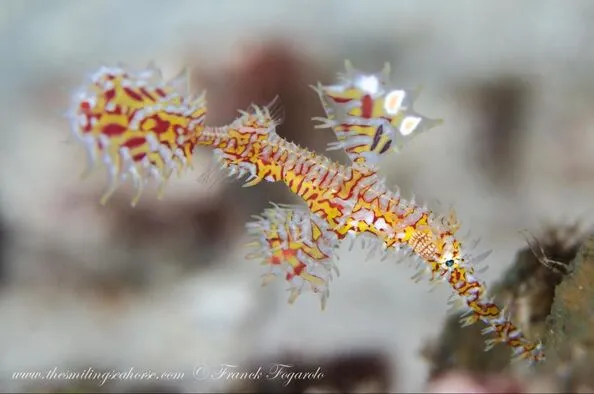
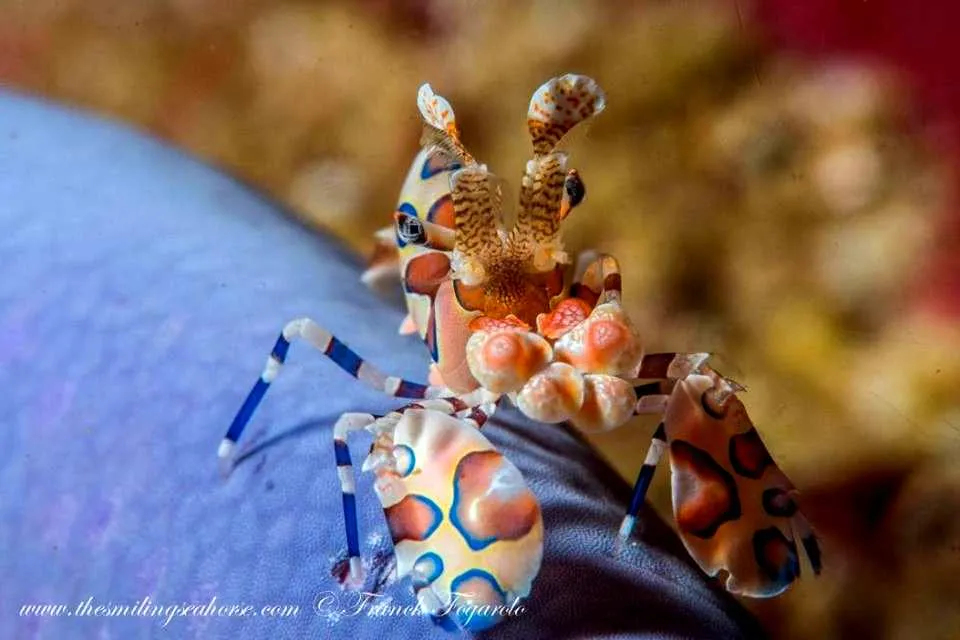
The pinnacle can easily entertain the most eager explorers for up to 4 dives. With rocks lying on a sandy bottom at up to 35 meters, you should closely monitor your no-decompression time. The south side is a sheltered bay sloping down gently, while the other side is made of walls separated by corridors. Watch out for the current; it might bring you the most exciting visitors, but it should be taken into account when planning the dive itinerary and exit.
Diving in Richelieu Rock, Koh Bon, and Koh Tachai is only allowed between the 15th October and 15th May, when Surin National Park is open to visitors. The conditions are usually very good throughout this period.
It is said that February to April is the best time to encounter whale sharks and manta rays in this region, although there is a pretty good chance of seeing them at any time of the season.
The water temperature is usually around 29°C at the surface and 27°C at depth, but occasionally it can drop down to 25°C due to thermoclines. These are like ‘blankets’ of cold water and are a natural phenomenon that happen most often in November and December as a result of the transition of wet season into dry season.
February and March are the driest months and, with regular flat seas, are probably the best time to visit Richelieu and the rest of the area.
From May to early October, the area is closed due to rough sea surface conditions.
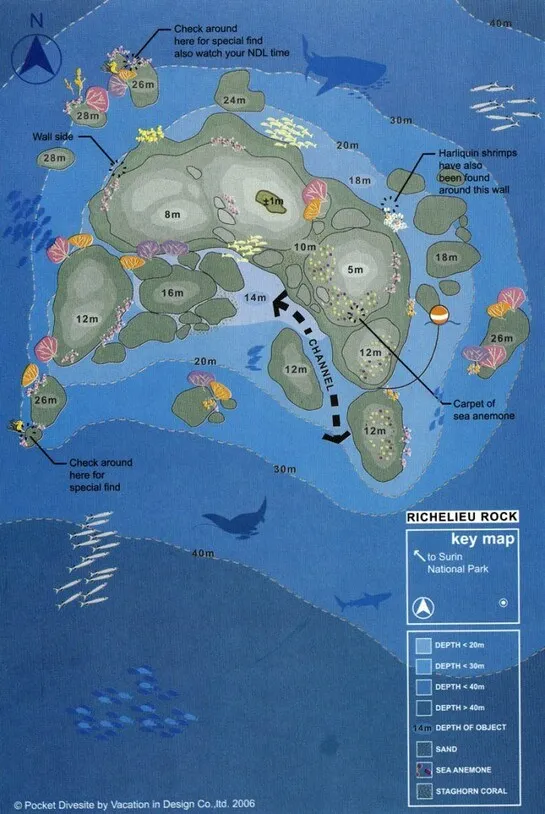
Dive Site


 Trustindex verifies that the original source of the review is Google.
 Trustindex verifies that the original source of the review is Google.
 Trustindex verifies that the original source of the review is Google.
 Trustindex verifies that the original source of the review is Google.
 Trustindex verifies that the original source of the review is Google.
 Trustindex verifies that the original source of the review is Google.
 Trustindex verifies that the original source of the review is Google.
 Trustindex verifies that the original source of the review is Google.
 Trustindex verifies that the original source of the review is Google.
 Trustindex verifies that the original source of the review is Google.


 Verified
 Verified
 Verified
 Verified
 Verified Verified
 Verified
 Verified Verified
 Verified