
Giant Oceanic Manta Ray: Facts, Size, Diet, Habitat and Diving Guide
The giant oceanic manta ray, Mobula birostris, is one of the most spectacular animals you can encounter while diving. With its enormous wingspan, graceful movements and remarkable intelligence, this gentle giant has fascinated divers and marine biologists around the world.
But how can you tell a giant oceanic manta ray from a reef manta or a devil ray? Where do giant mantas live? How big can they get, what do they eat, and are they endangered? And if you are lucky enough to meet one underwater, how should you behave around it?
We have put together this giant oceanic manta ray FAQ to answer some of the most common questions about Mobula birostris, with facts, identification tips and advice for responsible encounters with these incredible animals.
Giant Oceanic Manta Ray FAQ
- How do you identify the different species of manta rays and mobulas?
- Where do giant oceanic manta rays live?
- How big are the largest rays on the planet?
- What colours are giant oceanic manta rays?
- What do Mobula birostris eat?
- Are giant oceanic manta rays endangered?
- Can manta rays jump out of the water?
- How should you dive next to giant oceanic manta rays?
How do you identify the different species of manta rays and mobulas?
Giant oceanic manta rays, also known as Mobula birostris, are the largest members of the ray family. They are much larger and generally more pelagic than reef manta rays, Mobula alfredi, their close relatives within the Mobulidae family.
There are several physical features that can help distinguish a giant oceanic manta from a reef manta and from the smaller mobula rays.
Giant manta vs reef manta
Besides the obvious difference in size, look at these features:
- Cephalic fin colour: the inside of the cephalic fins is generally dark or black on Mobula birostris, while it is usually paler on Mobula alfredi.
- Dorsal pattern: the dark marking on the back often forms a T-shaped pattern on giant oceanic mantas, compared with a more Y-shaped pattern on reef mantas.
- Ventral pattern: the spots and markings on the underside are arranged differently. Giant oceanic mantas tend to have more of their markings around the lower abdomen, while reef mantas commonly have more spots between the gill slits.
- Tail base: giant oceanic mantas have a distinctive knob-like bulge at the base of the tail, which is not present in reef mantas.
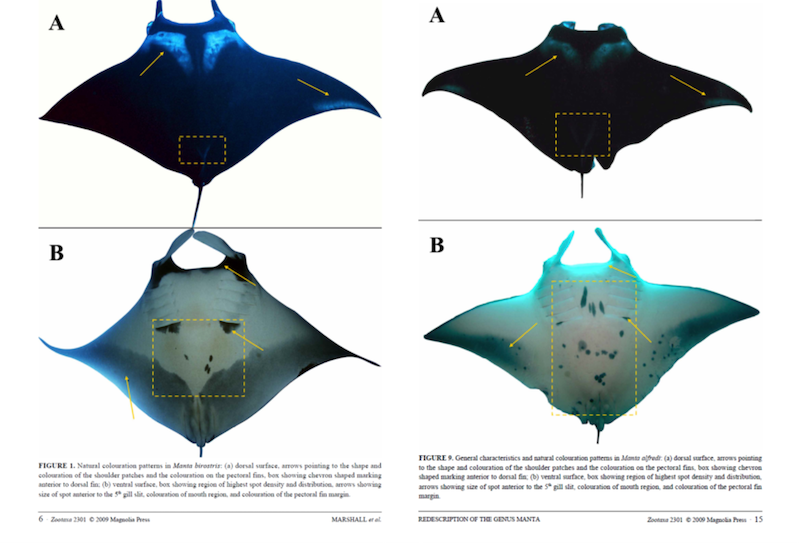
Giant oceanic manta vs reef manta: compare the dorsal and ventral patterns
Manta rays vs mobulas
Several smaller mobula ray species, including devil rays, can easily be mistaken for manta rays. Although they share the characteristic diamond-shaped body and forward-facing cephalic fins, there are some useful differences to look for.
The mouth is one of the easiest clues. Manta rays have a forward-facing mouth, while devil rays have a mouth that faces more downward. Devil rays also tend to have a more pointed body shape and a tail equipped with a spine, whereas manta rays do not have a tail spine.
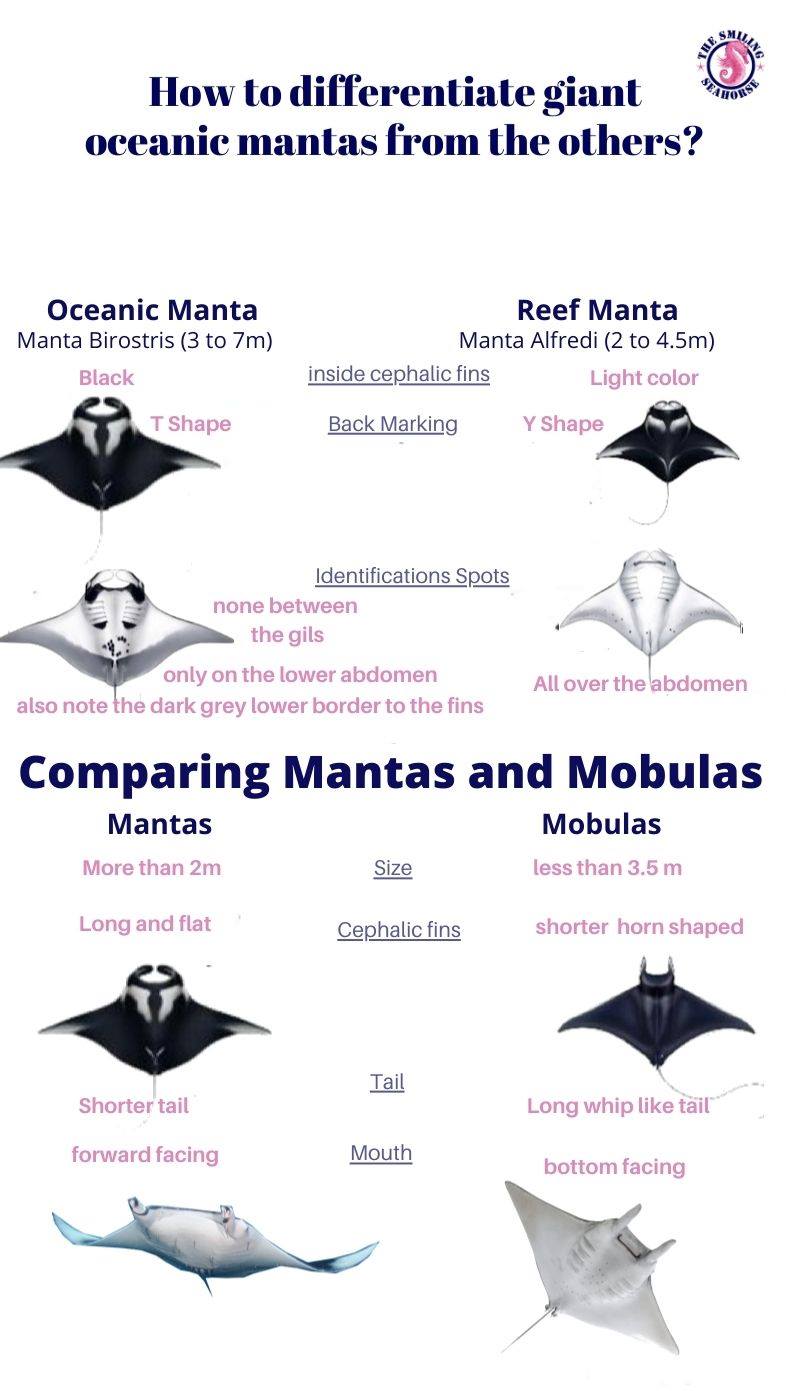
How to identify a giant oceanic manta ray: look at its size, mouth position and body pattern
Where do giant oceanic manta rays live?
Giant oceanic manta rays are found in tropical, subtropical and temperate waters around the world. They generally prefer warmer waters, although their distribution is not limited to the tropics.
Unlike reef mantas, which often spend considerable time around particular reefs and cleaning stations, giant oceanic mantas are more pelagic and can travel considerable distances through the open ocean.
Scientists have documented impressive movements by tagged manta rays. Some individuals have travelled hundreds of kilometres and have also been recorded at considerable depths, demonstrating just how much of the ocean these animals can explore.
Both reef mantas and giant oceanic mantas can migrate, but giant oceanic mantas are particularly associated with open-ocean environments and long-distance movements.
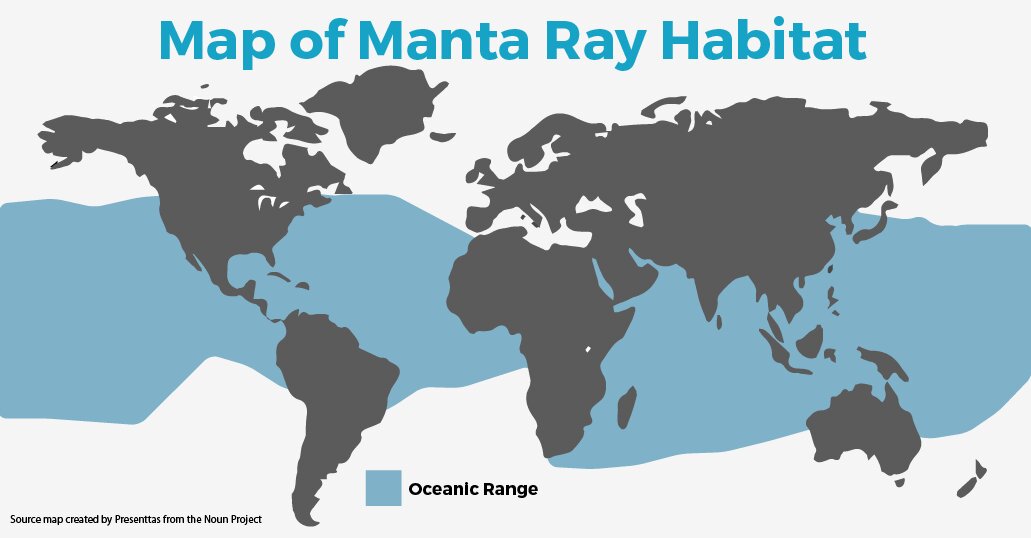
Where do giant oceanic manta rays live?
How big are the largest rays on the planet?
Giant oceanic manta rays are the largest rays in the world. Their enormous diamond-shaped bodies can reach around 7 metres in wingspan, although individuals vary considerably in size.
Reef manta rays are generally smaller, reaching around 5.5 metres, while many of the smaller mobula and devil ray species are considerably smaller still.
The largest giant manta ray reported in the original article was approximately 9 metres across and weighed more than 2 tonnes.
These enormous animals use their giant pectoral fins to propel themselves through the water and can move surprisingly quickly when necessary. Their size is even more impressive when you see one gliding silently above you underwater.
Manta rays are also considered highly intelligent animals. Their brains are exceptionally large compared with those of other fish, and manta rays have demonstrated complex behaviours that continue to interest researchers.
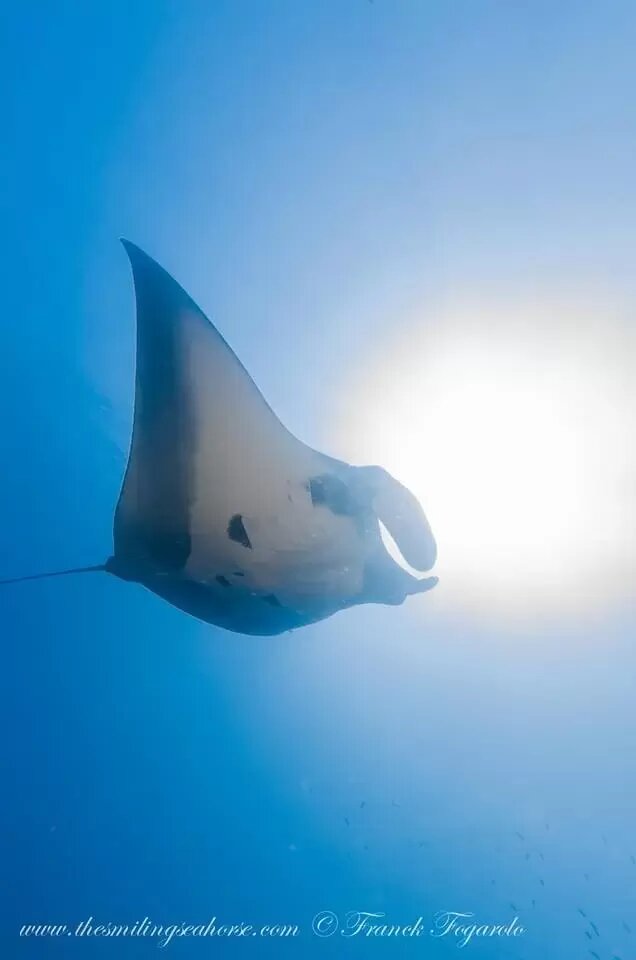
How big does a giant oceanic manta ray get?
What colours are giant oceanic manta rays?
Most giant oceanic manta rays have a dark grey, dark brown or almost black dorsal surface, with a contrasting white or pale underside. Individual patterns can vary considerably, which makes the markings useful for identifying individual manta rays.
Completely black individuals can also be found. These are known as melanistic manta rays and have unusually dark pigmentation.
One particularly famous example is a rare pink manta ray that has been observed in Australia. Its unusual colouration has been associated with a suspected genetic mutation.
What do Mobula birostris eat?
Giant oceanic manta rays are famous for their filter-feeding behaviour. They can be seen swimming with their enormous mouths open, using their gill structures to filter tiny organisms from the water.
They are particularly well known for feeding on zooplankton. In shallow waters, giant mantas can also use their cephalic fins like funnels, directing plankton and small organisms towards their mouths.
However, research has shown that their diet may be more complex than previously thought. A study published by the Royal Society found that giant oceanic mantas obtain a significant proportion of their nutrients from mesopelagic prey, including organisms associated with deeper waters.
This means that these spectacular animals are not simply shallow-water plankton feeders. Their movements between the surface and deeper parts of the ocean give them access to a much broader food supply.
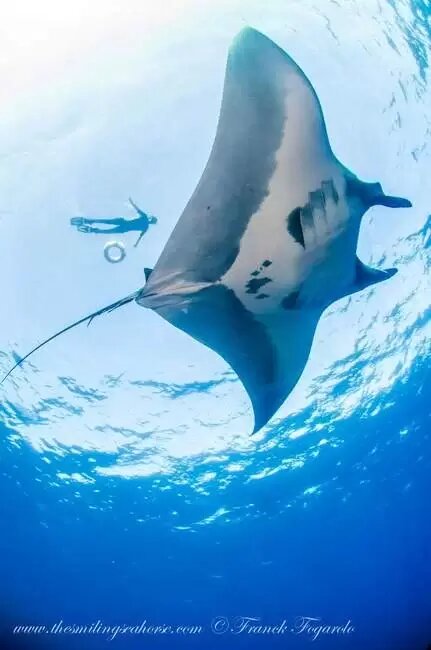
Giant oceanic manta ray feeding in the waters of Myanmar
Are giant oceanic manta rays endangered?
Giant oceanic manta rays are long-lived animals with a relatively slow reproductive rate, making populations particularly vulnerable to human pressures.
Manta rays can live for several decades. Females usually give birth to a single pup after a long gestation period, and there can be a considerable interval between pregnancies. This means populations cannot recover quickly when large numbers of animals are lost.
The International Union for Conservation of Nature (IUCN) lists the giant manta ray as Vulnerable. The species faces threats including targeted fishing, accidental capture and entanglement in fishing gear.
Their large size can make them particularly vulnerable to entanglement, while the demand for manta gill plates in some traditional medicine markets has historically contributed to targeted fishing.
Although manta rays are protected in a number of countries and through international conservation measures, they are highly mobile animals. They can travel through waters with different levels of protection and regulation, making international cooperation essential for their conservation.
Organisations such as the Manta Trust and the Marine Megafauna Foundation work with researchers and local communities around the world to better understand manta populations and protect these remarkable animals and their habitats.
Can manta rays jump out of the water?
Yes! Giant oceanic manta rays can jump completely out of the water.
This spectacular behaviour is known as breaching, and it remains one of the more mysterious behaviours displayed by giant oceanic manta rays. Scientists have proposed several possible explanations, including communication, mating behaviour and attempts to remove parasites, but the exact reason for individual breaches is not always known.
Seeing a giant manta breach is a rare and unforgettable experience. We have been lucky enough to photograph a Mobula birostris jumping at Black Rock in Myanmar.
Underwater, giant oceanic mantas are more commonly seen gliding through the blue, sometimes alone and sometimes in groups. They may also visit cleaning stations, hovering above reefs while cleaner fish remove parasites from their bodies.
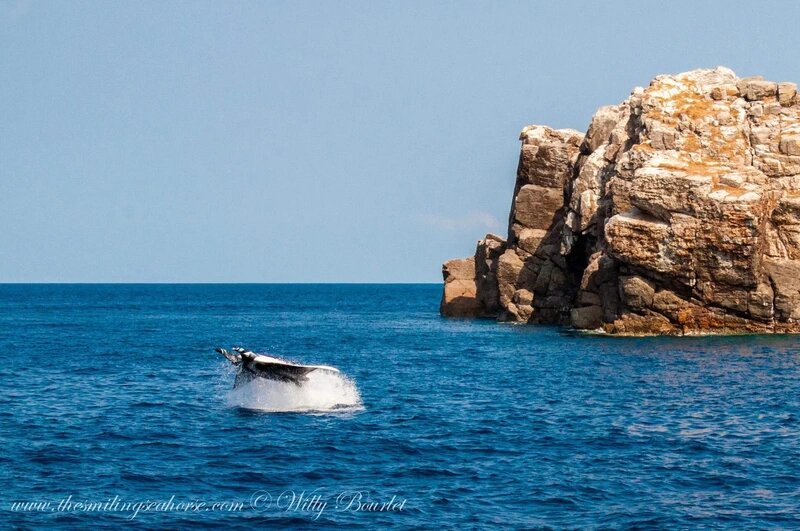
Giant oceanic manta ray breaching at Black Rock, Myanmar
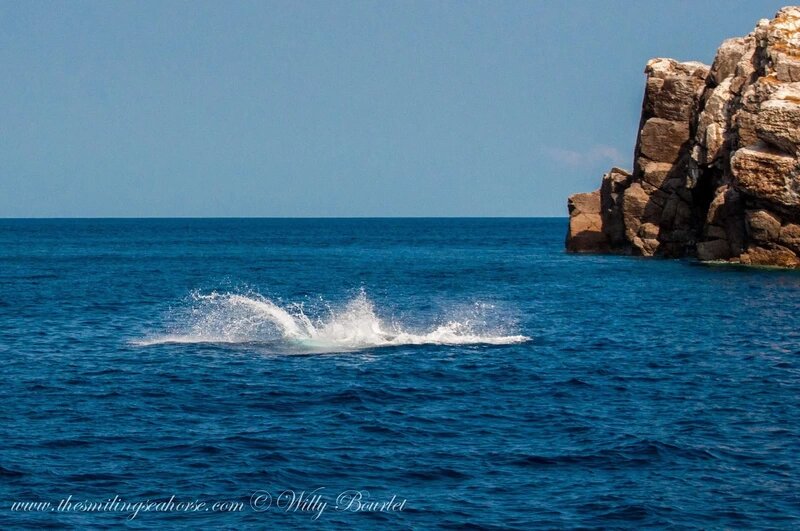
A giant oceanic manta ray returning to the water after its jump
How should you dive next to giant oceanic manta rays?
Divers love catching a glimpse of a giant oceanic manta gliding through the blue. The good news is that responsible behaviour not only helps protect these animals, but can also make encounters more enjoyable and longer-lasting.
Giant oceanic mantas are naturally curious creatures and may choose to remain around divers for surprisingly long periods. The key is to allow the manta to decide how close the interaction becomes.
How to have a responsible manta ray encounter
- Enter the water quietly. Avoid splashing excessively when entering the water and keep your fins below the surface.
- Let the manta see you. Approach from the side rather than suddenly appearing directly in front of or behind the animal.
- Keep your distance. Maintain at least 3 metres from the manta and allow it to approach you if it wants to get closer.
- Never chase a manta ray. If the animal swims away, let it go.
- Never touch the manta. These are wild animals and should always be observed without physical contact.
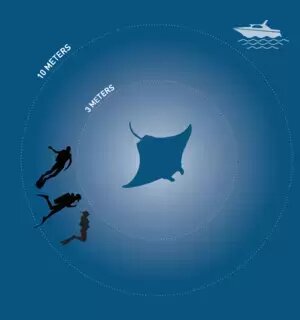
Keep a respectful distance when diving with giant oceanic manta rays
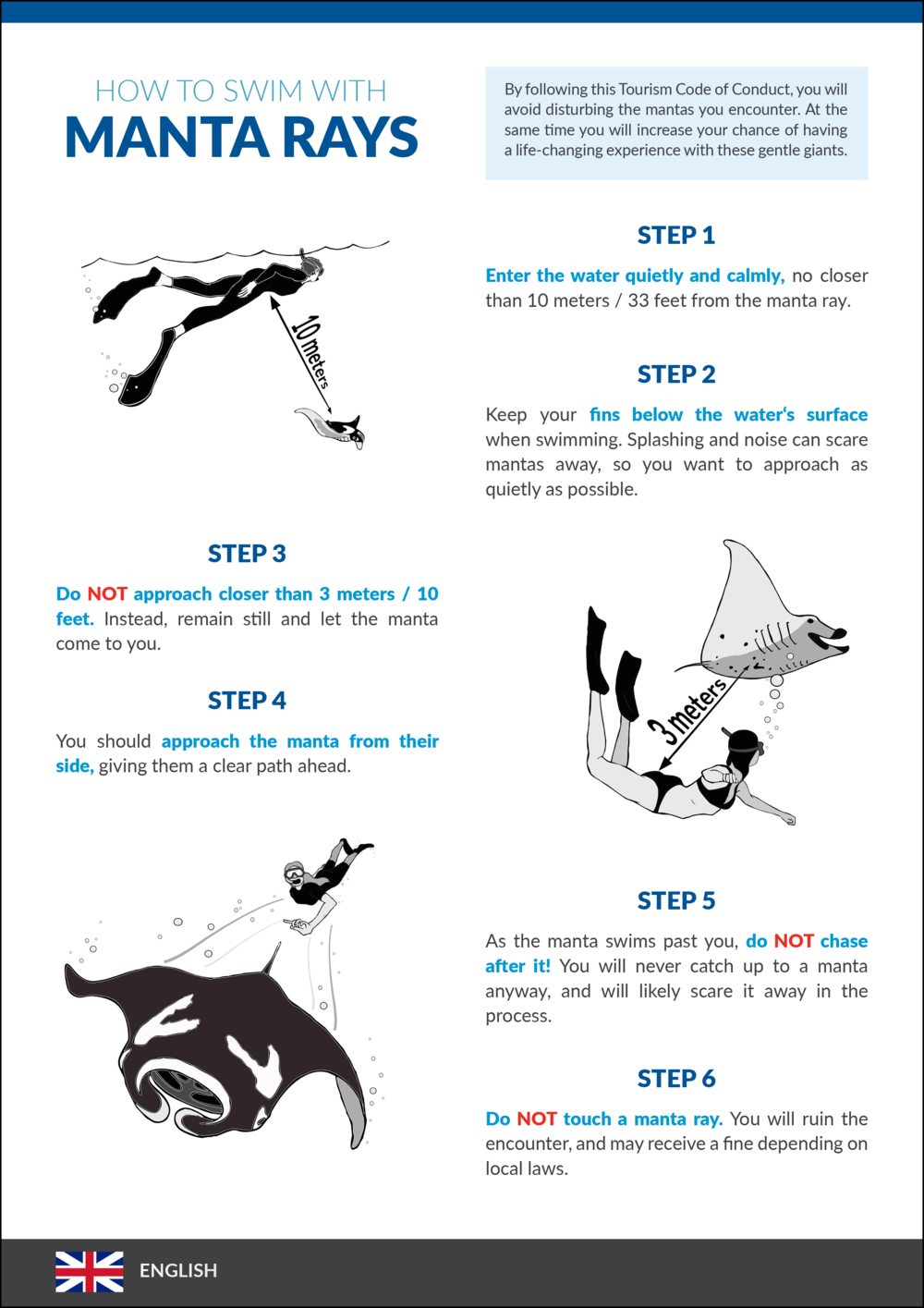
Responsible manta ray encounter guidelines
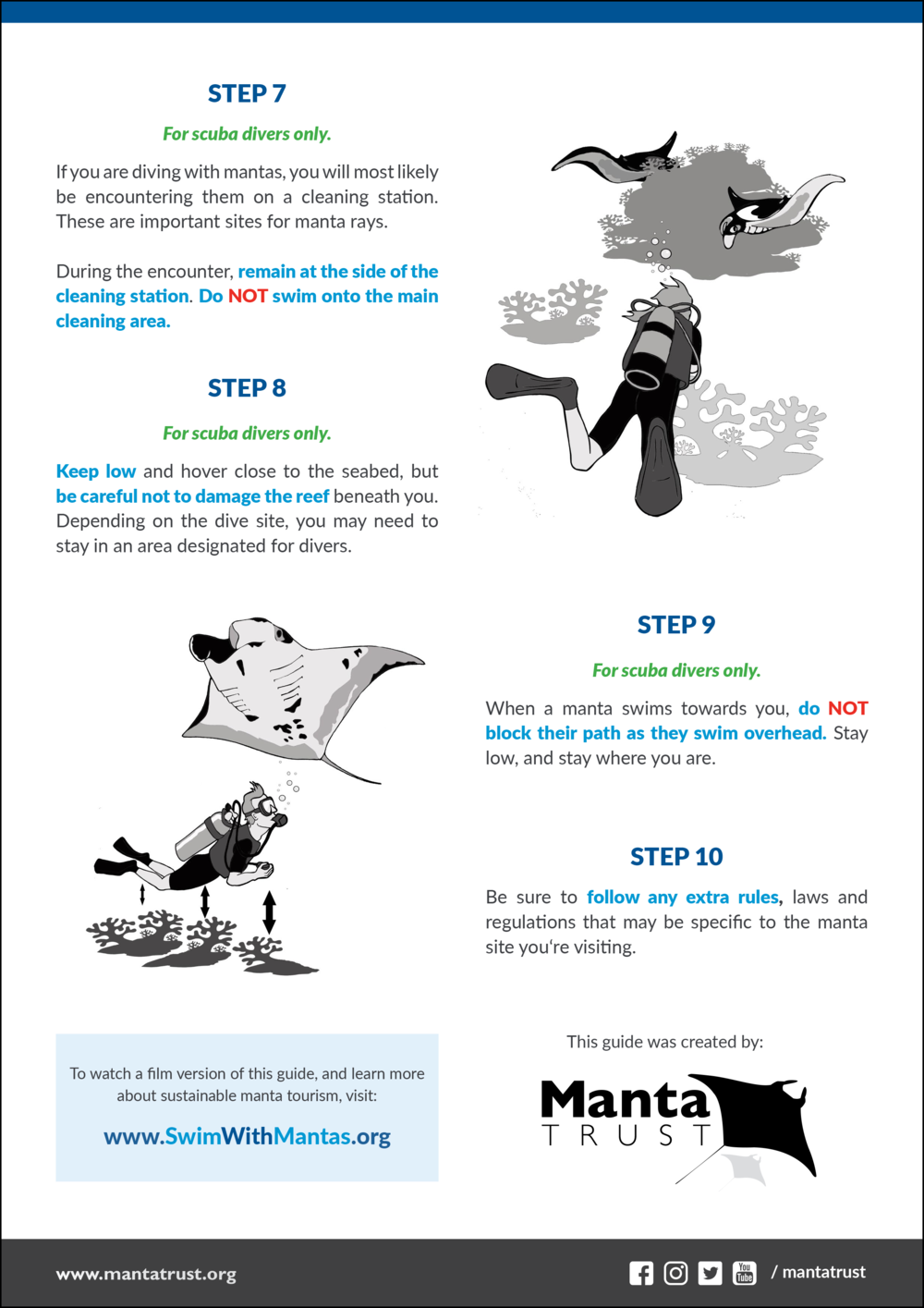
Responsible diving around manta rays
Giant Oceanic Manta Ray: Key Facts
- Common name: Giant oceanic manta ray
- Scientific name: Mobula birostris
- Family: Mobulidae
- Maximum wingspan: Around 7 metres, with larger historical reports
- Weight: Up to around 1,600 kg or more in very large individuals
- Lifespan: Several decades, with estimates reaching 40–50 years
- Diet: Mainly plankton and other small pelagic organisms, including deeper-water prey
- Conservation status: Vulnerable
Our photos of giant oceanic manta rays in Thailand and Myanmar
The manta ray is a favourite of guests and guides alike aboard the MV Smiling Seahorse. Over the years, we have been lucky enough to photograph these gorgeous gentle giants during encounters in Myanmar and Thailand.
Here are some of our favourite shots from encounters with Mobula birostris.
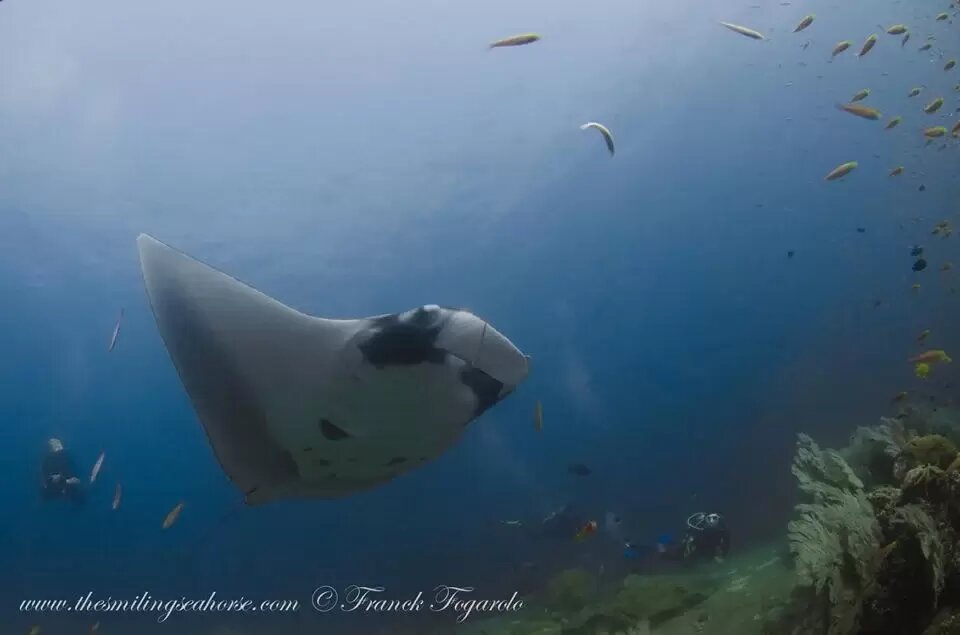
Giant oceanic manta ray at a cleaning station in Myanmar
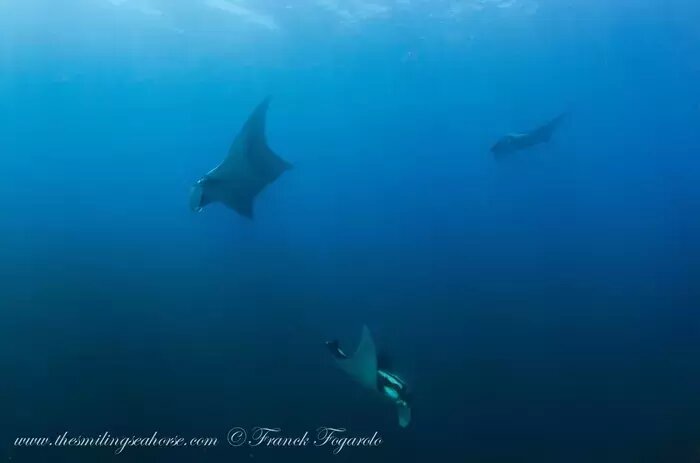
Three giant oceanic manta rays
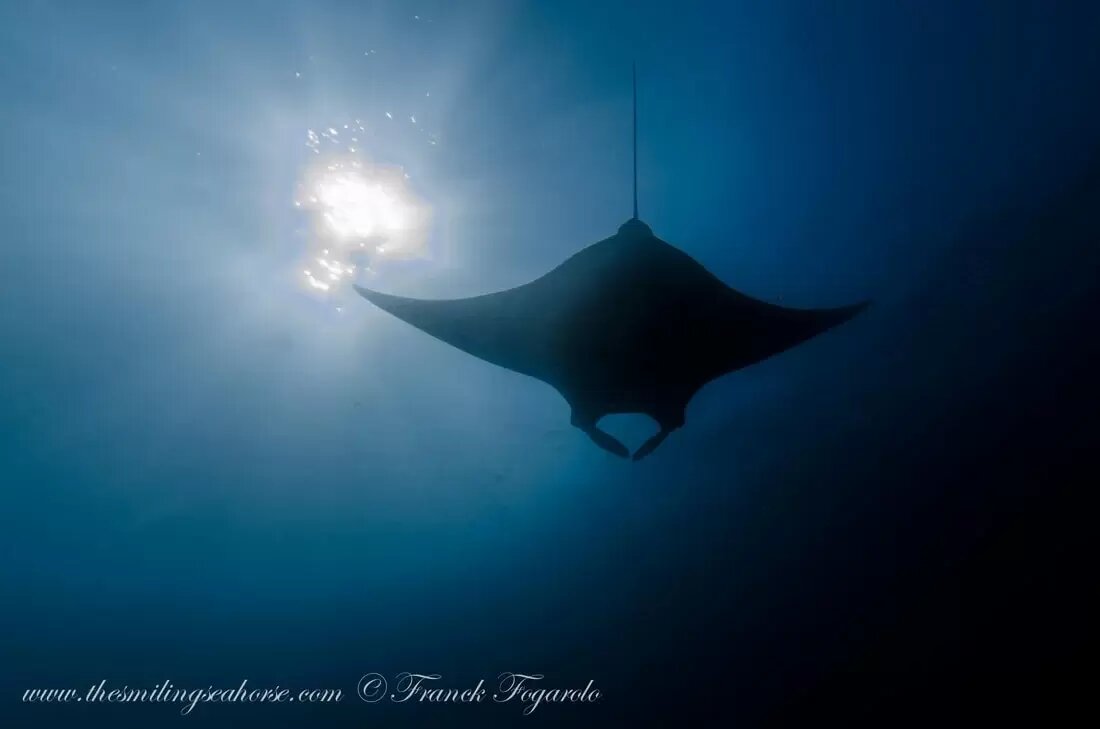
Giant manta ray in the sunlight
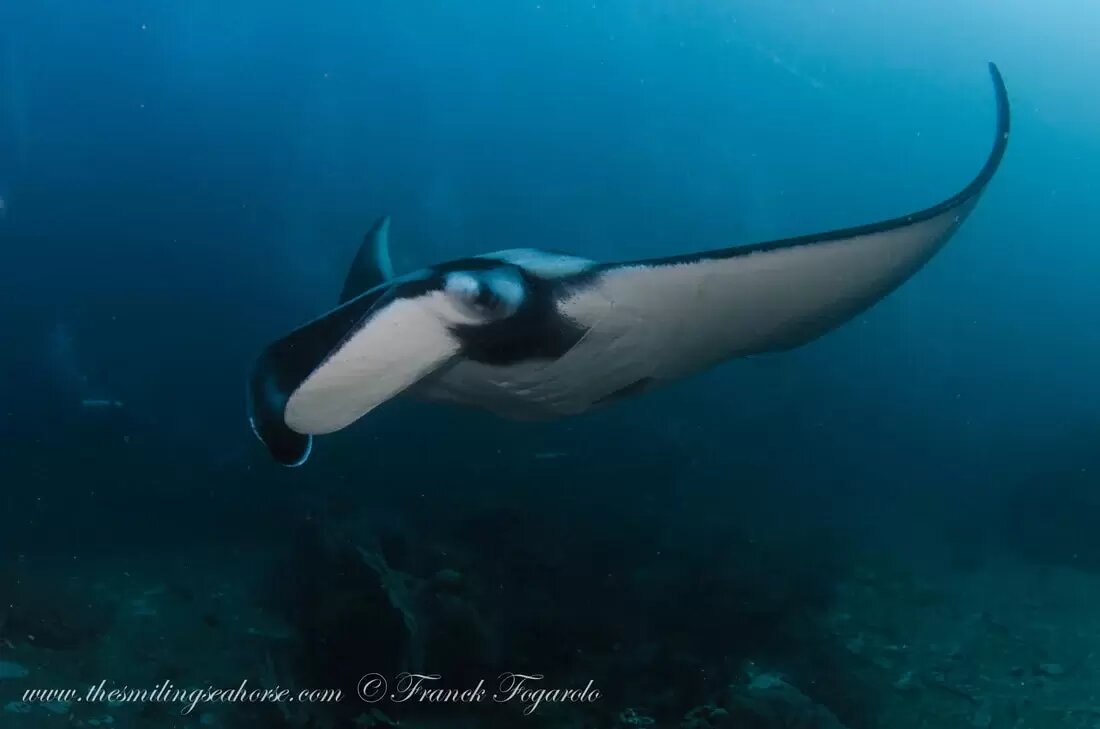
A giant oceanic manta looking at the photographer
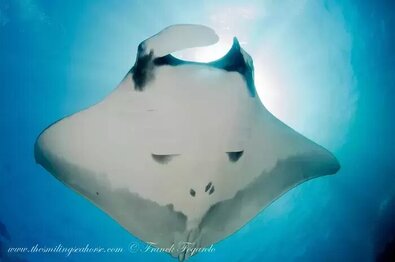
The underside of a giant oceanic manta ray
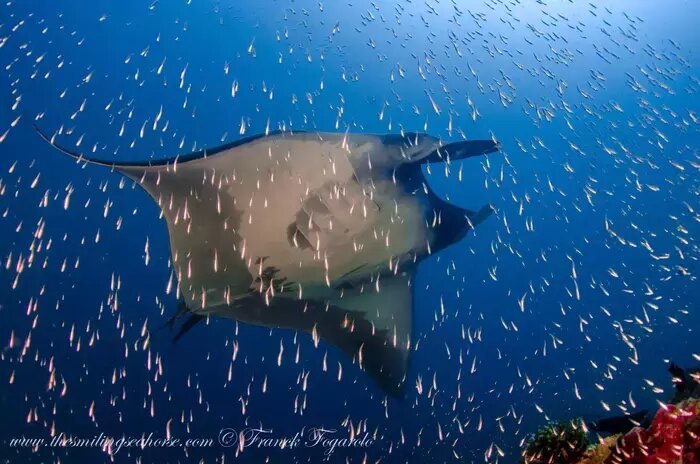
Giant manta ray surrounded by glassfish




