
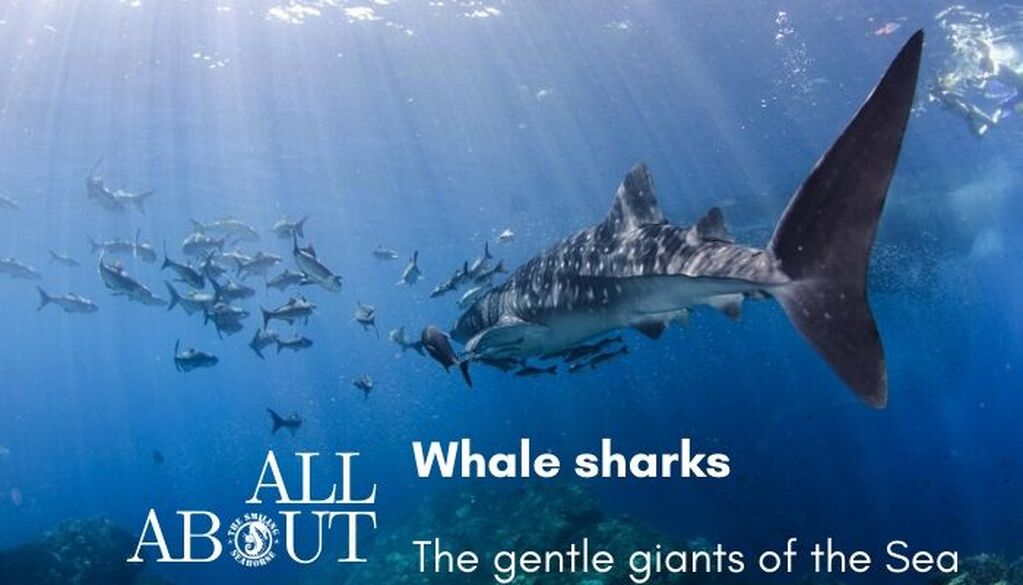
Whale Shark: Facts, Size, Diet, Reproduction and Where to Dive With Them
A favourite for many divers, the whale shark is one of the most extraordinary animals you can encounter underwater. Despite its name, this enormous animal is not a whale at all, but the largest living fish on Earth.
From its incredible size and unusual feeding habits to its mysterious reproduction and surprisingly tiny teeth, there is much more to the whale shark (Rhincodon typus) than meets the eye.
In this guide, we answer some of the most common questions about whale sharks, including how big they get, what they eat, where they live, how they reproduce, how long they can live and where divers can encounter them.
Whale Shark FAQ
- How big is a whale shark?
- Is the whale shark a fish or a whale?
- What do whale sharks eat?
- Do whale sharks have teeth?
- How long do whale sharks live?
- Are whale sharks endangered?
- How do whale sharks reproduce?
- Where do whale sharks live?
- Where are the best places to see whale sharks?
- Can you dive with whale sharks?
How big is a whale shark?
The whale shark (Rhincodon typus) is the largest living fish in the world. This is a cartilaginous fish, related to other sharks and rays, rather than a marine mammal.
Whale sharks can grow to enormous sizes. Historical reports include exceptionally large individuals approaching 20 metres in length, although such extreme measurements are uncommon and the maximum size of the species remains difficult to establish precisely.
Most whale sharks encountered by divers are considerably smaller, commonly measuring around 4 to 14 metres. Even a relatively small whale shark is an impressive sight when you are sharing the water with it!

Is the whale shark a fish or a whale?
Despite its name, the whale shark is definitely a fish.
Its name comes from its enormous size and its broad, whale-like feeding behaviour. Like other sharks, whale sharks are cartilaginous fish, meaning their skeleton is made primarily of cartilage rather than bone.
They are also very different from whales in the way they breathe. Whale sharks breathe through gills, while whales are mammals that must come to the surface to breathe air.
So, despite looking somewhat like a whale from a distance, the whale shark is actually a giant shark that belongs to its own family, Rhincodontidae.
What do whale sharks eat?
One of the most fascinating things about whale sharks is that the largest fish in the world feeds on some of the smallest organisms in the ocean.
Whale sharks are filter feeders. Their diet includes plankton, small crustaceans, fish eggs, small fish and other tiny organisms that they filter from the water.
They can feed by swimming slowly through the water with their enormous mouths open, allowing water to pass through their filtering structures while food particles are retained.
They can also actively feed on concentrated food sources, sometimes gathering in large numbers where plankton or fish spawn are abundant.
Have you ever found it fascinating that some of the largest animals in the ocean have a diet based largely on microscopic or very small prey?
Do whale sharks have teeth?
Yes! Whale sharks have teeth.
At first glance, a whale shark appears completely toothless because its mouth is so enormous and its feeding strategy does not rely on biting large prey.
In reality, whale sharks have a remarkable number of tiny teeth arranged in many rows. These teeth are extremely small and are not used to tear apart prey like the teeth of predatory sharks.

How long do whale sharks live?
The exact lifespan of whale sharks is still uncertain because these enormous and highly migratory animals are difficult to study throughout their entire lives.
Various scientific estimates have suggested that whale sharks may live for many decades and potentially more than 100 years. Their slow growth, late maturity and long generation time are important factors when considering the conservation of the species.
Their potential long lifespan makes conservation efforts critical. Scientists are still working to understand the exact age and longevity of whale sharks in the wild.
Are whale sharks endangered?
Yes. Whale sharks face significant conservation threats.
The whale shark is listed as Endangered on the IUCN Red List. CITES has also listed the species in Appendix II since 2002, regulating international trade in whale shark specimens and their products.
The species is particularly vulnerable because whale sharks grow slowly, mature relatively late and reproduce at a low rate compared with many other fish.
Historically, whale sharks have been targeted by fisheries for their meat, fins, liver oil and other products. They can also be affected by accidental capture, entanglement, vessel strikes and other human activities.
Their enormous size does not make them immune to these threats. In fact, their long lifespan and slow reproduction mean that populations can take a long time to recover after significant losses.
Protecting whale sharks therefore requires international cooperation, responsible fisheries management and better understanding of their migrations and important feeding and aggregation areas.
How do whale sharks reproduce?
Whale shark reproduction remains one of the most fascinating and least understood aspects of their biology.
Sharks and rays have several different reproductive strategies. Some species lay eggs, while others give birth to live young. Whale sharks are ovoviviparous: embryos develop inside eggs retained within the mother’s body, and the young emerge from the eggs before being born.
One of the most extraordinary discoveries came from a pregnant female caught near Taiwan in 1995. Researchers found approximately 300 embryos at different stages of development, providing important evidence about the reproductive strategy of the species.
Despite this remarkable discovery, many questions remain unanswered. Scientists still know very little about where whale sharks give birth, where very young individuals spend their first years and why sightings of very small whale sharks are comparatively rare.
Whale shark pups are thought to be born at around 40–60 cm, yet individuals below about 3 metres are rarely encountered in the wild.
One remarkable exception occurred in the Philippines in 2009, when fishermen found a whale shark measuring only around 38 cm.

Want to discover more about the mysterious early life of these giants? Read our article dedicated to baby whale sharks.

Where do whale sharks live?
Whale sharks are pelagic animals found in warm tropical and temperate waters around the world. Their range extends across the Atlantic, Pacific and Indian Oceans.
They are highly migratory and can travel enormous distances between feeding and aggregation areas.
Some locations are famous for seasonal whale shark aggregations, where large numbers of animals gather to take advantage of temporary concentrations of food. Other locations may have whale sharks present throughout much of the year, although encounters are naturally unpredictable.
This is one reason whale shark diving is so exciting: even in places where they are regularly seen, there can never be a genuine guarantee that a wild animal will appear on a particular dive.
Where are the best places to see whale sharks?
Whale sharks can be encountered in many parts of the world’s tropical and warm-temperate oceans. Some destinations have become famous for seasonal aggregations where sightings can be particularly frequent.
Mexico and the Philippines, for example, are well known for seasonal whale shark encounters. In the Andaman Sea, whale sharks can also be encountered around some of Thailand’s and Myanmar’s best dive sites.
At Richelieu Rock in Thailand, whale sharks are one of the spectacular pelagic encounters divers hope to experience. They can also be encountered in the waters of Myanmar, including remote sites in the Mergui Archipelago.
Unlike a captive-animal encounter, however, wild whale shark sightings can never be guaranteed. Marine conditions, food availability, season and the movements of individual sharks all influence whether you encounter one.

Can you dive with whale sharks?
Absolutely! One of the most unforgettable experiences for a scuba diver is sharing the water with a wild whale shark.
These enormous animals can appear surprisingly calm and graceful underwater. Their slow, powerful movements make it possible for divers to observe them without needing to chase them.
The most important thing is to remember that whale sharks are wild animals. Responsible divers should maintain an appropriate distance, avoid touching or blocking the animal and allow the whale shark to choose the direction and pace of the encounter.
For underwater photographers, whale sharks can also provide extraordinary photographic opportunities. Their enormous size, distinctive patterns and calm movements make them one of the most rewarding large-animal subjects in the Andaman Sea.
Our whale shark encounters in the Andaman Sea
Just because we love whale sharks, here are a few pictures we have taken in the Andaman Sea of these magnificent animals and some of the divers lucky enough to meet them.


Latest whale shark discoveries
Whale sharks continue to surprise scientists. One particularly fascinating discovery concerns their eyes.
Unlike many sharks, whale sharks have relatively exposed eyes on the sides of their heads. Researchers have discovered two remarkable protective adaptations: the eyes can be partially retracted into the eye sockets, and the surface of the eyeball is covered with tiny tooth-like structures called denticles.
These unusual adaptations provide additional protection for an animal whose enormous eyes are exposed to the surrounding environment as it swims through the ocean.


Whale Shark Key Facts
- Common name: Whale shark
- Scientific name: Rhincodon typus
- Family: Rhincodontidae
- Type: Cartilaginous fish
- Maximum size: Exceptional historical reports approach 20 metres, although such measurements are uncommon
- Typical diet: Plankton, small fish, crustaceans, fish eggs and other small organisms
- Feeding method: Filter feeding
- Reproduction: Ovoviviparous
- Conservation status: Endangered on the IUCN Red List
- CITES: Listed in Appendix II since 2002
Meet the largest fish in the world
There is something particularly special about encountering a whale shark underwater. It may be one of the biggest animals you will ever see while diving, yet its slow movements and filter-feeding lifestyle make it remarkably peaceful to observe.
Whether you are a passionate underwater photographer, a marine-life enthusiast or simply a diver hoping to experience one of the ocean’s true giants, meeting a whale shark in the wild is an encounter you are unlikely to forget.
Join us on a liveaboard cruise in the Andaman Sea and discover some of Thailand and Myanmar’s most spectacular dive sites, where whale sharks, manta rays, sharks and countless other marine species can sometimes make an appearance.
Explore more marine life and diving in the Andaman Sea
- Discover our complete giant oceanic manta ray guide and learn how to identify Mobula birostris.
- Meet the sharks of the Andaman Sea and discover which species you may encounter underwater.
- Explore the rays of the Andaman Sea, from manta rays to stingrays and other fascinating species.
- Discover Richelieu Rock, one of Thailand’s most famous sites for pelagic encounters and whale shark sightings.
- Explore Myanmar diving and the remote waters of the Mergui Archipelago.
- Discover the marine life of Thailand and the Andaman Sea and start planning your next underwater adventure.
.




