All About the Sexy Shrimp: The Tiny Dancer of the Reef
When it comes to eye-catching critters on the reef, few can compete with the Sexy Shrimp — scientifically known as Thor amboinensis. These pint-sized crustaceans may be small, typically reaching around 1.5–2 cm, but they have plenty of personality and some unmistakable moves that have earned them their cheeky common name.
If you have been diving with us in the Andaman Sea, chances are you have spent plenty of time looking closely at anemones, corals and reef rubble in search of tiny marine treasures like this one. There is much more to the Sexy Shrimp than its famous wiggle, and its unusual behaviour, relationship with cnidarian hosts and reproductive strategy make it one of the most fascinating little residents of the reef.
You can discover many more of the unusual animals we encounter underwater in our marine life guide to Thailand and the Andaman Sea.
💃 Why Are They Called “Sexy” Shrimp?
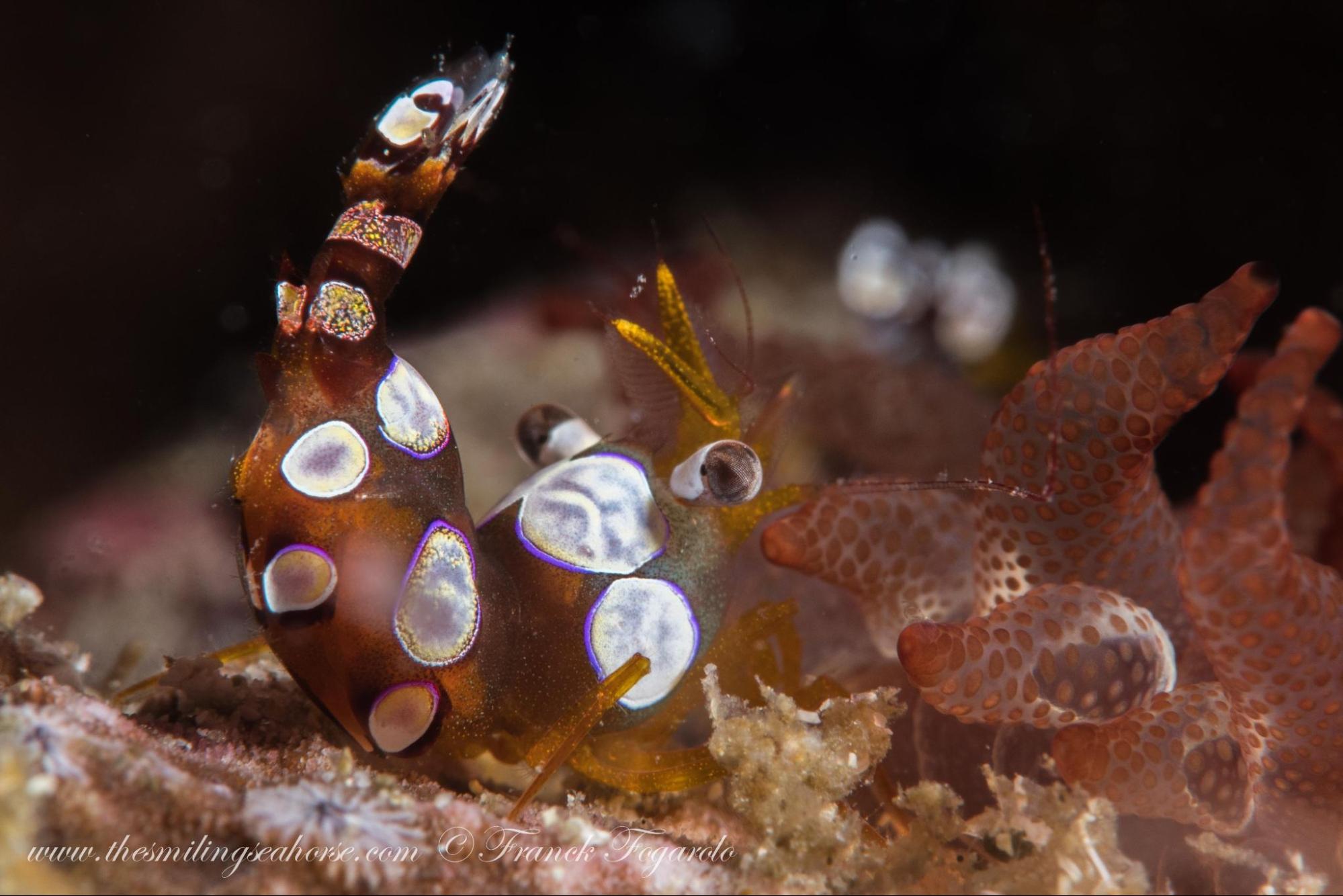
The name might sound like a gimmick, but it is actually quite descriptive.
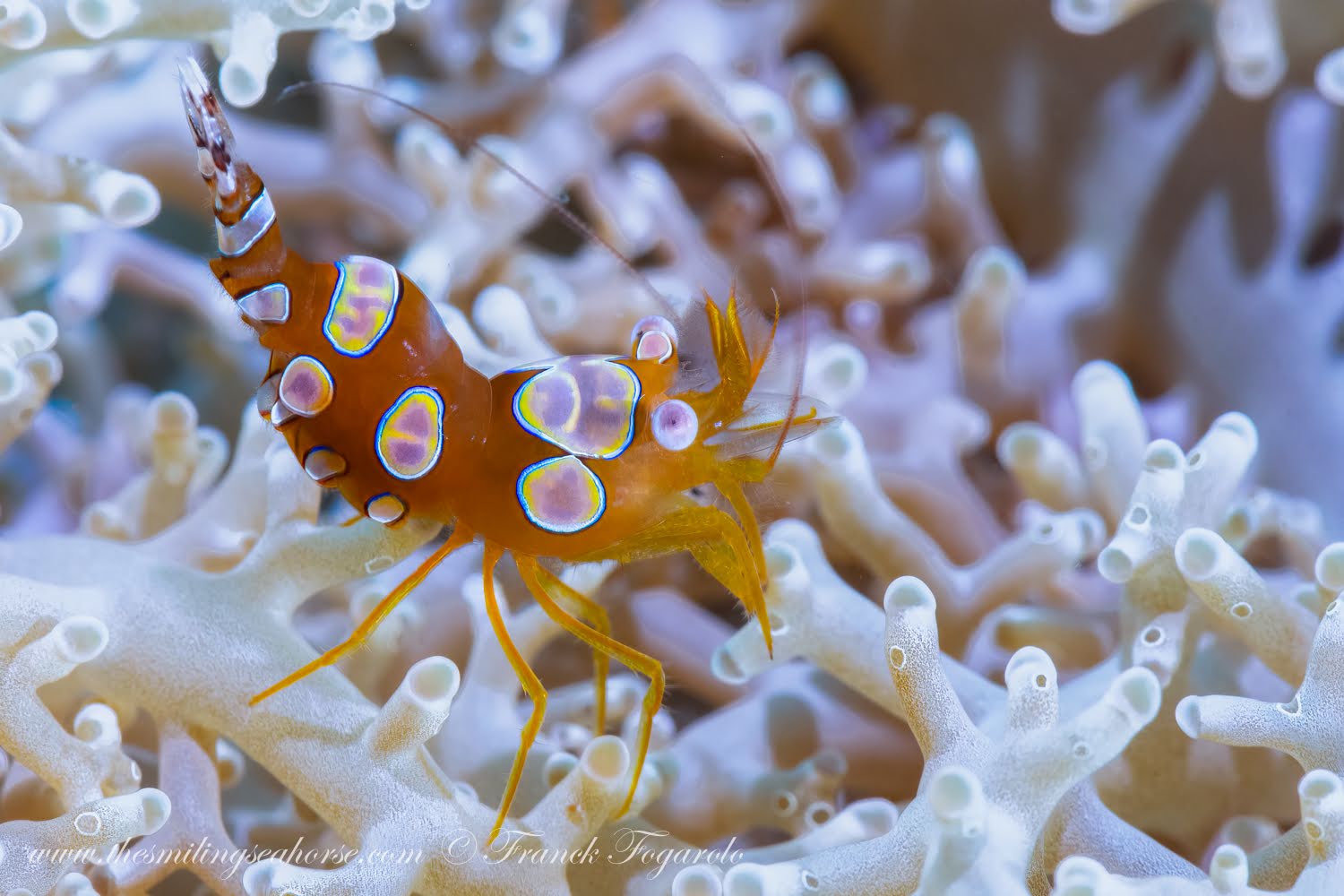
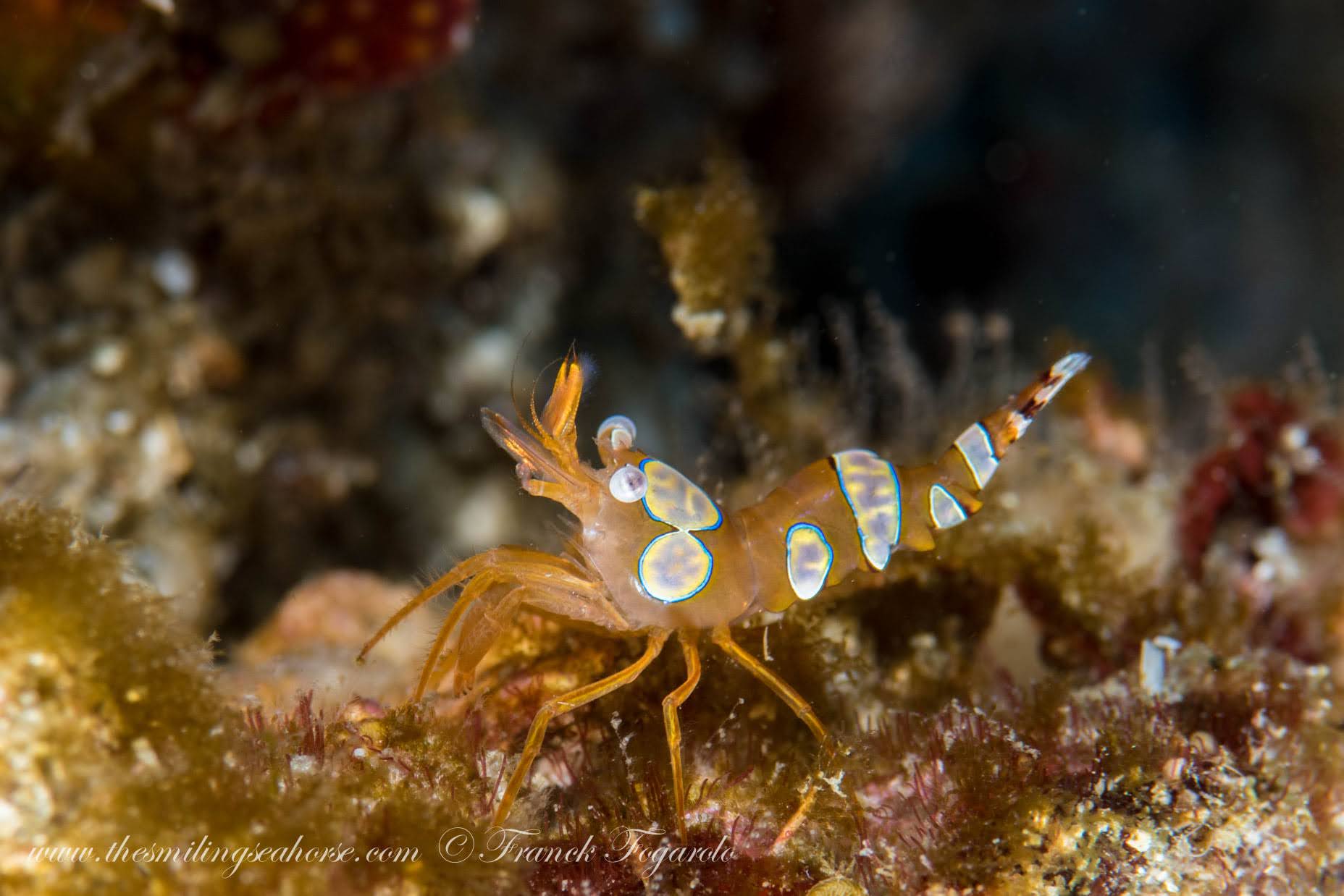
Sexy Shrimp are famous for their exaggerated rear-end-wiggling behaviour. As they move, they hold their curled abdomen high above the body and sway it from side to side, making them look as though they are performing on a miniature underwater dance floor.
This constant movement is one of their most recognisable features. It may play a role in communication and interactions between individuals, but for divers it also makes these tiny shrimp remarkably entertaining to watch.
With their animated movements and striking colour pattern, they have understandably become favourites among divers and underwater photographers. They really are the tiny cabaret performers of the reef.
🤝 Sexy Shrimp and Their Anemone Hosts
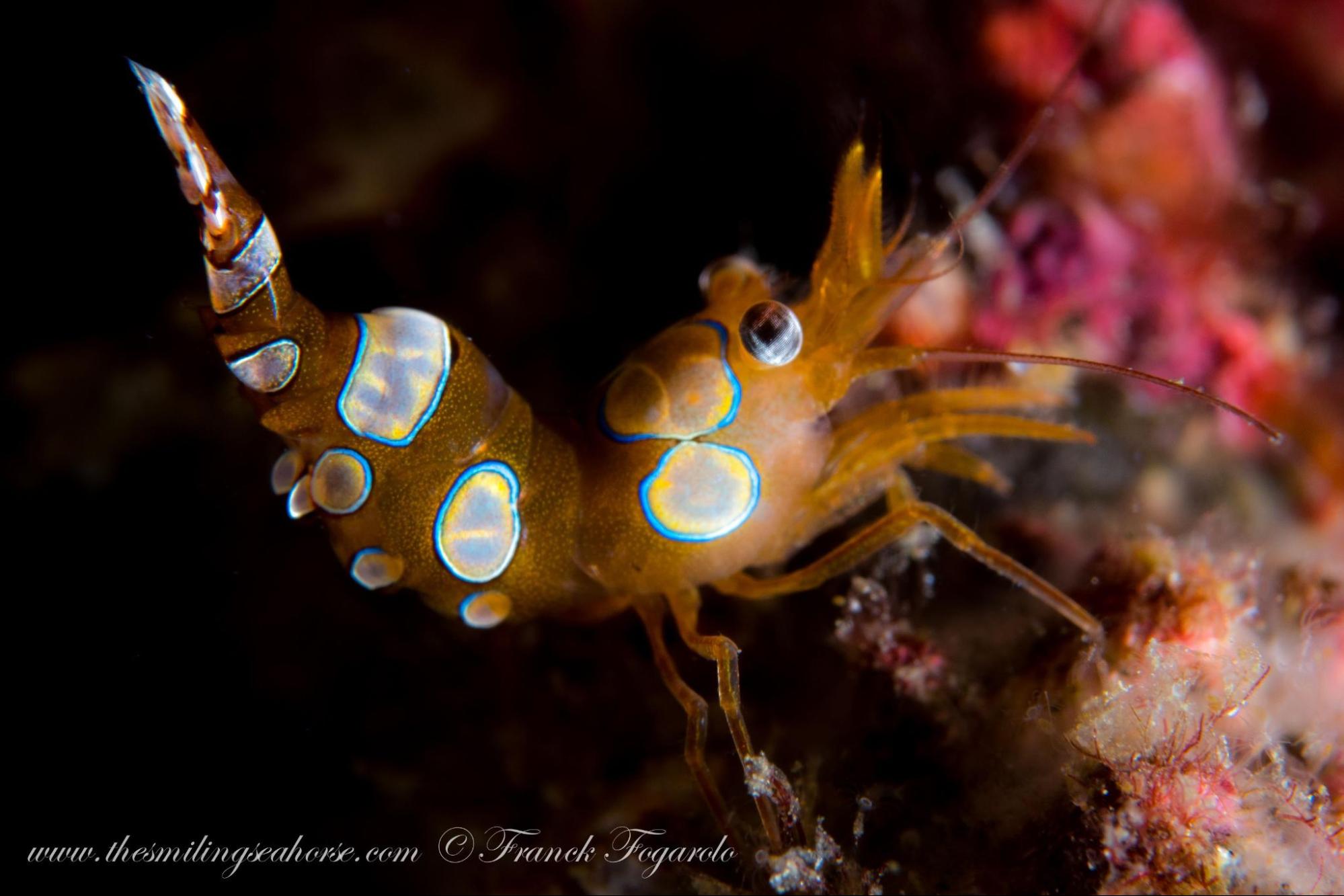
One of the most fascinating aspects of Thor amboinensis is its close association with sea anemones and other cnidarian hosts.
These tiny crustaceans can form groups among stinging invertebrates, where the surrounding tentacles provide shelter and access to food. Unlike animals that depend permanently on one particular host, Sexy Shrimp can associate with several different types of cnidarian.
The exact nature of this relationship is complex. The shrimp clearly benefit from the shelter provided by their hosts, while their feeding activity may also remove small particles and organisms from the area around the host. Under other circumstances, particularly when alternative food is scarce, Sexy Shrimp may feed directly on material produced by the host itself.
Rather than fitting neatly into a single category, the relationship can therefore vary depending on the host, available food and environmental conditions.
🪸 Common Hosts of Sexy Shrimp
Sexy Shrimp can associate with several types of anemones and other soft-bodied cnidarians. Some of the hosts mentioned in observations of these shrimp include:
- Branching anemones (Actinodendron glomeratum) — complex tentacles can provide plenty of sheltered space for small shrimp.
- Rock flower anemones (Phymanthus spp.) — their broad oral discs and radiating tentacles create numerous places for tiny shrimp to hide.
- Bubble coral (Plerogyra sinuosa) — not an anemone, but its inflated vesicles can provide useful shelter for small commensal animals.
- Tube-dwelling anemones (Ceriantharia) — solitary cnidarians that live in soft sediments within tubes they construct themselves.
🛡️ A Safe Haven
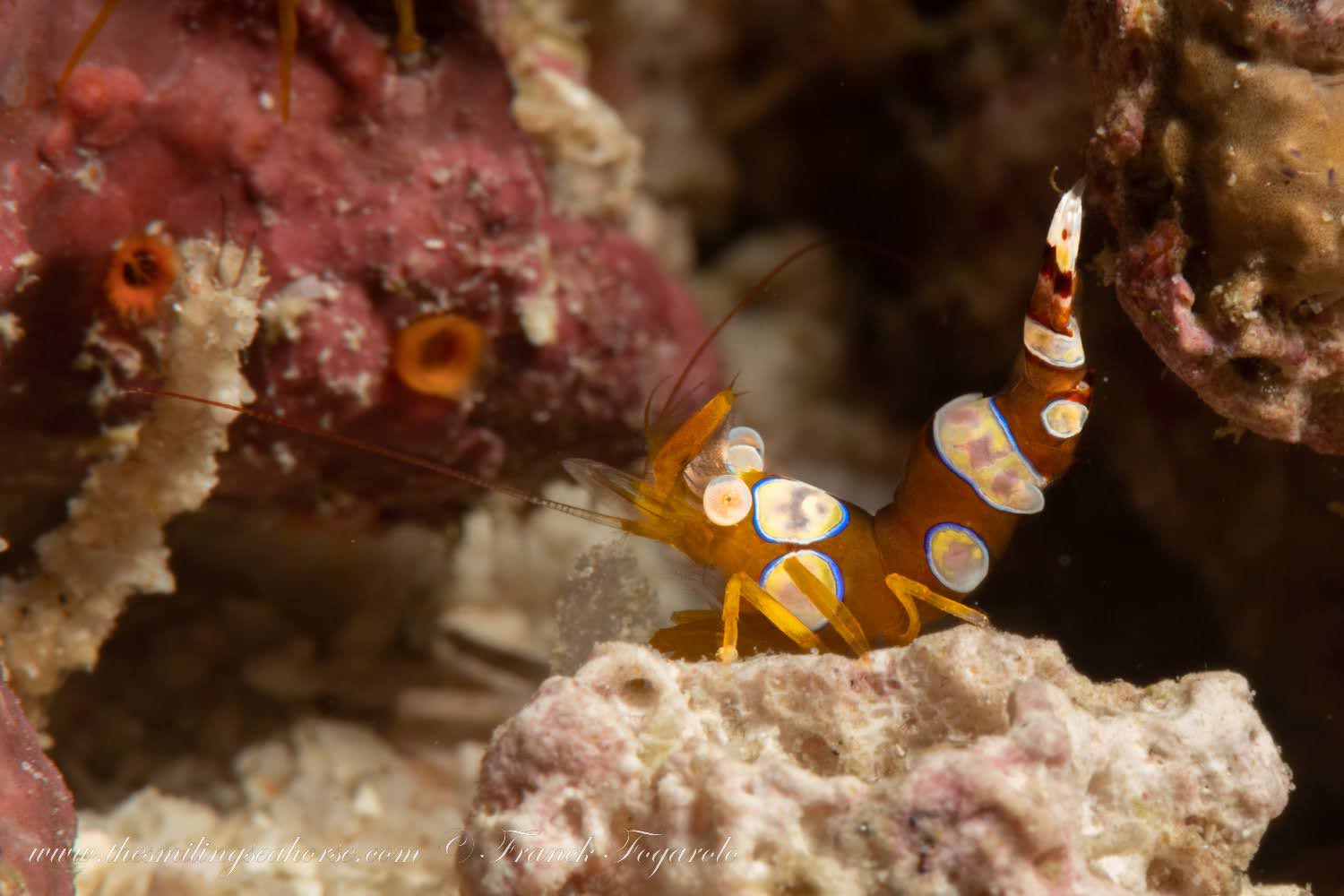
Living among stinging tentacles offers these tiny shrimp a valuable refuge from many potential predators. Their extremely small size allows them to move through spaces that larger reef animals cannot easily reach.
The result is an excellent combination of shelter, access to food and a relatively protected place in which to feed and reproduce.
🍽️ An Opportunistic Diner
Sexy Shrimp are opportunistic feeders. Their diet can include detritus, algae, plankton and small pieces of organic material found around their hosts.
They may also consume food particles and small organisms trapped around the host. When other food is limited, they can feed directly on material produced by the host itself.
Their flexible feeding strategy is one of the reasons these tiny animals can exploit such a specialised reef habitat.
🧍♂️ Not Alone in the Tentacles
Sexy Shrimp are often not the only animals making use of an anemone or coral colony. Depending on the host, divers may also encounter other small reef inhabitants such as:
- Porcelain crabs
- Anemone shrimp such as Periclimenes species
- Occasional juvenile fish and other small commensal animals
A single host can therefore become a miniature reef metropolis, with several species occupying different areas around the same animal.
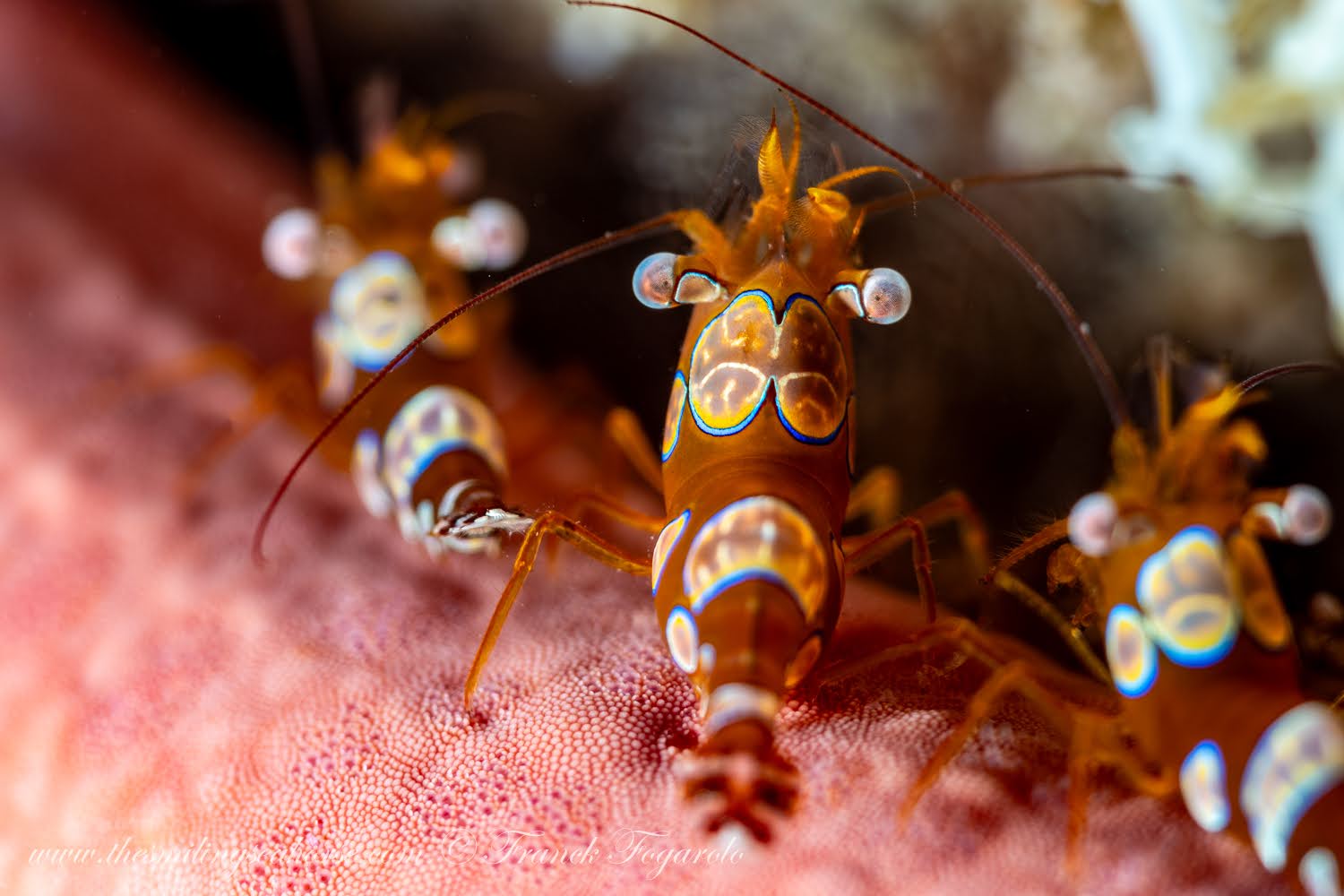
🧬 A Closer Look: Sexy Shrimp Facts
- Scientific name: Thor amboinensis
- Common name: Sexy Shrimp
- Typical size: approximately 1.5–2 cm
- Behaviour: small, active shrimp often found in groups around suitable hosts
- Diet: detritus, algae, plankton and other small organic food items
- Hosts: several species of anemones and other cnidarians, including some corals
- Distribution: tropical Indo-Pacific, including the waters of Thailand and Myanmar
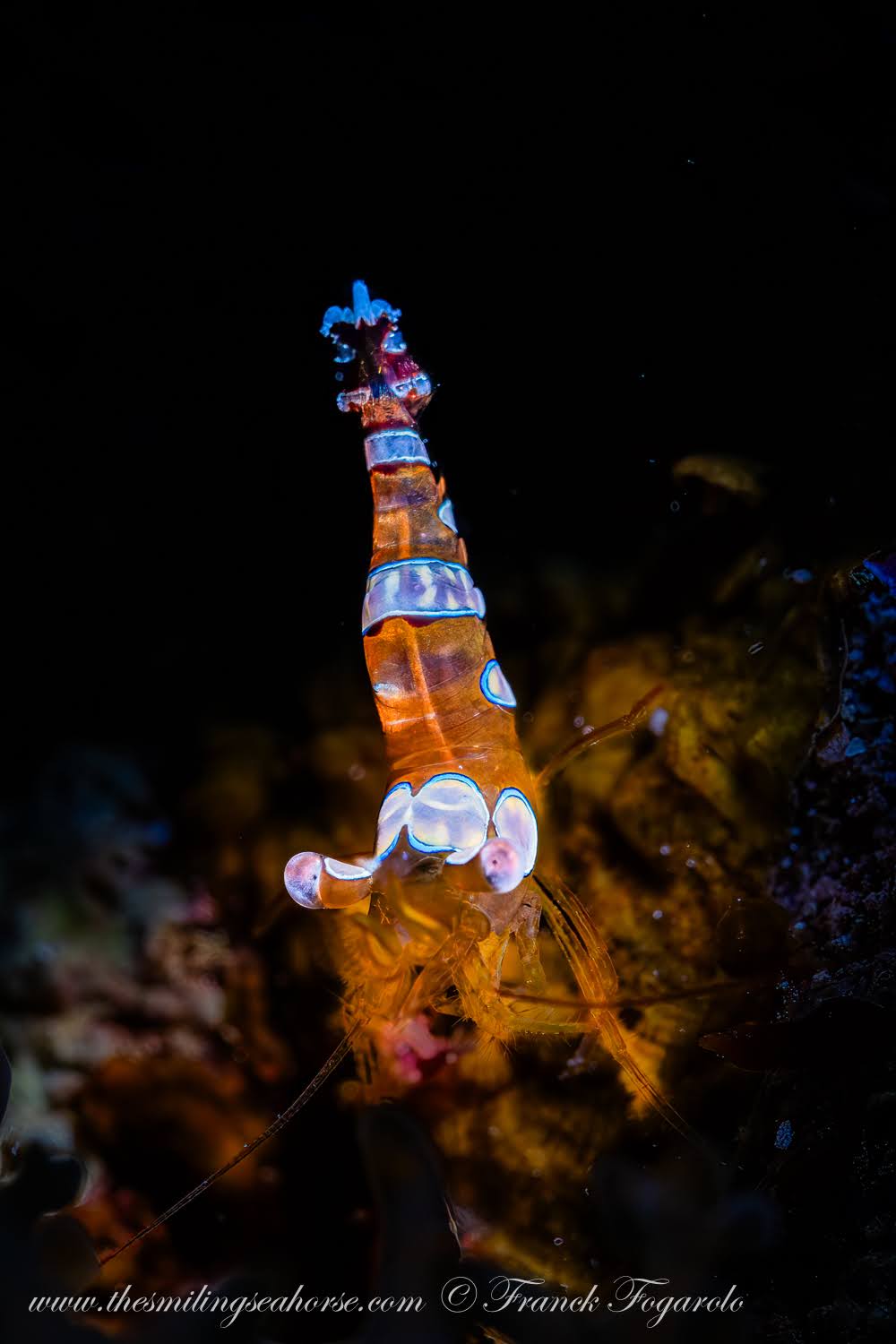
📸 A Macro Photographer’s Dream
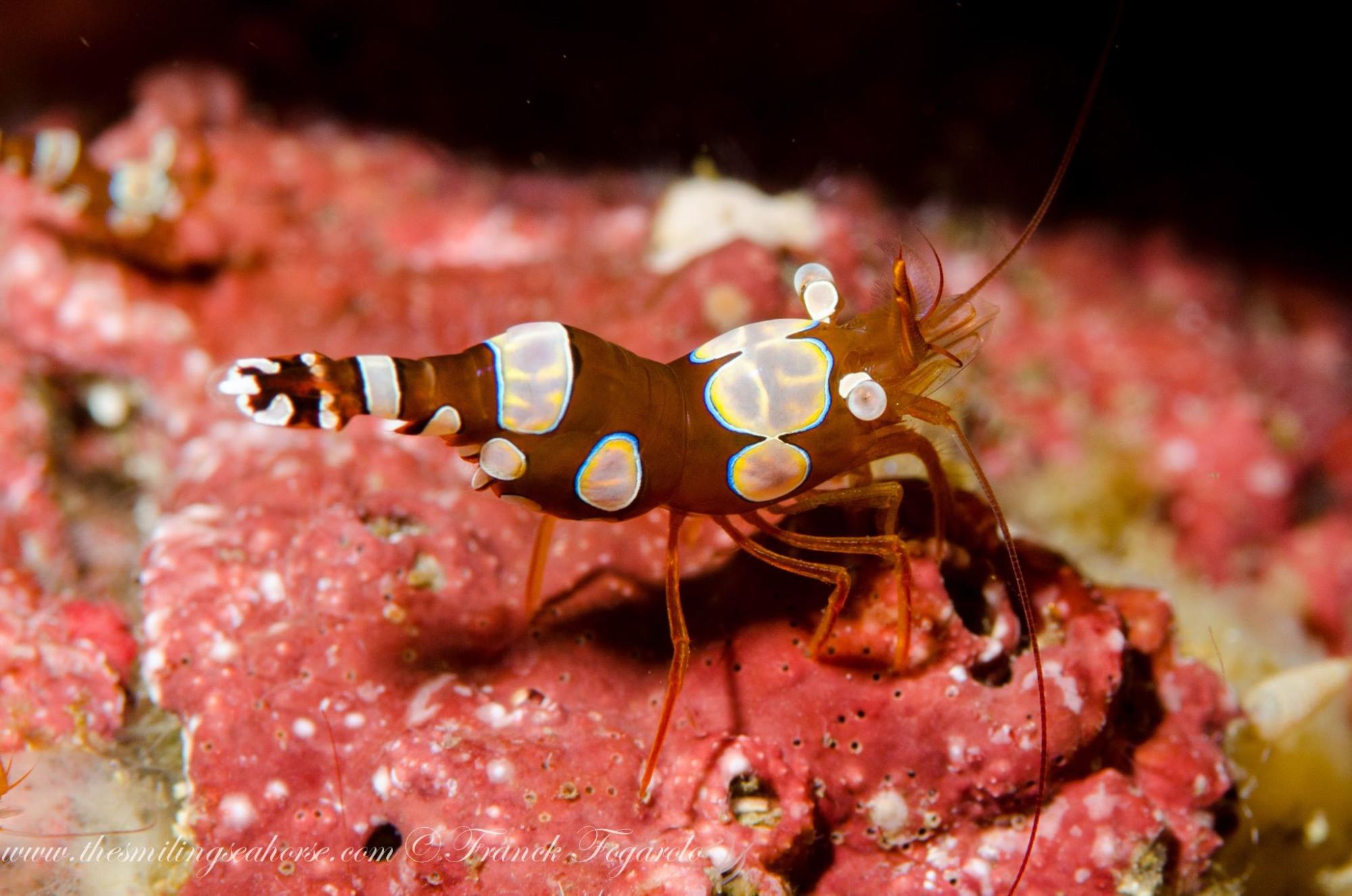
With their translucent bodies, bold white spots and orange-brown patterns, Sexy Shrimp are wonderful subjects for macro photography.
The challenge is their size and constant movement. A shrimp that appears reasonably easy to follow with the naked eye can become surprisingly energetic once you are trying to frame it through a macro lens.
Photography tip: approach slowly, maintain good buoyancy and avoid touching or disturbing the host. Watch anemones, bubble coral and other suitable hiding places carefully, then look for the characteristic tail wiggle. Once you recognise the movement, these tiny shrimp can become much easier to spot.
For more advice on photographing small marine life without damaging the reef, see our underwater photographer’s guide to Thailand.
🧬 Social Life, Behaviour and Reproduction
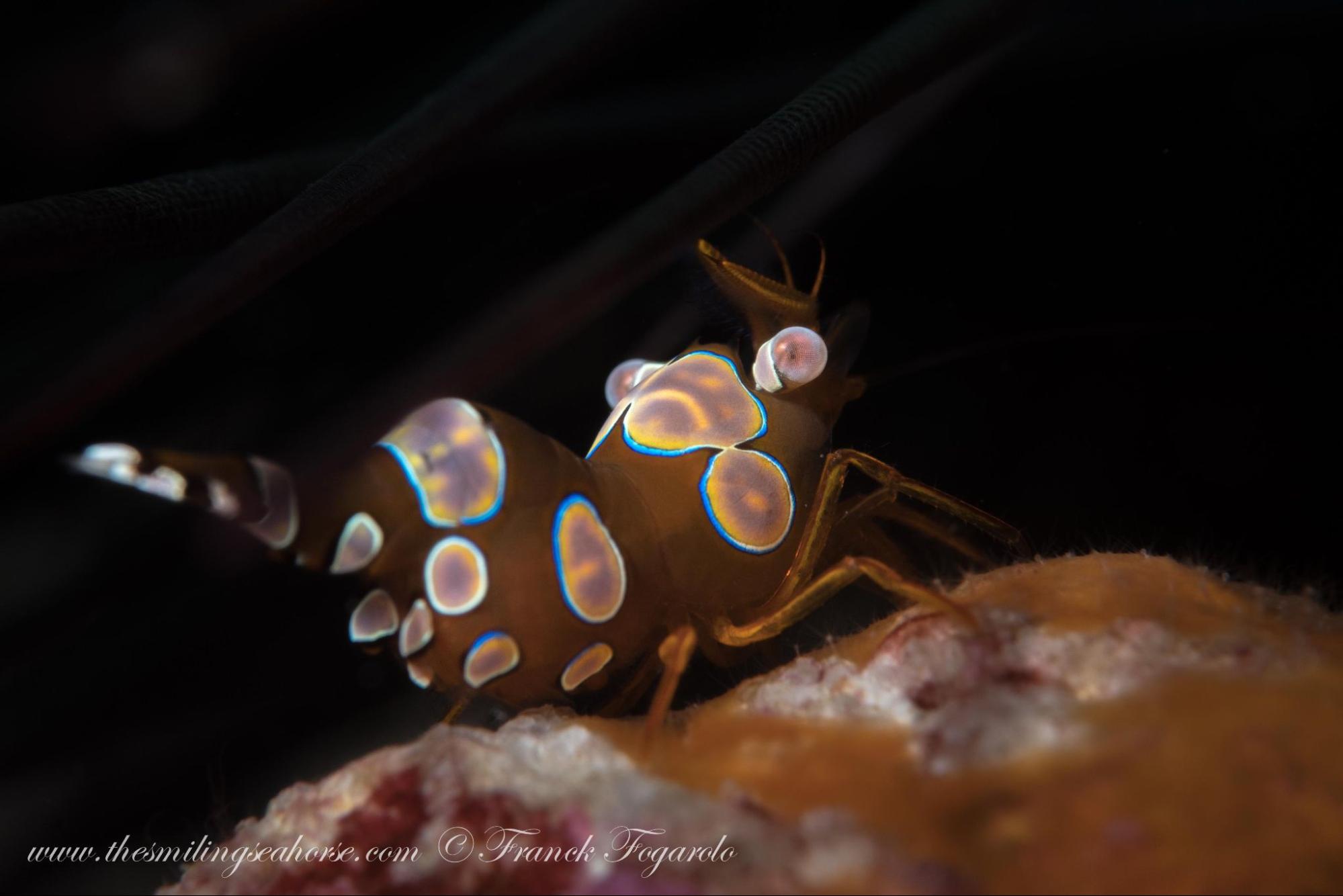
Despite their tiny size, Sexy Shrimp have an unusual reproductive strategy that adds another fascinating chapter to their biology.
🫂 Living in Groups
Several Sexy Shrimp may occupy the same suitable host. Group size and composition can vary, and multiple individuals can be seen moving independently around the tentacles or coral structure.
Rather than forming the kind of rigid social hierarchy seen in some highly social animals, these shrimp use the same limited habitat while interacting with the other individuals around them.
⚧ A Remarkable Sex-Change Strategy
Sexy Shrimp are protandric hermaphrodites. Individuals first mature as males and can later change sex and function as females.
This reproductive strategy is found in several marine crustaceans and allows a population to maintain reproductive flexibility even when individuals are scattered across small, isolated host animals.
♻️ Continuing the Next Generation
After reproduction, the developing larvae eventually enter the plankton, where currents can transport them away from the reef before they later settle into suitable habitat.
This combination of a tiny adult living in a very localised host environment and a dispersive larval phase helps Sexy Shrimp colonise reefs across a remarkably large geographical range.
🌊 Why Sexy Shrimp Matter to the Reef
At only a couple of centimetres long, a Sexy Shrimp can easily seem insignificant beside sharks, rays, turtles and large schools of fish. Yet coral reefs are built around thousands of interactions involving animals of every size.
Sexy Shrimp form part of this intricate network. They consume small organic material, interact closely with cnidarian hosts and in turn form part of the food web for larger reef animals.
Their importance is perhaps best understood not as one dramatic ecological service, but as another example of the extraordinary biodiversity and specialisation found on tropical reefs.
A healthy reef is not simply a collection of large charismatic animals. It is also an ecosystem filled with tiny crustaceans, worms, molluscs, juvenile fish and countless other organisms occupying very specific niches.
📍 Where Can You Find Sexy Shrimp in the Andaman Sea?
Thor amboinensis occurs throughout the tropical Indo-Pacific, including Thailand and Myanmar. For divers, the key is often not searching for the shrimp itself but learning to recognise the kind of microhabitat it uses.
Look carefully around anemones, bubble coral and similar reef structures rather than swimming past them in search of something larger. A patient diver may discover an entire miniature community living within an area only a few centimetres across.
This kind of careful observation is particularly rewarding when exploring the diverse reefs of the Andaman Sea, including areas such as Richelieu Rock, Koh Bon, Koh Tachai and the remote Mergui Archipelago.
Every site is different, and wildlife encounters can never be guaranteed, but slowing down and examining the reef closely often reveals creatures that would otherwise remain completely unnoticed.
💙 Final Thoughts: Small but Unforgettable
They may not be the reef’s largest or flashiest stars, but Sexy Shrimp are among the most entertaining and photogenic little critters you can encounter underwater.
Their famous dance, unusual relationship with their hosts, striking appearance and fascinating reproductive biology prove once again that some of the most interesting stories on a coral reef can be hidden in the smallest places.
So next time you are diving with The Smiling Seahorse, take a moment to peer closely around that anemone or coral colony. If you notice a tiny abdomen proudly wagging from side to side, you may just have found the reef’s smallest dancer.
📩 Want to See the Sexy Shrimp Up Close?
Join us on one of our liveaboard cruises and discover the small wonders that make diving in the Andaman Sea so fascinating.
🛳️ Check our upcoming cruises and prices »