North Andaman Liveaboard Expedition: From Similan to Richelieu Rock
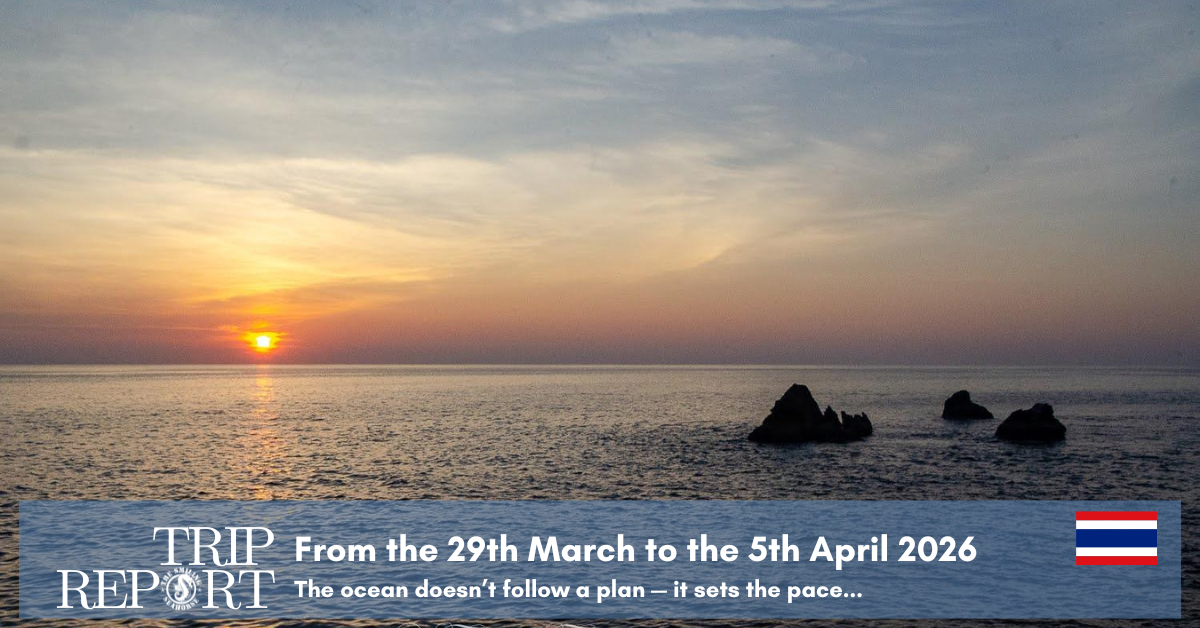
The ocean doesn’t follow a plan — it sets the pace.
Over the course of this North Andaman expedition, each dive unfolded with its own rhythm, from granite boulder fields to fish-packed pinnacles, where currents, schools and encounters constantly reshaped the experience.
Day 1 – Departure from Khao Lak to the Similan Islands
We departed from Tap Lamu Pier in Khao Lak with our guests from France, heading north toward the Similan Islands. Calm seas and a soft golden light set the tone as we settled into life on board, preparing for the days of diving ahead.


Day 2 – Similan National Park
At Shark Fin Reef, the first dive was the perfect warm-up with a classic Similan landscape of submerged granite formations. Two-tone dartfish hovered above the sand while a hawksbill turtle cruised by. Clown triggerfish and a whitetip reef shark added movement, while dogtooth tuna patrolled the blue. On the reef, Gymnodoris (lemon gymnodoris), Caloria indica, six-striped soapfish, Andaman sweetlips and juvenile chiseltooth wrasse appeared among schools of blue-and-gold fusiliers and surgeonfish.
Our divers were also able to recover a knot of abandoned fishing gear that was floating at the surface — we always give back to the ocean when we can.


At Boulder City, the energy picked up. The “gang” of bluefin trevallies and longnose emperors hunted through a dense school of batfish and barracuda. Around the reef, bignose unicornfish, humpback unicornfish and bluespine unicornfish cruised effortlessly, some stopping to show off their colours to a potential mate. Macro life revealed long-snouted crinoid shrimp, commensal crinoid shrimp, false cleaner wrasse, Midas blenny, Smith’s fang blenny and both adult and juvenile blue-lined angelfish.


At Hideaway, the dive slowed down with octopus, Glossodoris cincta, garden eels and squat shrimps tucked into the reef. A psychedelic batwing slug stood out among the colours, while fusiliers, butterflyfish and surgeonfish filled the water column.
The day ended with a sunset dive at Honeymoon Bay, where we found a brave longfin comet fish hiding inside the reef, a Jenkins whipray rested on the sand, and dragonets darted between coral heads. Marbled grouper, bluefin trevally, octopus, moray eels and another psychedelic batwing slug completed a calm and atmospheric dive, with brown tangs grazing quietly in the fading light.


Day 3 – Similan National Park
At Deep Six, strong currents brought action. A whitetip reef shark passed by, alongside a green turtle and bluefin trevallies. Macro highlights included Glossodoris cincta, baby Moridilla brocki, clown triggerfish and a striking blue dragon.


At West of Eden, the reef was alive with detail. Spearing mantis shrimps and squat shrimps occupied the substrate, while McCosker’s flasher wrasse flickered in the water column. Schools of emperors, hawksbill and green turtles, batwing psychedelic seaslugs, multibar pipefish and Andaman jawfish created a rich and varied dive. Fusiliers, snappers and parrotfish filled every layer.
At Elephant Head Rock, dramatic swim-throughs revealed ribbon eels, Andaman jawfish, Glossodoris cincta and bluestreak gobies. Schools of trevallies, sweetlips and fusiliers added movement to the rugged topography.


Later, we stepped ashore at Island Number 8, where a short climb led us to the iconic viewpoint overlooking Donald Duck Bay — a sweeping panorama of turquoise water framed by granite boulders, offering a rare moment to take in the Similan Islands from above.


The night dive at Turtle Rock brought intense activity. Snappers hunted in the beams of our lights while skeleton shrimps, decorator crabs, ornate sapsucking slugs, tiger cowries, whip coral shrimps and anemone hermit crabs covered the reef. A spearing mantis shrimp enjoyed an all-you-can-eat shrimp buffet in our torchlight while soft coral ghost gobies, clearfin lionfish, feather duster worms, Gosliner flatworms, Harpiliopsis shrimp, Hyman’s flatworm, bicolor flabellina and Glossodoris cincta completed the scene.


Day 4 – Similan National Park
At North Point, the dive opened with a balanced mix of pelagic movement and reef life. Dogtooth tuna cruised past in the blue while a turtle moved calmly along the reef. Schools of barracuda held their position in the current, creating a steady backdrop of motion.
Closer to the reef, the scene became more detailed: fringelip blenny peeked from small crevices, juvenile lionfish drifted cautiously between coral heads, and sand lizardfish rested motionless on the bottom. Schools of lunar fusiliers and neon fusiliers streamed across the reef, joined by striped surgeonfish grazing steadily, while butterflyfish and damselfish filled the shallower sections.


At Christmas Point, the energy shifted into a true hunting scene. Bluefin trevallies and longnose emperors formed the core of the action, working together with rainbow runners in tight formations — a classic “Christmas tree” moment as they moved across the reef in coordinated bursts. Around them, schools of fusiliers and snappers reacted instantly, compressing and expanding in response to the pressure, constantly reshaping the water column. Wrasses and parrotfish pecked at the reef, weaving through the chaos.

At Three Trees, the landscape opened into sandy patches and coral bommies, creating a more spacious and atmospheric dive. A Kuhl’s stingray rested half-buried while the glassfish filled every crevice of the reef and nearby bommies.
In the blue, a tornado of barracuda briefly formed, tightening into a spinning column before slowly dispersing again — a fleeting but striking moment. Oriental sweetlips hovered near coral heads, while yellowfin emperor and brown-marbled grouper stayed close to structure.
Large barrel sponges hosted sea fans growing along their sides, with spotted garden eels scattered across the sand. Yellowmargin triggerfish guarded their nests, adding bursts of territorial energy, while bignose unicornfish cruised above.

The final dive at Koh Bon brought us fully back into the blue. A Napoleon wrasse appeared out of the current, followed by dogtooth tuna cutting across the reef. Schools of barracuda, batfish and rainbow runners moved constantly through the site, with bluefin trevallies weaving between them.


Day 5 – Koh Bon & Koh Tachai
At Koh Bon Pinnacle, the dive delivered one of the highlights of the trip: a bull shark appearing briefly in the blue, powerful and unmistakable. A hawksbill turtle hid under an overhang, while yellowback fusiliers filled the water column. Bluefin trevallies hunted actively, and a cluster of Spanish dancer eggs clung to the reef. Batfish hovered mid-water while a guitarfish rested on the sand, almost blending into the seabed. Brown-marbled groupers stayed close to the reef, completing the scene.


At Koh Tachai Pinnacle, schools of batfish gathered in impressive numbers, mixing with giant trevallies, bluefin trevallies and bigeye trevallies. Brown-marbled groupers moved between boulders while schools of bluestreak fusiliers, neon fusiliers and yellowback fusiliers streamed across the pinnacle.
The following dive at Koh Tachai Pinnacle brought great barracudas patrolling the edges, alongside more bluefin trevallies and giant trevallies. We spotted some lobster hiding in the cracks as longnose emperors moved confidently around us. A juvenile Spanish dancer and Hypselodoris maculosa added colour to the substrate as Boer’s batfish and a group of teenage longfin batfish hovered in the current, creating a layered mid-water scene. Spotted hypselodoris appeared along the reef, reinforcing the macro diversity.


The night dive at Koh Tachai Reef was intense from start to finish. Blacktip reef sharks were present from the first minute to the last, constantly cruising through the lights. Anemone hermit crabs, blunt decorator crabs and ornate sapsucking slugs dotted the reef, while an unidentified flatworm added another mysterious element to the dive.
Nighttime adrenaline: Encountering Blacktip Reef Sharks under the cover of darkness at Koh Tachai is a highlight of the Andaman experience. | Denis Cadon
Day 6 – Surin National Park


At Hin Kong, macro life took centre stage. Cadlinella ornatissima, Robastra gracilis, squat shrimps, porcelain crabs and Hyman’s flatworms were scattered across the reef, turning the dive into a slow and detailed exploration. During our surface intervals, we also had lovely snorkelling excursions to the coast of these stunning islands.

At Yellow Rock, we witnessed a full colour spectrum in our encounters. Spotted hypselodoris, Hypselodoris bullocki, allied cowrie and bicolor flabellina stood out against the reef. A juvenile shaded batfish tried to blend in nearby, while a pygmy seahorse remained perfectly camouflaged. Silver Andaman sweetlips added contrast, moving slowly along the reef.

At Torinla, two Napoleon wrasses stole the show — one large female and an impressive, massive male cruising slowly across the site, completely unbothered by divers. A hawksbill turtle munched away at the corals, equally unbothered by the divers, while a tiny juvenile pufferfish tried to hide in the sand on the reef’s edge.


The night dive at Ao Pakkad delivered one of the strongest macro moments of the trip. Seven harlequin shrimps were found across the site, alongside Flabellina exoptata, Glossodoris atromarginata, complex marble shrimps, Conus geographus and blacktail Zanzibar urchin shrimp. Around them, filefish, crabs, shrimps and nocturnal reef life created a dense and vibrant night scene.


Day 7 & 8 – Richelieu Rock
Six dives at Richelieu Rock brought a grand finale to the trip, combining dense fish life with outstanding macro diversity.
Nudibranchs were everywhere: Spotted hypselodoris, ornate sapsucking slug, Chromodoris geometrica, Chromodoris rufomarginata, Chromodoris annulata, Chromodoris reticulata, Risbecia pulchella, Glossodoris atromarginata, Halgerda tesselata mating, Cadlinella ornatissima, bicolor flabellina and ridged Dermatobranchus.


Two ornate ghostpipefish hovered delicately in the current, while a thorny seahorse remained anchored to the reef. Harlequin shrimps added flashes of colour, and a juvenile yellow boxfish drifted nearby.


In the blue, the full “gang” was present: bluefin trevallies, giant trevallies, rainbow runners, amber jacks and longnose emperors hunting continuously. They even teamed up with a giant moray eel near the bottom of the pinnacle for a hunt on our last dive. Schools of barracudas circled the pinnacle, while longfin batfish hovered elegantly in mid-water.


Moray eels were well represented with zebra morays and white-eye morays moving between crevices, completing a site that once again delivered both scale and detail in perfect balance.


The final evening brought everyone together on the upper deck for our traditional BBQ, a well-earned moment after days of diving. The air was warm, the sea calm, and the boat gently rocking under a sky full of stars. Between grilled food, shared stories and laughter, the atmosphere slowly shifted from relaxed to festive, and before long, the music took over and the deck turned into a dance floor. A perfect way to close the trip — somewhere between celebration and that quiet feeling of not quite wanting it to end.
Day 8 – Return to Ranong
After these final dives, we made our way back toward Ranong, closing another North Andaman expedition filled with contrasts — from fast-paced pelagic encounters to intricate macro discoveries — exactly the kind of balance that makes this region so unique.
Some trips are measured in sightings. Others in the rhythm they leave behind.
This one offered both — from powerful encounters in the blue to the smallest details hidden in the reef.
Until the next tide brings us together again — see you soon, fellow divers.


Photos Taken by Denis Cadon