
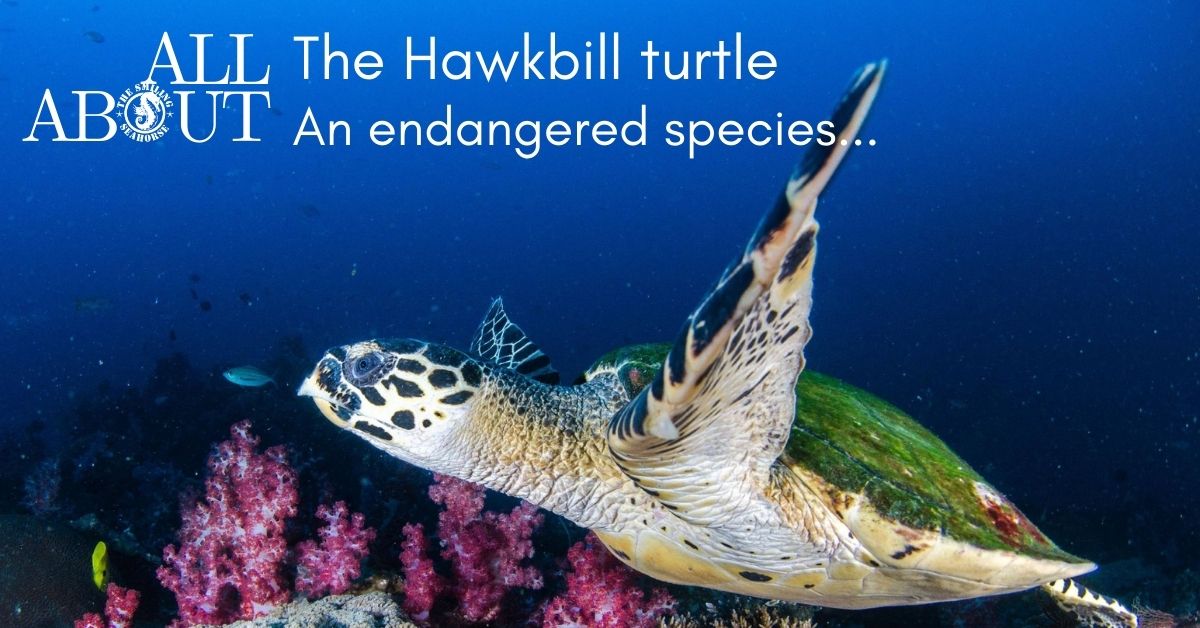
Hawksbill Turtle: The Critically Endangered Sea Turtle
While critically endangered, hawksbill turtles are among the most frequently encountered sea turtles on our cruises. Today, let’s learn more about the hawksbill turtle, Eretmochelys imbricata.
All sea turtles are cold-blooded creatures belonging to the reptile family, just like snakes, crocodiles and dinosaurs.
Where Can You See Hawksbill Turtles?
The hawksbill turtle, the only representative of the genus Eretmochelys, lives in subtropical and tropical waters of the Atlantic, Indian and Pacific Oceans. It is therefore quite possible to encounter one in the Andaman Sea, particularly around coral reefs.
In Thailand, hawksbill turtles can be seen in both the North Andaman, including the Surin and Similan Islands, and the South Andaman.
Hawksbill turtles are amongst the smaller species of sea turtle. Adults generally measure around 76–89 cm and weigh approximately 40–69 kg.
As a migratory species, they use a wide range of habitats, from the open ocean to lagoons and even mangroves in estuaries. During the early stages of their lives, like other young sea turtles, they live a pelagic life at sea until they mature enough to settle in coastal habitats.
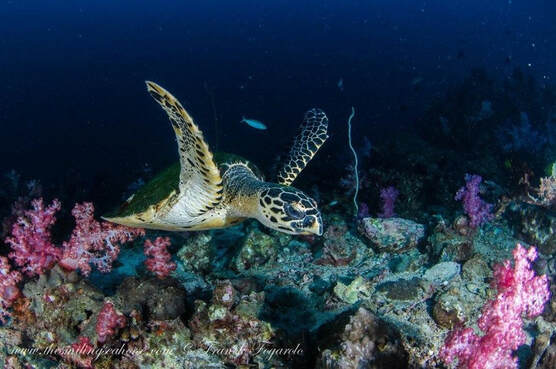
How to Tell Hawksbill Turtles from Other Sea Turtles
Hawksbill turtles and green turtles are both commonly seen in the Andaman Sea and can be difficult to tell apart at first sight. Here are a few useful features to look for.
Hawksbill vs Green Turtle: Face Identification
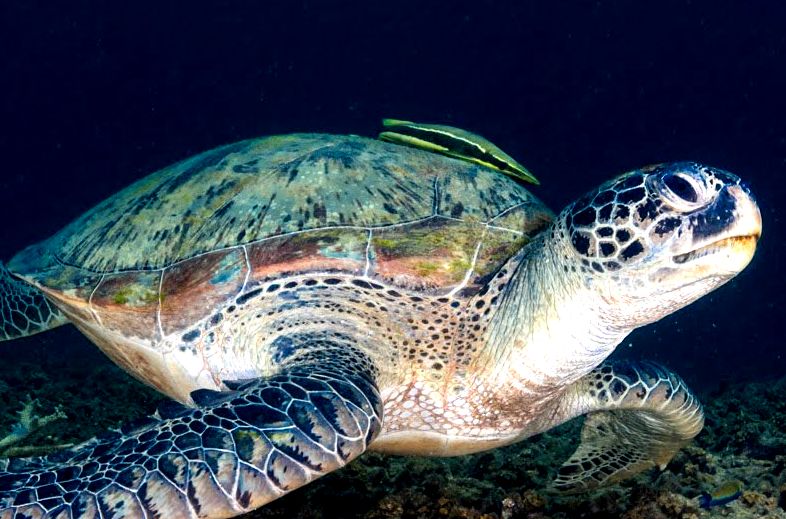
Hawksbill turtles have a distinctive hooked beak, while green turtles have a much more rounded face.
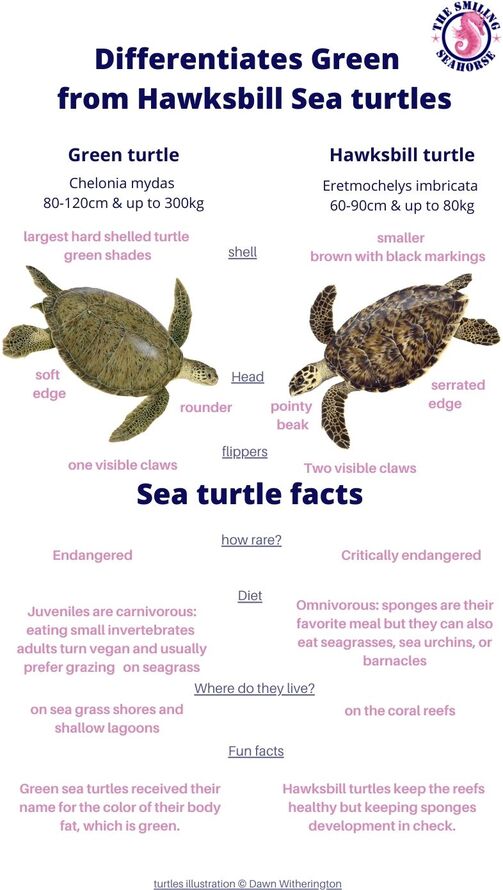
Hawksbill vs Green Turtle: Beak Shape
The shape of the beak is one of the easiest ways to distinguish these two species. Hawksbill turtles have a pronounced hooked beak, while the beak of a green turtle is much more rounded.
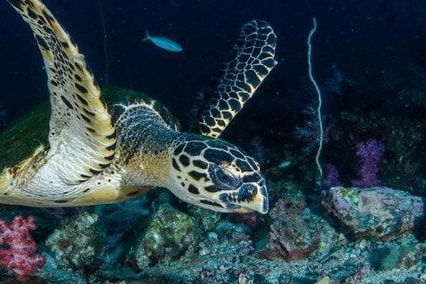
Prefrontal Scales
Another useful feature is found on top of the turtle’s head. Hawksbill turtles have two pairs of prefrontal scales, while green turtles have only one pair.
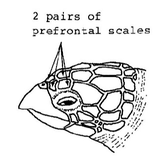
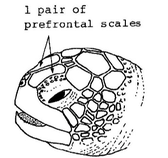
The scales can be difficult to see underwater, but they provide another useful clue when looking closely at photographs.
Hawksbill vs Green Turtle: Nostrils
The turtle’s nose is also a useful identification feature. The nostrils of hawksbill turtles point upwards and sit towards the top of the beak, whereas the nostrils of green turtles are positioned more towards the front of the face.
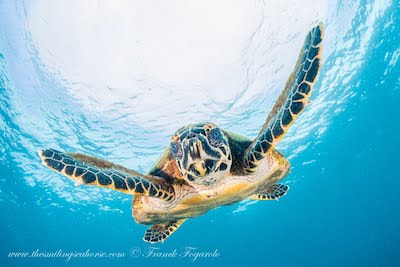
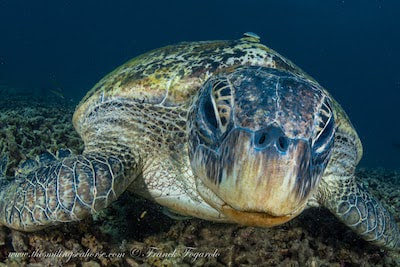
When looking at a turtle from the front, the difference in nostril position can be easier to notice.
Hawksbill vs Green Turtle: Shell Identification
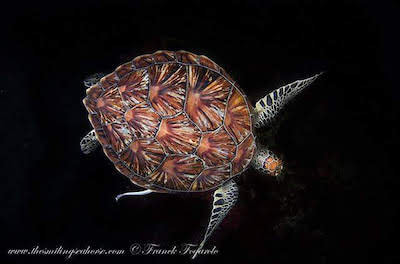
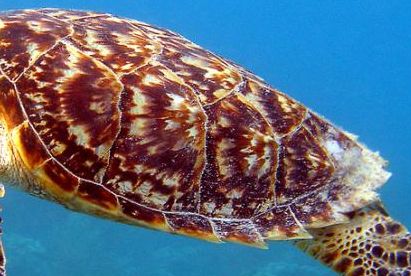
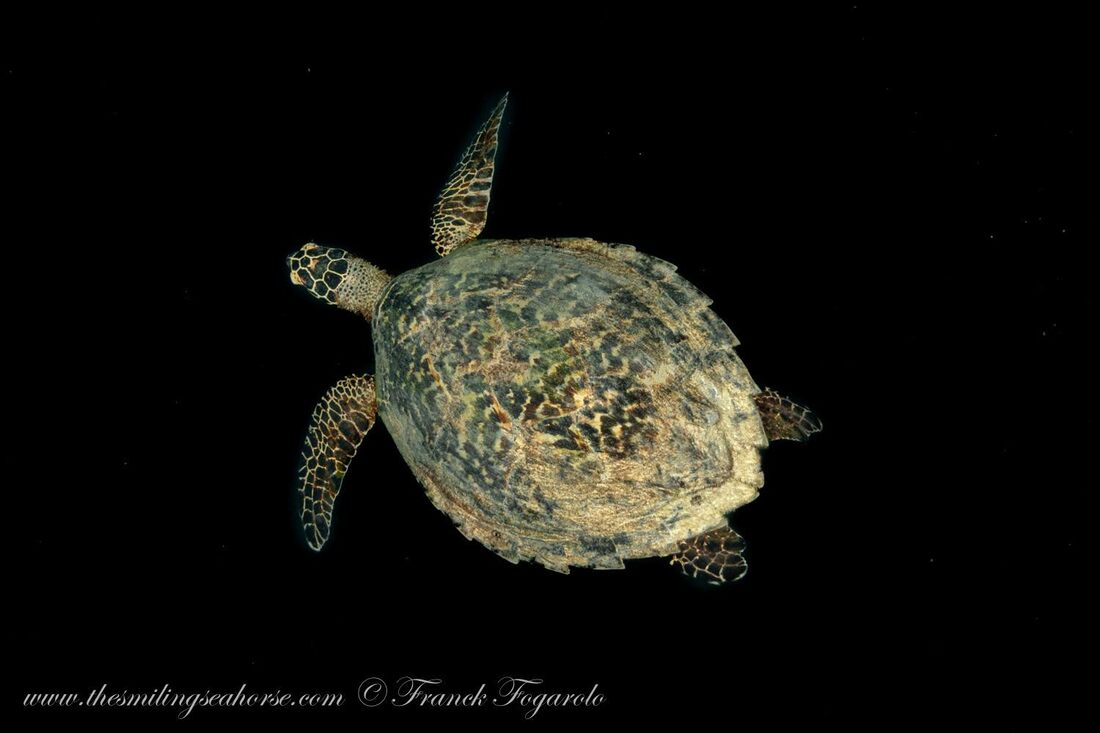
The carapace is another excellent way to distinguish the two species.
The shell of a green turtle is generally more rounded, with scutes that do not overlap and a smoother edge. The hawksbill has a more elongated, heart-like shape, with overlapping scutes and a distinctive serrated edge.
Hawksbill vs Green Turtle: Front Flippers
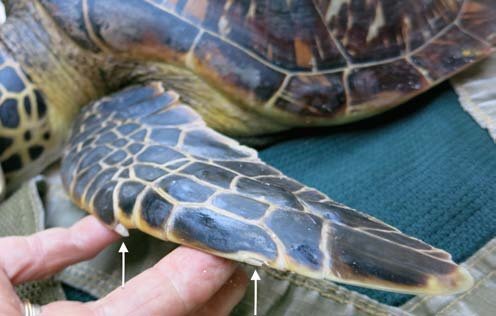
Hawksbill turtles have two claws on each front flipper, while green turtles generally have only one. The second claw on a hawksbill can be quite small and difficult to spot underwater.
It is not always easy to spot, but checking the front flippers can provide another useful clue when the turtle is close enough to observe.
Hawksbill vs Green Turtle: Belly Identification
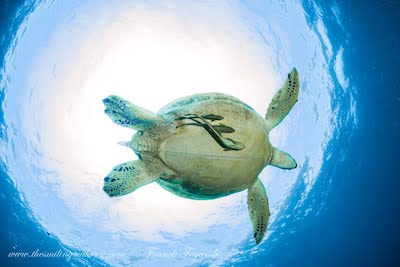
If you have a photograph of a turtle from underneath and are trying to determine whether it is a green turtle or a hawksbill, the shape of the body and shell can provide useful clues.
The hawksbill has a longer, more pointed head and a distinctive beak. Looking closely between the rear flippers can also reveal the serrated edge of the carapace.

What Do Hawksbill Turtles Eat?
The hawksbill turtle is one of the few animals known to feed extensively on sponges and is the only known reptile with a diet specialising in sponges.
Their diet also includes other marine invertebrates such as anemones and jellyfish, as well as molluscs and sea urchins.
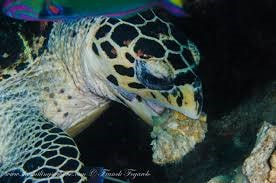
Hawksbill turtles do not have teeth. Instead, their powerful jaws and hooked beaks allow them to tear pieces from their food.
Small reminder: some of the animals they consume can contain toxins. Hawksbill turtles are adapted to this diet, but their flesh can contain toxins and is not considered safe for human consumption.
Hawksbill Turtle Reproduction
Like most sea turtles, hawksbills generally live solitary lives and come together for reproduction.
Female hawksbill turtles return to nesting beaches to lay their eggs, often showing strong fidelity to particular nesting areas. Nesting generally takes place at night.
The female digs a hole in the sand where she deposits a clutch of eggs before covering the nest and returning to the sea.
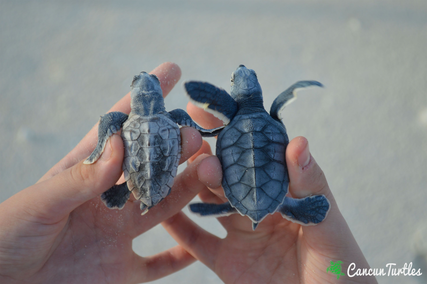
After roughly two months of incubation, the hatchlings emerge and make their way towards the ocean. This journey is dangerous, with predators such as birds and crabs waiting along the beach.
Did You Know?
The temperature of the nest during incubation influences the sex of the hatchlings. Warmer sand generally produces more females, while cooler incubation temperatures tend to produce more males.
Is the Hawksbill Turtle Threatened?
Yes. The hawksbill turtle is classified as Critically Endangered on the IUCN Red List.
Hawksbill turtles have been hunted for centuries, particularly for their beautiful patterned shells, which have been used to make jewellery, ornaments and other decorative objects.
Today, they continue to face numerous threats, including illegal wildlife trade, bycatch in fishing gear, habitat degradation, loss of nesting beaches, marine pollution and plastic waste.

Plastic pollution is particularly dangerous for sea turtles. A floating plastic bag can resemble a jellyfish or other prey, making it easy for a turtle to mistake plastic for food.
Hawksbill turtles also depend heavily on healthy coral reef ecosystems. Protecting reefs, reducing marine pollution and supporting responsible fishing practices are therefore all important parts of protecting these remarkable animals.
Frequently Asked Questions
Where can you see hawksbill turtles in Thailand?
Hawksbill turtles can be encountered in several areas of Thailand’s Andaman Sea, including the Surin Islands, Similan Islands and other coral reef areas of the North and South Andaman.
How can you tell a hawksbill turtle from a green turtle?
Look for the hooked beak, two pairs of prefrontal scales, upward-facing nostrils, overlapping shell scutes and serrated edge of the carapace. Hawksbill turtles also have two claws on their front flippers.
What do hawksbill turtles eat?
Hawksbill turtles feed extensively on sponges and also eat other marine invertebrates such as anemones, jellyfish, molluscs and sea urchins.
How do hawksbill turtles reproduce?
Female hawksbill turtles return to nesting beaches to lay eggs, usually at night. After roughly two months of incubation, hatchlings emerge and make their way towards the sea.
Does nest temperature affect hawksbill turtle hatchlings?
Yes. The temperature of the nest during incubation influences the sex of the hatchlings. Warmer temperatures generally produce more females, while cooler temperatures tend to produce more males.
Why are hawksbill turtles critically endangered?
Hawksbill turtles face threats including historical and ongoing exploitation for their shell, bycatch, loss of nesting habitat, degradation of coral reefs and marine pollution, including plastic waste.
Discover More About Sea Turtles and Marine Life
Hawksbill turtles are just one of the fascinating animals you can encounter while diving in Thailand and the Andaman Sea. Discover more marine life and diving destinations with us:





One Response
Hi! I’m wondering how long does it takes for the hawksbill turtles to reach their adult size ?
Thanks for all those infos ! 🙂