
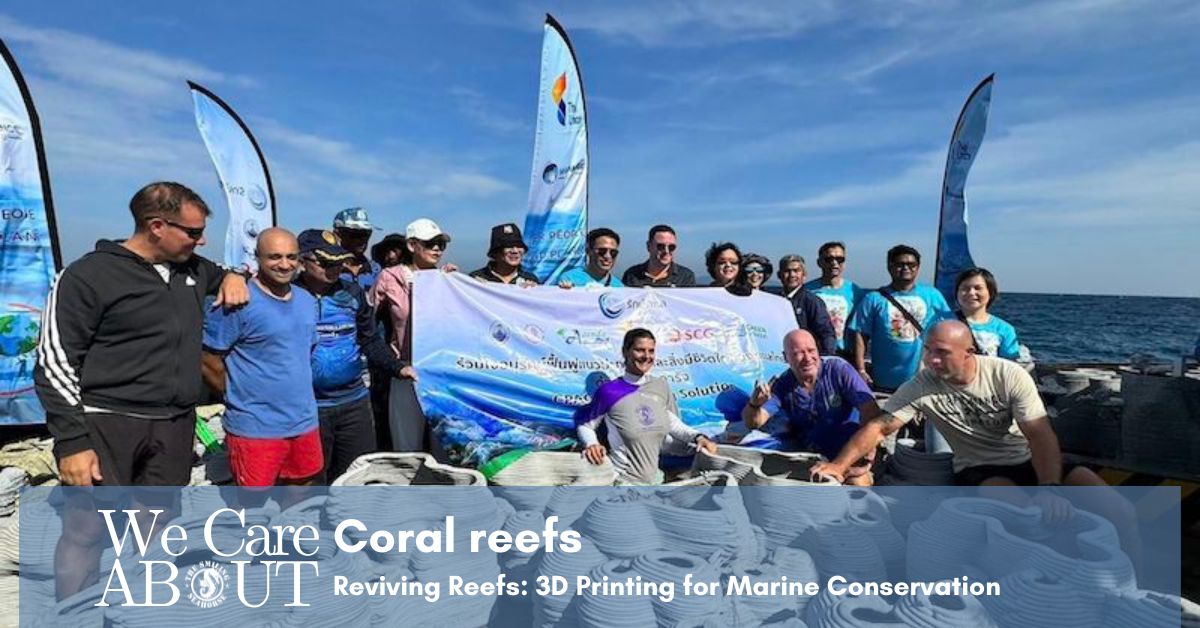
Restoring Coral Reefs in Siam Bay: An Artificial Reef Project
The recent deployment of approximately 180 intricate structures marks an important milestone in marine conservation. The vision behind the project is both simple and ambitious: to bridge the gaps between coral bommies and provide a haven for broken yet living corals. By positioning these structures strategically and covering them with coral fragments, the project aims to create new foundations where coral can attach, grow and develop.
Coral restoration is not simply about putting something back where it used to be. The structures themselves need to provide suitable spaces for coral fragments while also creating shelter for the many small creatures that depend on reef habitats. In this project, the different structures have been designed with varied shapes and sizes, creating a more complex environment on the seabed rather than simply placing identical objects in one area.
There is something particularly encouraging about watching a restoration project take shape underwater. Before the work was even completely finished, the new structures were already attracting small fishes looking for somewhere to hide. These early visitors may be small, but their presence is an encouraging indication of how quickly marine life can begin to make use of newly created habitat.


180 Structures Ready for a New Life Underwater
Seeing the full barge loaded with the structures gives a good impression of the scale of the operation. Approximately 180 individual structures had to be transported to the site before being carefully lowered to the seabed. What begins as a collection of man-made structures on a barge will hopefully become part of the underwater landscape as coral fragments attach themselves and marine life gradually takes possession of the new habitat.
The deployment itself is a major part of the project. Each structure needs to be positioned underwater and placed where it can contribute to the restoration plan. Once on the seabed, the structures can provide the framework needed to connect areas of coral habitat and give broken but still living coral fragments somewhere to settle.

Once the barge was empty and all 180 structures had been lowered to the seabed, the real waiting game began. The team could finally look ahead and see how the artificial reef would develop over the coming weeks and months.
The First Signs of Marine Life
What’s truly exciting is the immediate response witnessed during the deployment. Even before the completion of the setup, small fishes had already begun seeking shelter within these novel formations. It is easy to understand why this is such an encouraging sight. A newly deployed structure may initially look very different from a natural reef, but underwater, even a small cavity or sheltered space can provide somewhere for a fish to escape the open water.
The early arrival of these small fishes also highlights an important aspect of artificial reef projects. The objective is not only to provide a surface for coral fragments. As the structures become established, they can also offer shelter and additional habitat for marine creatures, creating the potential for a much richer underwater environment.
It’s a sight that sparks hope. The promise of these artificial reefs providing a safe haven for marine life, with each fragment of coral finding a new home, brings anticipation for the future. As the structures settle into the ocean floor, they stand as beacons of regeneration, inviting life back into these waters.


Building a More Complex Reef Habitat
The different shapes and sizes of the structures are an important part of the project. Rather than creating a completely uniform area, the structures can create spaces and gaps throughout the new reef. These different spaces have the potential to be used by different marine creatures as the area develops.
For the team working underwater, there is also something very satisfying about seeing the project move from an idea on paper to a physical reality on the seabed. The structures have to be handled and positioned carefully, and the work requires people to operate together both above and below the surface.
The team eagerly awaits the upcoming weeks, poised to witness the progress and transformation that these efforts will catalyze. The early signs of marine life finding sanctuary in these structures already hint at a brighter future for Siam Bay.
Beyond the immediate impact on coral restoration, the potential ripple effect is vast. With thriving reefs, the entire marine ecosystem stands to benefit. The influx of life attracted by these structures will likely contribute to the biodiversity of the area, paving the way for a richer and more balanced marine environment in the future.
Looking Towards the Future
Of course, a newly deployed artificial reef does not become a mature reef overnight. The structures are only the beginning. Over time, the coral fragments placed around them will have the opportunity to develop, while marine life can continue to use the spaces created by the different structures.
This is what makes the coming weeks so exciting. The team will be able to watch the transformation step by step: from bare structures on the seabed towards an environment increasingly occupied by coral and marine life. Every new arrival and every sign of growth will provide another indication of how the project is progressing.
In the quest to safeguard our oceans, this collaboration stands as a testament to human innovation and dedication to environmental conservation. It’s a reminder that even in the face of ecological challenges, creative solutions can emerge, offering a glimmer of hope for the future of our oceans.
Projects like this also remind us that marine conservation is a long-term process. There is no instant solution and no single deployment can restore an entire ecosystem. Instead, restoration is built from many individual efforts, careful planning and continued observation. In this case, approximately 180 structures now form the starting point for what the team hopes will become a thriving new area of reef habitat.


As we eagerly anticipate the evolution of these artificial reefs, it’s with optimism and excitement that we look forward to a time when these underwater structures will teem with life, contributing to the resurgence of marine ecosystems in Siam Bay and beyond.
For everyone involved, the deployment is therefore not the end of the project but the beginning of a new chapter. The structures are now underwater, the first small fishes have already discovered them, and the coral fragments have new places to call home. Now comes the fascinating part: watching nature take over and seeing what develops.
Well done team Buffalow, and thank you DMCR for letting us be part of this great project. We are looking forward to seeing how these new artificial reefs evolve and, hopefully, how they will contribute to a healthier and more vibrant marine environment in Siam Bay for years to come.





One Response
covered in local news 🙂
https://www.thephuketnews.com/reef-restoration-underway-at-racha-90347