
Diving in Southern Myanmar: Sharks, Seahorses, Rays and Incredible Reefs
Back to Burma: Spanish Dancers, Ghost Pipefish and Dolphins
We go again to Burma, and this time we set out on a 6-day/5-night adventure around the southern islands of the Mergui Archipelago. The southern part of Myanmar is home to some wonderfully remote dive sites, and every expedition brings the possibility of discovering something new beneath the surface.
During the first day of diving, we explored High Rock, Stewart Island, Tower Rock and Spanish Garden, our secret spot for finding Spanish dancers on every dive!
Spanish Garden must be some kind of reproduction centre for these beautiful nudibranchs, because we can often find their eggs here. In the evening, the Spanish dancers come out for the ball, making a night or late-afternoon visit particularly rewarding.


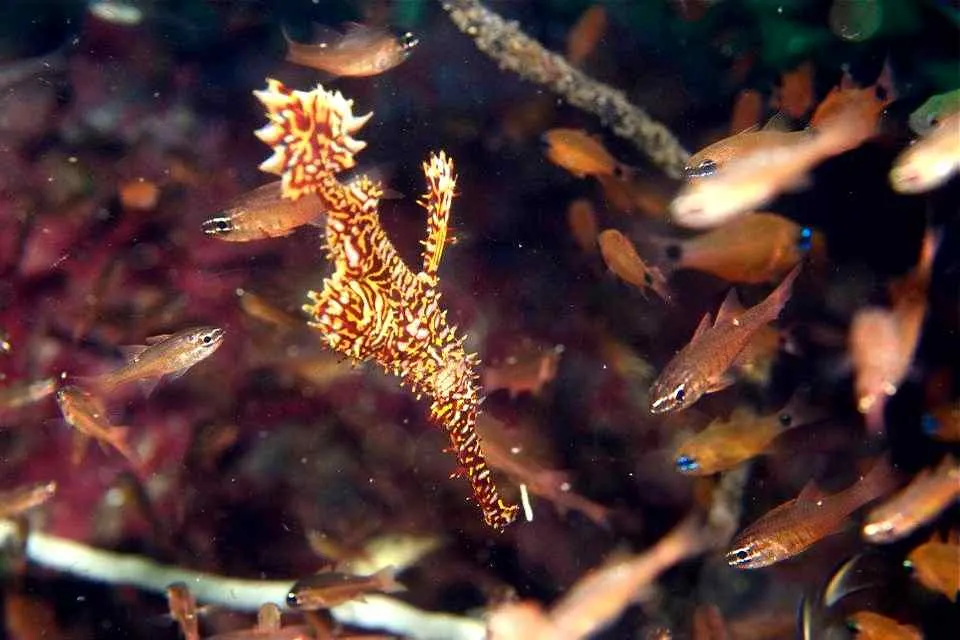
During the day, we also spotted a ghost pipefish, the first one of the season, yeah! These beautifully camouflaged creatures are always a special find, particularly when you are keeping your eyes open for the smaller inhabitants of the reef.
And then came another kind of encounter altogether. In the morning, we were lucky enough to see a pod of dolphins hunting in the bay. I love them, even if they run away when we dive!!!

Seeing dolphins from the boat is always exciting, but watching them actively hunting in the bay adds another dimension to the encounter. Of course, the moment we entered the water, they had other ideas and disappeared from our view. Still, it was a fantastic way to begin the expedition.
Crabs of Myanmar
Our Myanmar dives are not only about the large animals. The reefs of the Mergui Archipelago are full of smaller creatures that reward divers who take the time to look carefully into cracks, underneath corals and among the reef’s many hiding places.
Crabs were particularly interesting during this expedition. We encountered many different types, including sponge crabs and spider crabs, also known as decorator crabs because of the remarkable way they use pieces of colourful coral and sponges to dress themselves up.
These small animals are easy to overlook when surrounded by schooling fish and larger marine life, but once you start searching for them, the reef becomes a completely different place. Every small overhang or sponge can hide another fascinating creature.
Western Rocky: A Day of Discoveries


November 5th 2012
Myanmar diving expedition report:
- Dive 1: 7:10, 32 m, 42 min, new dive site
- Dive 2: 11:14, 33 m, 45 min, Western Rocky
- Dive 3: 15:38, 26 m, 42 min, Western Rocky
- Dive 4: 19:12, 22 m, 40 min, Western Rocky
Besides the usual coral reef fishes which we encounter every time we dive in Myanmar, we saw a group of cuttlefish, big filefish and many types of crabs, among which were sponge crabs and spider crabs, also called decorator crabs because of the way they use pieces of colourful coral and sponges to dress up.
It was a busy day underwater, with four dives giving us plenty of time to explore Western Rocky and its surrounding pinnacles. The combination of reef fish, unusual macro life and larger animals is exactly what makes returning to the same area so rewarding: there is always another corner to investigate and another creature to discover.
You can see more pictures about this trip in our Facebook album: First trip to Burma: awesomeness!!!
Volcano, Seahorse City and Sting Rays in the Mergui Archipelago
On the 6th of November, we jumped in very early for a chance to see the blacktip reef sharks living in the crater of a sleeping volcano.


On the outside of the crater, there is a coral wall that we like to call Seahorse City, because we always find seahorses there! Visibility is pretty bad in this area, but it is still a very good dive site, especially when you know there are seahorses hiding along the wall.
As expected, we saw two blacktip reef sharks and two seahorses. Not a bad start to an early morning dive!
On the 6th of November, we did four dives around Western Rocky and its pinnacles. The major highlight of the day was a massive blotched stingray, about 2 metres wide without counting the tail. Really huge!!!


We also saw a Jenkins stingray, easily recognisable by its shape and the long size of its tail.
Too bad I scared it away with my scooter before Franck could snap a picture, which is why I didn’t use his picture of a running stingray. But it was as big as the one above.
These encounters were a good reminder that the reefs of southern Myanmar can deliver some seriously impressive rays. The combination of dramatic pinnacles, coral walls and open water makes every dive feel full of possibilities.
Shark Cave Lives Up to Its Name
On the 13th of November, we were still reporting on our dive trip in the Mergui Archipelago. Today we visited four dive sites around Shark Cave, and it certainly deserved its name.


Two massive nurse sharks were happily sleeping in its bowels! They were between 2 and 3 metres long, and we passed next to them to get to the other side of the cave. This is exciting!!!
And for those who didn’t have enough, two big blotched stingrays were also there!!! What a dive!
We had to do it again at night, and everyone was still there, lazily resting on the sandy bottom. It is hard to imagine a better reason to return for a second look.
Shark Cave is exactly the sort of place that reminds us why the Mergui Archipelago is such an exciting destination for adventurous divers. The combination of caves, rays and sharks creates a dive experience that is very different from simply swimming along a conventional coral reef.
North Twin, South Twin and an Evening with Dolphins
On the 14th of November, we continued our expedition in the Mergui Archipelago towards North Twin Pinnacle.
We hoped to see some mantas, and we planned two dives there. Unfortunately, no mantas showed up, but we were greeted by one leopard shark, a big school of barracuda and a turtle!

Sometimes the ocean has its own plans. We may have been hoping for mantas, but a leopard shark, a large school of barracuda and a turtle made for a very worthwhile pair of dives.
The last two dives of the day were on South Twin, where we could play with some swim-throughs. It is also the place for nudibranchs!

And on the evening, we had a great encounter with dolphins on the surface. Awesome!
Encounters like this are one of the pleasures of a multi-day liveaboard expedition. A dive may deliver something completely different from what you expected, and the day can continue with wildlife encounters even after everyone has left the water.
Seafan Forest: Giant Corals and a Frenzy of Fish
Burma has some incredible dive sites. On the 7th of November 2012, The Smiling Seahorse’s team was visiting Seafan Forest and North Rock in the south of Burma’s Archipelago, also known as Mergui.


On this beautiful day we spotted many large schools, among which were barracudas and snappers. We also saw an octopus, blue-spotted stingrays, porcelain crabs, squat shrimps and beautiful nudibranchs.
Seafan Forest is particularly impressive because of its huge sea fans and dramatic reef structure. The site offers plenty for divers who enjoy both wide-angle scenery and the smaller creatures that can be found among the corals.

Even the details can become fascinating when you take the time to look closely. Between the large schools of fish and the dramatic reef scenery, there was an endless supply of smaller subjects to discover.
Seafan Forest: An Encounter with an Eagle Ray
On the 15th of November, we dived Seafan Forest in the south of the Myanmar Archipelago. It is a magnificent coral reef, which goes down to more than 40 metres and comes up to around 5 metres from the surface.


This makes it a wonderful dive site, with huge seafan corals reaching more than 2 metres high all over the reef.
We started our dive up-current so that we could reach the swim-through side, covered by purple soft coral. We found two ghost pipefish and a couple of harlequin shrimps there.
What a great start!

On our second dive there, we literally bumped into an eagle ray, and it was the hectic time when all the fish were hunting: rainbow runners, jacks, trevallies and barracuda!
Absolutely fantastic!
The contrast between the peaceful purple soft corals in the swim-through and the sudden frenzy of hunting fish made these dives particularly memorable. One moment we were concentrating on tiny creatures such as ghost pipefish and harlequin shrimps, and the next we were surrounded by larger fish moving rapidly through the reef.
That variety is what makes spending several days exploring the Mergui Archipelago so rewarding. The same expedition can take you from close-up macro encounters to huge schools of fish and encounters with rays, sharks and other large marine life.




