
The Manta Project: Fighting Plastic Pollution at Sea
“Every minute, 15 tonnes of plastic waste is dumped into the oceans” — or around 8 million tonnes each year. There is an urgent need to act now. Everyone knows that… or should know.
The problem of plastic pollution in the oceans is enormous and, unfortunately, complicated to solve. There is no quick fix. But there are different approaches and different ways of tackling the problem. One of them is the ambitious approach of the association The SeaCleaners: fighting plastic pollution by “fishing it” directly from the ocean.

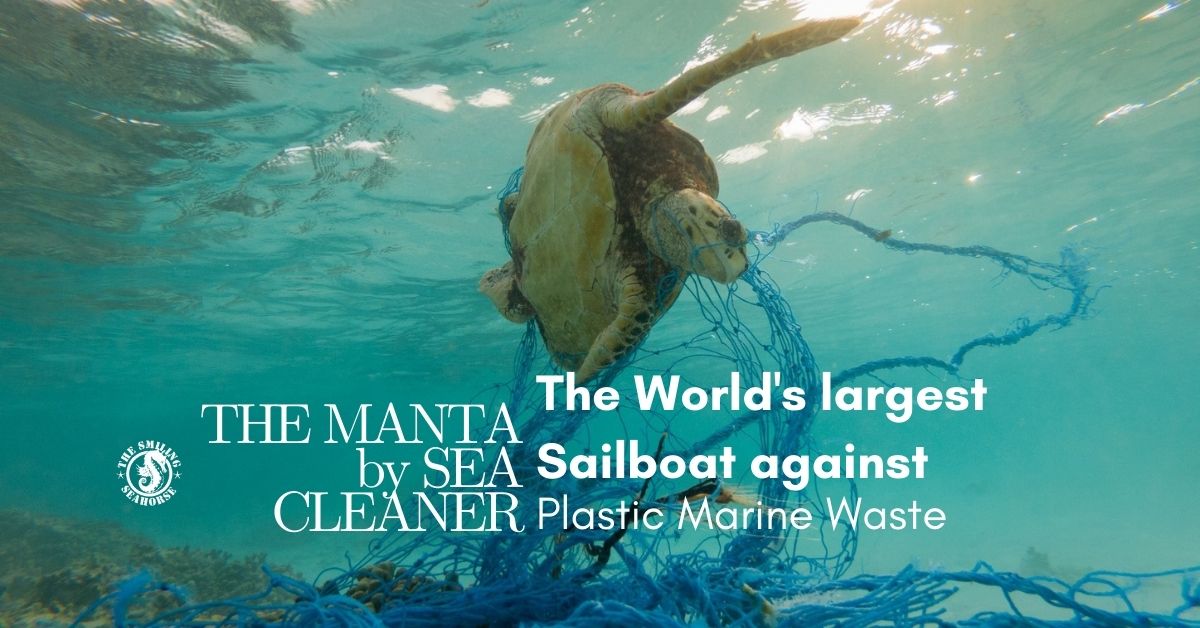
This slightly crazy idea was born from an observation as sad as it is well known: our seas and oceans are becoming increasingly infested with plastic waste. Over time, this waste breaks down into smaller and smaller fragments, with terrifying consequences for marine ecosystems. Marine animals can swallow plastic or become entangled in larger pieces of debris, with potentially fatal consequences.
The Manta Project
The SeaCleaners association’s answer to this problem was the ambitious Manta Project, a concept for a large ocean-going vessel designed specifically to collect and process floating plastic macro-waste.

The Manta was presented as the first offshore vessel capable of collecting and processing large quantities of plastic macro-waste floating on the surface of the oceans in a continuous flow. The project was also designed to support scientific missions, raise public awareness about plastic pollution and promote the circular economy.
A conveyor belt located under the boat would collect floating waste. Inside the vessel, a team of operators would separate the waste from organic matter, with the organic material returned to the sea.
The Manta was also planned to have a crane at the rear for collecting drifting nets, an important part of the problem because abandoned fishing gear can continue to trap and kill marine life long after it has been lost at sea.
Another ambitious element of the project was a pyrolysis system designed to transform non-recyclable waste into fuel. Recyclable material collected by the vessel would be compacted into blocks. The project plans described a capacity of around 600 one-cubic-metre blocks, representing up to 250 tonnes of waste, before being brought back to land for recycling.
The project’s designer, Swiss sailor Yvan Bourgnon, wanted to go even further: the long-term ambition described at the time was to build a fleet of around 100 vessels in order to optimise the project’s operational efficiency.


Using Renewable Energy
Collecting enormous quantities of waste from the ocean is only part of the challenge. The Manta project also aimed to optimise the vessel’s energy autonomy by combining several technologies for producing energy from renewable sources while limiting its overall carbon footprint.
The electricity required to power the vessel’s equipment and electric motors was planned to come from a combination of conventional generators and energy produced from waste, alongside wind turbines, hydro-generators, and photovoltaic solar panels.
The large catamaran was also designed with sails to help reduce its reliance on conventional propulsion. The idea was to turn the Manta itself into a showcase for different renewable-energy technologies while carrying out its primary mission of collecting marine plastic waste.


Aiming for the Oceans of Southeast Asia
The Manta was presented as the first macro-waste collector vessel of its kind, developed by a consortium of companies from different sectors in collaboration with The SeaCleaners association, which was created in 2016.
At the time this article was written, construction of the Manta was expected to begin in 2022, with a projected budget of €35 million. More than a third of that amount had already been gathered from private patrons.
The project plans called for the vessel to spend its first year in Europe and the Mediterranean before heading towards Southeast Asia. The region was identified as a particularly important area for tackling marine plastic pollution, with the project highlighting twelve countries said to account for a very large proportion of the plastic entering the world’s oceans.
The ambition was for the Manta to begin criss-crossing the seas and oceans from 2024 onwards, collecting waste while also supporting scientific research and raising awareness of the scale of the problem.
For anyone who spends time underwater, the issue is impossible to ignore. Healthy seas depend on healthy marine ecosystems, and reducing the amount of plastic entering those ecosystems is a challenge that requires action on many different levels. Projects such as the Manta represent one ambitious attempt to tackle the waste that is already floating in our oceans.




