
Clownfish and Anemonefish: The Amazing Fish That Live With Sea Anemones
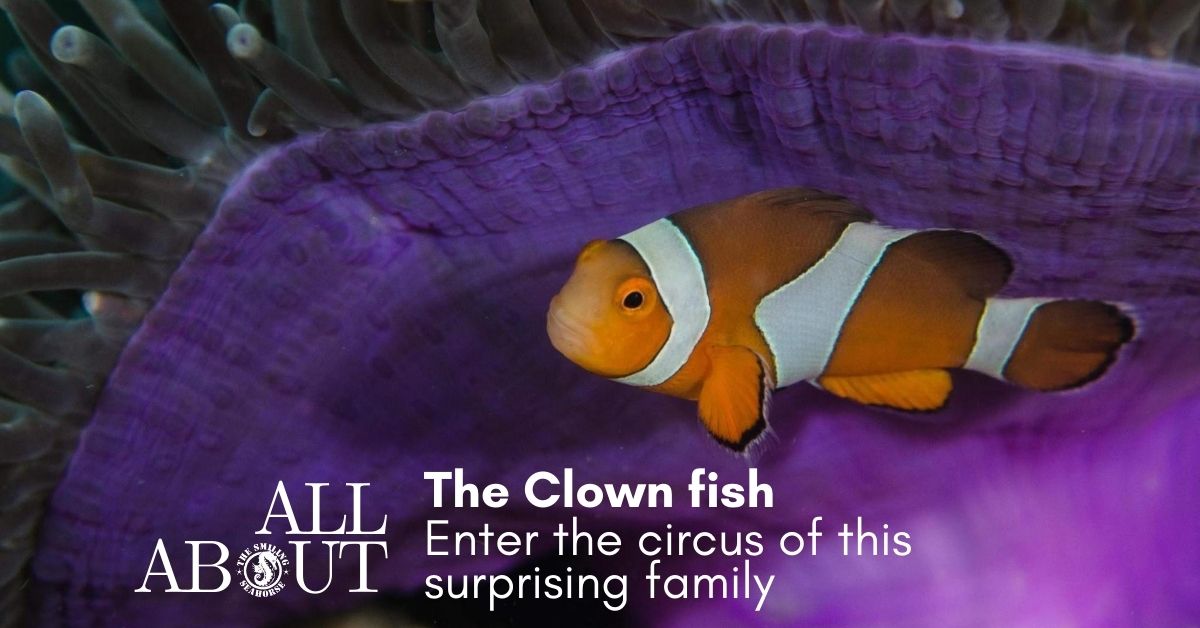
The clownfish is an anemonefish, a specialised type of damselfish, and one of the most recognisable fish on any tropical reef. Their bright colours, fascinating social structure and extraordinary relationship with sea anemones make them a favourite with divers and underwater photographers around the world.
But behind that cute face is a surprisingly complex little fish. Clownfish have developed a remarkable tolerance to the venomous tentacles of their host anemone, live in a strict social hierarchy, and can even change sex during their lifetime.
The Clownfish’s First Magic Trick: Immunity to the Anemone’s Sting
The first magic trick that the clownfish is able to perform is its venom immunity. Clownfish and their host anemones have a specialised symbiotic relationship. Both animals benefit from living together: the anemone provides the fish with shelter and protection from predators, while the fish can provide nutrients through its waste and help circulate water around the anemone’s tentacles.
It is a mutually beneficial relationship that has evolved over millions of years. The clownfish is able to live safely among tentacles that would normally sting and immobilise other fish.
Clownfish begin their association with anemones very early in life. Their eggs are laid on a carefully selected patch of rock close to their host anemone, and the adults protect them until they hatch.


The Clownfish’s Second Magic Trick: Changing Sex
But the highlight of the show is probably its remarkable sex-changing ability.
Clownfish have a fascinating social structure. They are born male, with one dominant female surrounded by a group of smaller males. The female is the largest fish in the group. If she leaves the group or dies, the largest male changes sex and becomes the new female.
This means that clownfish have a very unusual social system in which the hierarchy determines who gets to reproduce.
So, spoiler for the next episode: Nemo will never be able to have a little sister.
True Clownfish (Amphiprion percula), False Clownfish (Amphiprion ocellaris) and Two-Banded Clownfish (Amphiprion bicinctus)
False Clownfish are actually among the most common and best-known clownfish and, believe it or not, Nemo, the Pixar animation star, is not the real deal: he is a False Clownfish!
It is actually quite difficult to differentiate the True Clownfish from the False Clownfish. Both are bright orange with white bands separated by black lines, although these black lines are generally slightly thinner in the False Clownfish.
The Two-Banded Clownfish can also be spotted in the Andaman Sea of Thailand. One useful identification feature is that its tail has no black margin.


Saddle Anemonefish, aka Tomato Clownfish – Amphiprion ephippium
Tomato clownfish have an orange-red colouration. Amphiprion frenatus, another member of the Tomato complex, has a white vertical stripe behind the eye when it is young. This band disappears as the fish ages, with darker markings becoming more prominent in adults.
Amphiprion ephippium, commonly known as the Saddle Anemonefish, is a medium-sized anemonefish, around 5–10 cm long, from the Tomato complex. It is more commonly encountered when diving in Myanmar.


Clark’s Clownfish – Amphiprion clarkii
Clark’s Anemonefish are quite distinctive compared with other anemonefish. They are generally darker in colour, with two white lines contrasting with an orange face, tail and fins.
I love Clark’s Clownfish because they usually hover quite high above their anemone, which makes them easy to spot. They are also often found living alongside anemone crabs, creating a fascinating little community around their host anemone.


Skunk Clownfish – Amphiprion akallopisos
Also quite easy to identify, the Skunk Clownfish is one of the smaller anemonefish, reaching around 11 cm. Its most distinctive feature is the white band running all along its back.

Where Can You See Clownfish and Anemonefish?
Habitat: Clownfish are found throughout tropical parts of the Indo-Pacific, including the Andaman Sea. Different clownfish favour different types of sea anemone, so the host can often provide a useful clue when identifying an anemonefish underwater.
Tomato clownfish, for example, like beautiful orange bubble-tip anemones, while Clark’s Anemonefish are more commonly found around shorter, carpet-like anemones.

What Do Clownfish Eat?
Clownfish are omnivorous. They feed mainly on filamentous algae, planktonic copepods and benthic crustaceans. Living around an anemone gives them access to a varied food supply while also providing protection from larger predators.
Clownfish Reproduction
When a female is ready to mate, the male performs a courtship display and the female deposits between approximately 400 and 1,000 eggs on the rock next to or beneath their host anemone.
The male then immediately passes over the patch to fertilise the eggs. Both parents help protect the eggs until they hatch, usually after around 6 to 11 days.
Once they hatch, the tiny clownfish larvae drift with the current. They remain part of the plankton until they are large enough to swim actively and eventually find a suitable anemone in which to settle.


Watching a clownfish dart between the tentacles of its host anemone may look simple, but there is an incredible amount of biology behind that little orange fish. Their symbiotic relationship with anemones, complex social hierarchy, ability to change sex and careful parental behaviour make anemonefish some of the most fascinating reef fish to encounter while diving.





One Response
Hi Franck & Camille,
Love the article, and I often use some of your information to support our pages and YouTube channel.
But are you sure your photo of the True Clownfish is a True Clownfish? Also, why no mention of A.perideraion, which is (in my opinion) more commonly seen in our waters than A.akallopisos.
Cheers and keep up the great work,
Jamie