
Ear Barotrauma While Diving: How to Prevent Ear Problems Underwater
One of the most common injuries associated with scuba diving is painful middle ear barotrauma. I am sure most of you have felt that familiar squeeze in your ears, even when snorkelling and trying to descend just a few centimetres below the surface without equalising. While diving, your ears are constantly exposed to the pressure of the surrounding water, and that squeeze can quickly become painful and, in more serious cases, cause permanent damage to your ears.
Understanding ear barotrauma while diving and learning how to equalise properly are therefore essential parts of safe and comfortable diving.
How Does Ear Barotrauma Happen When Diving?
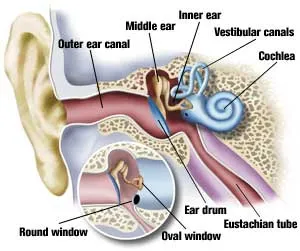
As you probably know, water pressure increases as you descend deeper below the surface. Your middle ear is a closed air space connected to the back of your throat by the normally closed Eustachian tubes. If you fail to fill this space with air as the pressure around you increases, you need to equalise your ears.
If you do not equalise properly, the pressure difference between the inside and outside of your eardrum can quickly become painful. The deeper you descend, the greater the pressure difference becomes.
What Happens to Your Ears as You Descend?
- At only 30 cm below the surface, your eardrum begins to flex inward and you may already feel pressure in your ears. It can feel similar to the pressure you experience when an aircraft is landing.
- At about 1 metre below the surface, your eardrum is pushed further inward and mucus can begin to enter the Eustachian tubes, making equalisation more difficult. The nerves in your ear are stretched and you may start to feel pain.
- At around 2 metres deep, the tissues in your ear can begin to tear, causing inflammation that may last for up to a week. Equalisation can become extremely difficult because the increasing pressure pushes the soft tissues together and can close the ends of the Eustachian tubes.
- At around 3 metres deep, blood and mucus can be drawn from the surrounding tissues to fill the middle ear. This is known as middle ear barotrauma. The pain may actually decrease and you may feel as though water has entered your ear. Do not try to remove this “water” — it is not water from outside the ear and can be reabsorbed by the tissues over time.
- At around 4 metres, if the pressure difference continues, your eardrum may rupture. Water from the outside can then enter the middle ear, potentially causing vertigo. This can be particularly noticeable when the surrounding water is cold because the temperature difference between the two ears can affect the balance system.
There is another serious risk if you forcefully try to equalise against a blocked ear. Excessive pressure can damage the round window membrane between the middle and inner ear. This is known as inner ear barotrauma and can potentially result in temporary or permanent hearing loss.
As you can see, things can go wrong very quickly. That is why equalising your ears early and regularly is an essential part of safe scuba diving. You need to open your Eustachian tubes and allow air to flow from your throat into your middle ear as the surrounding pressure increases.
How to Avoid Ear Problems While Diving
Rule No. 1: Mind Your Depth!
Be careful when you empty your BCD and become negatively buoyant. You do not need to make any effort to descend — you can simply start sinking without even noticing how quickly you are going down.
If you are descending along a line or next to a wall, it is relatively easy to see that you are changing depth. If you are descending in open water, keep an eye on your depth gauge or dive computer.
Remember that the greatest pressure changes occur close to the surface. This is why you should be particularly attentive to your depth during the first few metres of your descent.

Rule No. 2: Equalise!
The most common equalisation technique taught during a PADI Open Water course is the Valsalva manoeuvre: pinch your nose and gently blow. The increased pressure in your throat can help open the Eustachian tubes and allow air to enter the middle ear.
This can become much more difficult if you wait too long before equalising, because the increasing pressure around you can make it harder to open the passage.
To avoid problems when using this technique, do not blow too hard and do not maintain the pressure for more than a few seconds. If you still cannot equalise, ascend slightly until the pressure difference is reduced and try again.
There are several other techniques you can practise and combine:
- Swallow while pinching your nose. This activates the muscles around the Eustachian tubes and can help pull them open while compressed air moves towards the middle ear.
- Move your jaw forward and down. This is similar to the movement you make when yawning. Be careful to maintain a good seal around your regulator so that you do not end up with a mouthful of seawater. Moving your jaw from side to side may also help.
You can use each technique separately, alternate between them or combine two techniques. With practice, some divers become very good at keeping their Eustachian tubes open during descent, greatly reducing the stress placed on their ears.
If you keep your nostrils pinched while equalising, you may also notice pressure building inside your mask. Allowing a little air through your nose into the mask will be enough to prevent a mask squeeze.
Rule No. 3: Take Your Time!
You should equalise as often as necessary — and preferably more often than you think you need to.
When descending, do not wait until you feel pressure or pain in your ears before equalising. Once pressure has already built up, equalisation becomes more difficult.
If your ears are blocked, do not force them. This is one of the easiest ways to cause an injury. Stop descending and maintain your depth. If necessary, ascend slightly to reduce the pressure and allow your Eustachian tubes to open, then try again.
If you cannot equalise, you cannot descend. Take your time and listen for the little “pop” or “click” that can indicate that your Eustachian tubes have opened.
When you reach your planned bottom depth, equalise once more. You may not feel a significant pressure difference, but even a small imbalance can become uncomfortable or painful if it remains for a long time.
Some divers find it easier to descend feet first with their head in a slightly raised position. Looking upwards can also help some people open their Eustachian tubes.
If one technique does not work, try another or combine two methods — for example, swallowing while gently attempting to equalise, or yawning while using another equalisation technique.
Be aware of mucus and congestion, which can block your Eustachian tubes. Do not dive with a cold or significant congestion. Keep your mask clear of water, and if you are prone to ear problems while diving, be aware that tobacco, alcohol and dairy products may affect mucus production for some people.
Equalising at the surface before beginning your descent may also help. Some divers find that chewing gum before a dive helps them get their jaw and swallowing muscles moving.
Rule No. 4: Be Careful of a Reverse Block
When you ascend, the air in your middle ear expands and needs to escape through the Eustachian tubes. Normally, this happens naturally without you even noticing it.
However, if you feel pressure or pain in your ears or sinuses while ascending, you may be experiencing a reverse block.
A reverse block can occur when mucus or swollen tissues prevent expanding air in the middle ear or sinuses from escaping normally.
What to Do in Case of a Reverse Block
Be careful: although the sensation can be similar to the pain of a normal ear block during descent, the situation is effectively reversed.
DON’T: simply continue ascending to try to release the pressure. Increasing the surrounding pressure by descending slightly can sometimes help reduce the pressure difference. Also, do not forcefully blow your nose or perform a powerful Valsalva manoeuvre, as this can increase pressure in the middle ear and potentially make the problem worse.
DO: try gentle swallowing or yawning techniques. If this does not work, stop and take your time. Slow down your ascent. As long as you have enough air in your tank, there is no need to force your way through the problem.
The final 10 metres of the ascent involve the greatest relative pressure change, so this is particularly important. Go slowly and give your ears time to equalise naturally.
You can also try descending slightly to reduce the pressure difference and allow the trapped air to escape more gradually.
Again, the most important thing is to take your time. Some reverse blocks can take 10–15 minutes to clear. At shallow depth, you should normally have enough air to remain at depth while waiting for the pressure to equalise, so relax and try to enjoy your extended dive.
How to Avoid a Reverse Block
Do not dive with a cold or significant sinus congestion. If you use a decongestant, make sure you understand how long its effects are expected to last and that it will not wear off during your dive. Never rely on medication simply to push through an ear problem that would otherwise prevent you from diving.
Your ears are precious and are not designed for the rapid pressure changes associated with scuba diving. Take good care of them and learn to equalise properly to avoid ear barotrauma!
Happy Diving!
Taking care of your ears is one of the simplest ways to make your dives more comfortable and reduce the risk of middle ear barotrauma. Listen to your body, equalise early and often, never force an equalisation, and remember that there is no prize for reaching the bottom faster than everyone else.
Safe diving is comfortable diving — so take your time, look after your ears and enjoy the underwater world!
The Smiling Seahorse: Myanmar liveaboard diving specialist!





3 Responses
Learned a lot, thank you
Great article on how to prevent barotrauma. I would also add that the Frenzel maneuver is a safer and more effective way to equaluze and clear your eustacian tube while diving than the Valsalva maneuver.
Thanks Donna for your comment. Its true that the Frenzel Manoeuver (using your tongue pushing up at the back of the roof your mouth – like in swallowing) is safer than the Valsava Maneuver (blowing through your pinched nose). However I’ve heard many divers complaining that they cannot decompress using the Frenzel Maneuver. Would you have some good tips for them on how to perform this “safer Maneuver”? Thanks for your inpout 🙂