
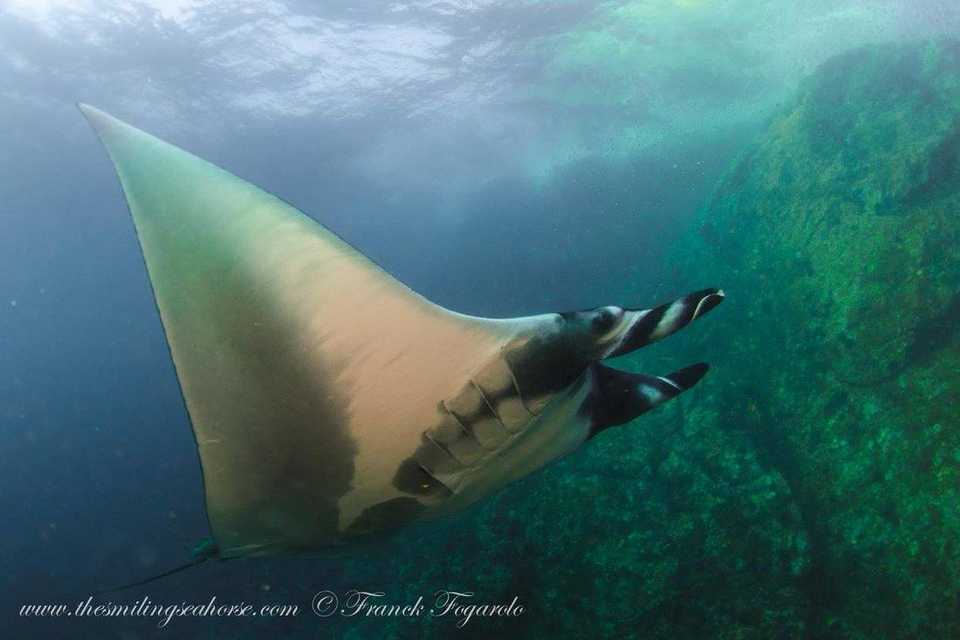
Manta Rays in the Andaman Sea: How to Dive with Mantas Responsibly
Mantas have arrived, and we are very excited about it! Because, let’s be honest, manta rays are awesome. Few encounters in the underwater world are quite as memorable as watching a manta ray glide effortlessly through the blue, its enormous wings moving with barely visible effort.
For divers exploring the Andaman Sea, manta encounters can be one of the highlights of a liveaboard trip. But getting the most from these encounters does not mean getting as close as possible. Quite the opposite: giving manta rays space and allowing them to decide how close they want to come is one of the best ways to enjoy a respectful and memorable encounter.
How to Approach Manta Rays Correctly
Divers love to catch a glimpse of manta rays gliding through the blue. When a manta suddenly appears above a reef or cruises past a group of divers, it is tempting to follow it or swim towards it for a closer look.
However, manta rays are wild and sensitive animals, and the way divers behave can make a real difference. Respectful encounters are not only better for the animals; they can also result in longer and more natural encounters for divers. Mantas are remarkably curious creatures and may choose to remain in the area for quite some time when they do not feel threatened or pressured.
When diving with manta rays, keep these simple guidelines in mind:
- Enter the water quietly. Avoid splashing the surface unnecessarily and keep your fins below the water when entering.
- Approach from where the manta can see you. Move slowly and approach from the side rather than directly from behind.
- Keep your distance. Stay at least 3 metres away and allow the manta to decide whether it wants to come closer.
- Do not chase the manta. If it changes direction or swims away, let it go.
- Never touch a manta ray. Enjoy the encounter without attempting to make physical contact.
The best manta encounters are often the ones where divers simply stop, remain calm and let the animal do the travelling. A manta may circle a cleaning station, pass overhead, disappear into the blue and then return a few minutes later. Giving it the freedom to behave naturally makes the experience far more rewarding.

Why Is It Called a Manta?
The name “manta” comes from Portuguese and Spanish, where manta means a mantle, cloak or blanket. The name is a fitting description of the broad, blanket-like shape of these spectacular rays.
Manta rays have also historically been referred to as “devil fish”, a name linked to their distinctive horn-shaped cephalic fins. These fins sit on either side of the head and can give the animal an unusual appearance when viewed from the front.
But there is nothing diabolical about a manta ray. Quite the opposite: these animals are peaceful, curious and remarkably graceful. Watching one approach a group of divers, circle around them and then disappear silently into the blue is one of those underwater moments that stays with you long after the dive is over.
Their impressive size can make them seem intimidating at first, but their behaviour around divers can be surprisingly gentle and inquisitive. This is another reason why maintaining a calm presence underwater is so important. There is no need to chase a manta to have a memorable encounter.

Where to See Manta Rays in Thailand
Manta rays are among the highlights of diving in Thailand’s Andaman Sea. Depending on the season and conditions, encounters can occur around several of the region’s famous dive sites, including Koh Bon and Koh Tachai.
These encounters are never guaranteed, because manta rays are wild animals and their movements naturally vary with conditions and food availability. That uncertainty is also part of what makes seeing one underwater so exciting. You can descend expecting a normal dive and suddenly find yourself sharing the blue with one of the ocean’s most impressive animals.
For liveaboard divers, the advantage is being able to spend several days exploring the Andaman Sea and visiting sites where manta encounters are possible. Rather than relying on a single dive, a multi-day itinerary gives you more opportunities to experience the region’s changing underwater environments.
Let the Manta Come to You
Our advice is simple: don’t chase the manta. Find a comfortable position, stay calm, keep your distance and watch what happens.
When divers follow good behaviour guidelines, encounters can sometimes last much longer. A manta may make repeated passes, circle above the reef or glide directly towards the group before turning away again. Those moments are far more special when the animal has chosen to interact with you rather than being pursued.
And if you are lucky enough to see several mantas during the same dive, take a moment to stop worrying about your camera settings and simply enjoy the experience. Some underwater encounters are worth remembering even without a photograph.
More Manta Rays Underwater
Check out more of our underwater photography and follow The Smiling Seahorse on Facebook for the latest pictures and updates from our cruises.
Tired of seeing manta rays through your screen? Come and join one of our next cruises! It is the perfect time for manta sightings, and on our last trip we were lucky enough to see four of them.





One Response
Awesome pictures. I love it.