
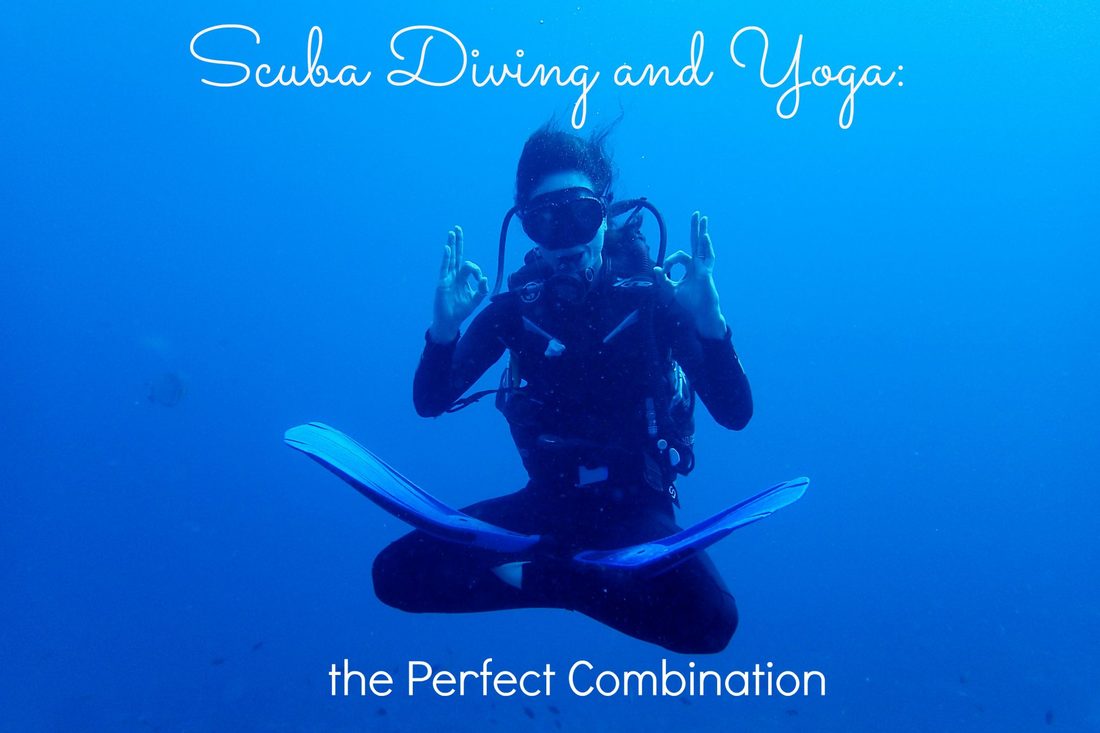
Yoga and Scuba Diving: How Yoga Can Improve Your Diving Experience
At first sight, we might think that yoga and scuba diving are two completely different activities with little in common. But look a little further and the similarities become clear.
While diving, the deeper we go, the more we disconnect from everyday life, from the world around us, and sometimes even from our usual sense of space and time. Problems and distractions seem to disappear as we focus on our breathing, our body and the underwater world.
Isn’t that also part of what makes yoga so appealing?
From this perspective, combining yoga and scuba diving can have a beneficial impact on both practices. Yoga can help divers develop better breathing awareness, concentration, flexibility and relaxation — all qualities that can contribute to a more comfortable experience underwater.
Remember Your Open Water Course?
Remember your Open Water course?
The never-ending instruction:
“Breathe deeply, slowly and continuously.”
Does that sound familiar?
And what about one of the skills that many new divers find particularly challenging: hovering?
Staying perfectly still in the water, controlling your breathing and maintaining your position without constantly adjusting your equipment requires awareness and control. These are also qualities that yoga encourages us to develop.


The Benefits of Yoga for Divers
The similarities between yoga and diving don’t stop at breathing and relaxation.
Yoga can help develop several physical and mental qualities that are useful for divers, including:
- Strengthening the back, core and muscles
- Improving joint mobility
- Developing breathing awareness and control
- Increasing flexibility
- Improving concentration and body awareness
- Encouraging relaxation and patience

An improved level of physical fitness and a more relaxed state of mind are among the many potential advantages of practising yoga.
How Can Yoga Improve Your Scuba Diving?
Breathing and relaxation techniques can be particularly relevant to scuba diving. Becoming more aware of your breathing may help you remain calm and focused underwater.
For some divers, this can contribute to:
- More controlled breathing
- Better buoyancy awareness
- Improved relaxation underwater
- Greater concentration
- Better body awareness and movement
- Greater comfort during longer dives
Yoga can also help divers become more comfortable with slowing down, focusing on the present moment and paying attention to how the body feels.
These benefits should not be interpreted as a guarantee of lower air consumption or longer dives. Your gas consumption depends on many factors, including your experience, breathing pattern, equipment, depth, current, workload and level of relaxation.
Yoga, Relaxation and the Underwater Experience
Diving is not only a physical activity. The mental side of diving is just as important.
Staying calm, concentrating on your surroundings and responding appropriately to changing conditions are important parts of being a comfortable and responsible diver.
Yoga encourages us to slow down, focus on our breathing and become more aware of our body and mind. Those habits can be particularly enjoyable when combined with time underwater.
And after a day of diving, what could be better than stretching out on the sundeck, feeling the sea breeze and taking a few quiet moments to relax?

Connect with Yourself and the Ocean
Just like yoga, scuba diving has many advantages, but that’s the topic of another article.
Practising yoga can complement the scuba diving experience by helping you focus on your breathing, your body and your surroundings.
Once underwater, everything else seems to fade away. You become connected with yourself, the ocean, the marine life and the world around you.
So remember:
Breathe. Relax. Stay aware. And enjoy every moment underwater.




