
“`html
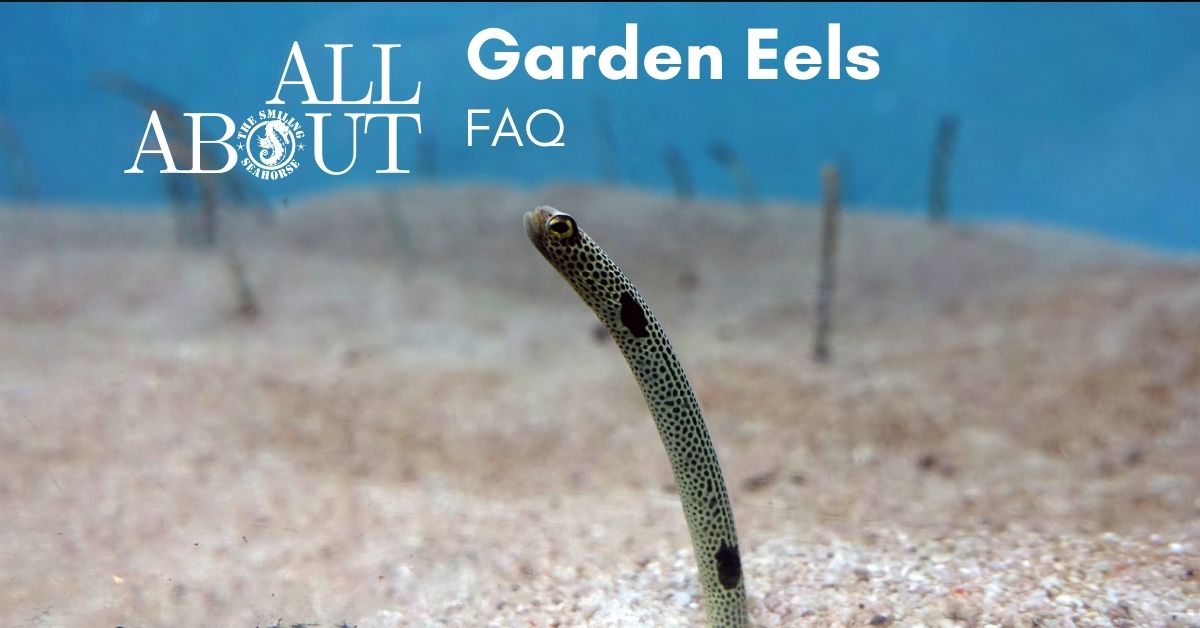
Garden Eels: The Wonderful Eels That Grow Like a Garden
Garden eels are some of the most fascinating creatures you can encounter while diving in the tropical oceans. They live in sandy burrows, often in large colonies, with only their upper bodies protruding from the seabed as they wait for tiny drifting prey to come past in the current.
In the Andaman Sea, garden eel colonies can be found on sandy plains and slopes around coral reefs. They may look like plants gently swaying in the current, but every “stem” is actually a shy little eel ready to disappear underground whenever a diver gets too close.
Garden Eels FAQ
- Who are the garden eels?
- Why are they called “garden eels”?
- Where do garden eels live?
- How do garden eels move?
- What do garden eels feed on?
- How do garden eels reproduce?
- Are garden eels dangerous?
- How do you take photos of garden eels?
Who are the garden eels?
Garden eels, together with congers, belong to the Congridae family. Garden eels are medium-sized fish, with the wonderful garden eel reaching up to around 40 cm in length. Their bodies are slender and roughly cylindrical, only about 10 mm in diameter.
Unlike many eels that spend their time swimming or hiding in crevices, garden eels spend most of their adult lives in individual burrows in the seabed. They dig their burrows using their tails and coat the walls with mucus, helping to prevent the tunnels from collapsing.
Why are they called “garden eels”?

These small eels live in burrows on the sea floor and get their name from their habit of poking their heads and upper bodies out of their burrows while keeping most of their bodies safely underground.
Garden eels tend to live in colonies, sometimes numbering a few hundred individuals. When an entire colony is standing upright in the current, with dozens or even hundreds of eel heads emerging from the sand, the seabed really does look like an underwater garden.
Where do garden eels live?
Most garden eels live in warm tropical and subtropical parts of the world’s oceans, including the Andaman Sea. They can often be spotted from a distance in colonies on sandy plains and slopes bordering coral reefs.
They favour areas swept by currents because currents bring a constant supply of nutrients and plankton. Garden eels dig themselves into sand or mud, and more rarely settle among rocks, creating burrows in which they can retreat when threatened.
Unlike many eel species that are nocturnal, garden eels are active during the day. They spend daylight hours protruding from their burrows to feed and retreat underground at night.

How do garden eels move?
Although garden eels can swim freely, they prefer to bury themselves in the sand and remain close to their burrows. Once they are large enough to dig a hole and settle down, they generally stay there rather than travelling around the reef.
One important exception is the mating season. Garden eels may leave their original burrows or move their burrows closer to a potential partner. Outside of these occasions, their burrow is their home and their main protection from predators.
What do garden eels feed on?
Garden eels feed mainly on zooplankton. Rather than actively hunting their food, they take advantage of the ocean current that brings tiny organisms directly towards them.
They do not need to travel far for a meal. Instead, they extend their bodies from the seabed into the current, with the whole colony facing the same direction and waiting for the next piece of drifting food.
They can spend much of the day feeding this way, gently swaying with the current like a field of underwater plants.
How do garden eels reproduce?

Garden eels usually leave their original burrows to get closer to their partners during the spawning season. If two males end up too close to each other, they may fight over territory and access to neighbouring females.
During mating, garden eels intertwine their upper bodies while their tails remain in their individual burrows. Two eels can remain in this position for hours during a single mating.
Garden eels are pelagic spawners. They release their fertilised eggs into the open water, where the eggs drift with the current, generally close to the surface. When the eggs hatch, the juveniles swim freely in the open water until they grow large enough to settle on the seabed and create their own burrows.
This is also one of the reasons garden eels can occasionally turn up during Blackwater dives, when divers have the opportunity to observe the mysterious pelagic stage of young marine animals.
Photo courtesy of Pete Atkinson.
Are garden eels dangerous?
No, garden eels are not dangerous to divers. Their diet consists mainly of tiny planktonic organisms, and they are not equipped to attack divers.
In fact, garden eels are extremely shy. When a diver approaches too closely, they quickly disappear back into their burrows, sometimes leaving an apparently empty patch of sand where just moments before there was an entire colony.
How do you take photos of garden eels?
Because garden eels are so shy, photographing them can be surprisingly tricky. Getting close enough for a good photograph without causing the entire colony to disappear requires patience, slow movements and plenty of time.
Some photographers have managed successful close-up shots by holding their breath for long periods. Others have experimented with remote controls to get the camera closer without having a diver approaching the colony.
The beautiful photograph below was taken by Pete Atkinson. When asked how he managed to get so close, he explained that the secret was habituation, patience and breath-holding. He lay on the sand and gradually inched his way closer over about 30 minutes, holding his breath whenever the garden eels appeared so he would not scare them.
Eventually, the eels became familiar enough with his presence to come out far enough for him to take a few photographs. He was using a 105mm macro lens on a Nikon F4 with flash. Whenever he breathed out, the garden eels would disappear back into their holes. As Pete noted, photographing them might be easier with a rebreather, which allows much longer periods without bubbles.

Garden Eels in the Andaman Sea
Garden eel colonies are a wonderful example of how even apparently simple sandy areas around coral reefs can be full of life. Look carefully while diving in the Andaman Sea and you may spot an entire colony gently moving with the current.
The trick is not to rush towards them. Slow down, keep your distance and watch. If you are patient enough, the garden eels will gradually emerge again, revealing the fascinating behaviour that makes these shy little fish such a memorable encounter underwater.
Discover More
“`





2 Responses
I have got some brown flat eels come up amongst my rickety .they are about 5inches wide. Got loads of teeth and pay across the rocks with mouths open.so I have them water and biscuits.there was a
White one with red and blue marks but the day got mum
See these garden eels all over where I live in the sandy bottom, in Tenerife. Funny creatures, always disappear into the ground when approached.