
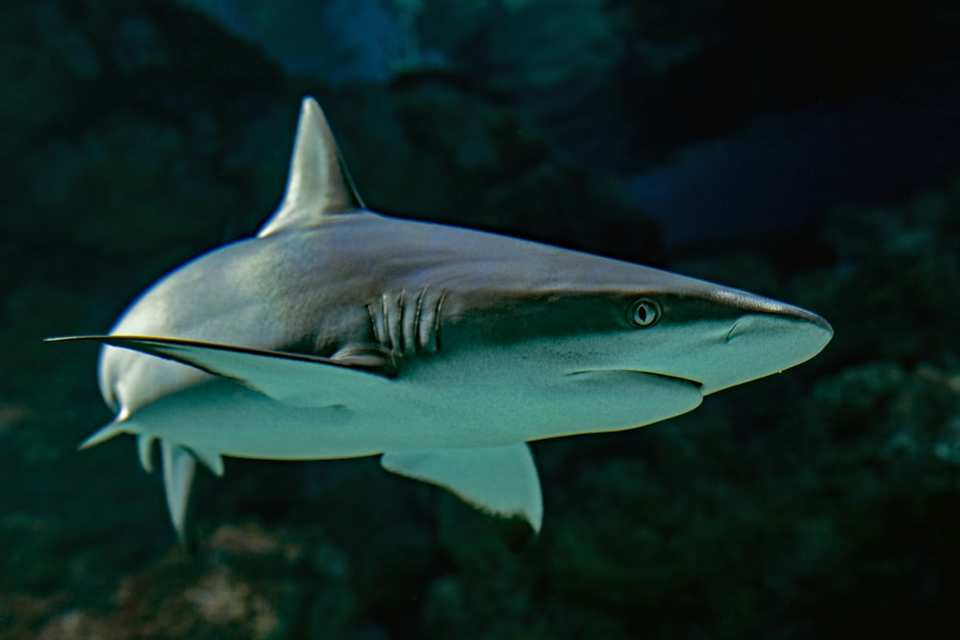
You Are More Likely to Die in Your Bathroom Than Be Killed by a Shark…
You Have a Better Chance of Dying in Your Bathroom Than Being Killed by a Shark

What are the chances of being killed by a shark?
You have all seen Jaws, or perhaps Deep Blue Sea, films that have done a great deal to popularise the image of the shark as a bloodthirsty killing machine. Some of you may even have that fear somewhere in the back of your mind: the thought of a shark suddenly appearing from nowhere and devouring you whole.
But what is the reality? Faced with this widespread fear, I asked myself a very simple question: what is the actual probability of being killed by a shark? So I went looking for the figures to find out…
Apparently, one person in 300 million is said to be the victim of a shark attack… Now that certainly puts things into perspective! 😄
But I wanted to go a little further and compare this risk with other extremely unlikely events. And the results are rather amusing: in an ordinary lifetime, you are statistically much more likely to experience extraordinary events than to end up in a shark’s jaws.
Some frequently quoted comparisons suggest, for example, that the chances of becoming President of the United States would be around 1 in 10 million, while the chances of winning an Olympic medal are around 1 in 655,000. In other words, even though these events remain exceptionally rare, they would theoretically be more likely than a fatal encounter with a shark.
But perhaps the most interesting thing is to look at the risks we actually face in everyday life. We tend to fear spectacular and heavily publicised events — such as shark attacks — while much more ordinary accidents represent a far greater threat.
Some older comparisons have even claimed that you are more likely to be killed by a falling coconut than by a shark! This statistic has been widely circulated, but it is based on old estimates that are difficult to verify.
Nevertheless, it perfectly illustrates how distorted our perception of danger can be: what frightens us most is not necessarily what presents the greatest risk.
So, should we be afraid of sharks? The figures suggest that we should put things into perspective. Shark attacks are extremely rare compared with the number of people who visit the ocean every year. And, above all, the vast majority of sharks have absolutely no interest in humans.

Bathtubs and Showers Are Far More Dangerous Than You Might Think! 😄

Every year, people still die as a result of domestic accidents involving bathtubs or showers, particularly falls. And when these accidents are compared with the risk of a shark attack, the difference is enormous: some estimates suggest that the risk of dying after a fall in your bathtub is thousands of times greater than the risk of being killed by a shark.
Water-heating systems can also present an electrical risk when an installation is faulty or improperly grounded. Some sources have reported deaths caused by electrocution in bathrooms.
So, before you jump into the water imagining that a shark is waiting for you somewhere in the ocean…
Perhaps you should be more careful around your own bathtub! 😉

Approximately 400 people are said to be struck by lightning every year, while land animals are responsible for hundreds of deaths annually: hippopotamuses, deer, dogs, elephants… and even some species of ants. By comparison, deaths caused by sharks remain extremely rare.
But there is another interesting misconception: most interactions with sharks look nothing like the scenes from the films we all have in our minds. Incidents frequently involve people swimming, surfing or taking part in other activities at the surface. In some cases, a shark may mistake a human for its usual prey, particularly when a silhouette is seen from below at the surface or in poor visibility.
This obviously does not mean that there is no risk, but scuba diving is a very different situation. A diver is underwater, usually equipped with a scuba tank and other equipment that completely changes their silhouette and movements. And, most importantly, divers are not natural prey for sharks.
In the waters of Thailand and the Mergui Archipelago in Myanmar, encounters between divers and sharks are remarkably rare considering the number of dives carried out every year. International databases do record some shark attacks in Thailand, but they do not provide evidence of a long series of attacks specifically targeting scuba divers.
So, should you really be afraid of diving with sharks? The facts mainly show that their reputation as “killing machines” is very far removed from the everyday reality experienced by divers.

Some Simple Rules for Divers and Swimmers
Encountering a shark in its natural environment is an exceptional experience. So rather than being afraid, it is better simply to keep a few common-sense rules in mind:
- Don’t be afraid, don’t panic. A shark does not automatically mean danger. Stay calm and avoid sudden movements.
- Be cautious. Pay attention to your surroundings and always keep an eye on the shark’s behaviour.
- Keep your distance. Never chase a shark or try to touch it, even if it appears completely calm.
- Respect its space. The shark is at home: give it the opportunity to move away at its own pace.
- Do not feed it. Attracting or feeding sharks can alter their natural behaviour and create dangerous situations for both them and us.
- Stay together. For divers, staying with your buddy and following the instructions of your guide or instructor is always a sensible precaution.
- Observe rather than interfere. The best memory is often one where everyone simply continues on their way peacefully.
In short: don’t panic, be a little cautious, show plenty of respect… and enjoy the encounter! 🦈

But If Sharks Are So Harmless to Us, What About the Other Way Around?
The real paradox is that we often spend more time wondering whether a shark will attack us than asking ourselves what we can do to avoid contributing to their decline. Yet for many shark species, the danger comes far more from humans than from sharks themselves.
Sharks play an essential role in maintaining the balance of our oceans. They have roamed our seas for hundreds of millions of years and were already here long before the dinosaurs appeared. Yet their incredibly long reign at the top of the ocean food chain is now seriously threatened.
And this time, the predator is far more dangerous than a shark: it is us.
For many years, estimates suggested that up to 73 million sharks were killed every year, mainly to supply the global trade in shark fins. These are particularly sought after for the famous shark fin soup, traditionally consumed in several parts of Asia.
And fins are unfortunately not their only problem. Sharks are also victims of overfishing, accidental capture in fishing nets, and the trade in their meat, skin and other body parts. Their biology makes them particularly vulnerable: they grow slowly, mature late and produce relatively few young. When a population is severely depleted, it therefore takes a long time to recover.
So, if you want to help protect sharks, one very simple first step is to avoid consuming shark fin soup and find out more about products derived from sharks. You can also learn about the work of organisations involved in shark conservation, such as Pew or Project AWARE.
After everything we’ve just seen, I hope you feel a little safer in the oceans… See you underwater!




