
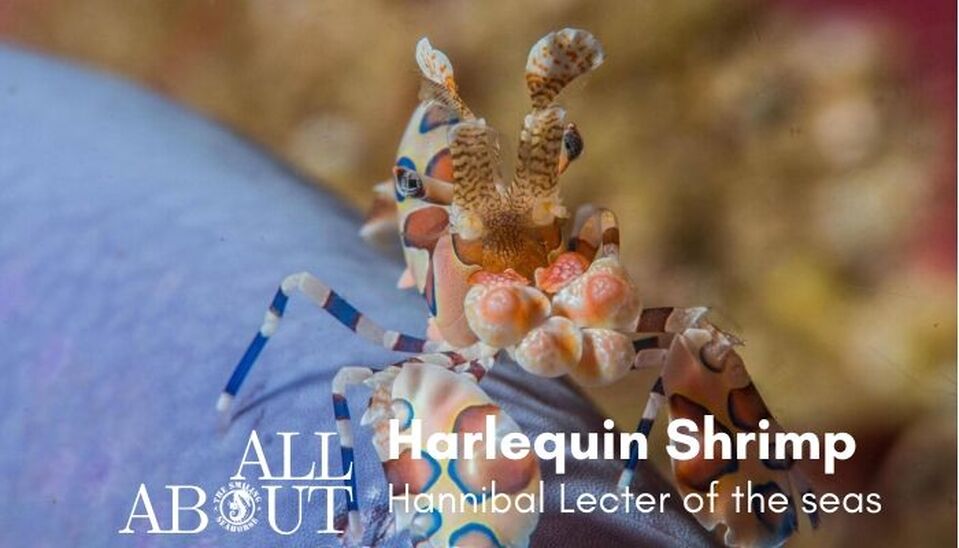
Harlequin Shrimp Guide: Facts, Behavior, Diet, and Photography Tips
Also called Hymenocera elegans, the harlequin shrimp is a minuscule, flamboyant crustacean that ranks among the superstars of its family. Its hypnotic coloration and bizarre behavior make this rarity a top target for macro underwater photographers (read the full underwater guide to diving Thailand).
FAQ – Harlequin Shrimp
- What does a harlequin shrimp look like?
- How big do harlequin shrimp get?
- Can harlequin shrimp change color?
- What do harlequin shrimp eat?
- How do harlequin shrimp hunt and eat starfish?
- How do you photograph harlequin shrimp?

Spotting a Harlequin Shrimp

Harlequin shrimp can be identified by several distinctive features, including their unique body shape and specialized appendages. Their claws are large and flat, differing from all other types of shrimp. Their tail is trapezoidal, and they use two fancy, flat antennae on their heads equipped with sophisticated scent receptors tuned to detect prey.
How Big Do Harlequin Shrimp Get?
Females can grow up to 5 cm in length, whereas males, even when fully grown, look like juveniles next to them.
One of the harlequin shrimp’s most attractive features is its carnival-ready costume. Their carapace is cream-colored and patterned with large, psychedelic spots.
It was once thought there were two varieties of harlequin shrimp (Hymenocera elegans and Hymenocera picta), but it was later concluded that they are one and the same, with color variations depending on their native region.

Around the Indian Ocean (H. elegans), they generally feature orange-to-purple spots surrounded by a blue line, while harlequin shrimp native to the Pacific, particularly Hawaii (H. picta), are more vibrant with pink or purple spots detailed with a yellow lining.
Can Harlequin Shrimp Change Color?


Some aquarium owners have reported that harlequin shrimp can change color based on their mood—for example, when a collector ordered a pair consisting of one picta and one elegans, both arrived looking identical until they calmed down and returned to their true colors!
These intricate motifs developed through evolution as a means of protection. In the underwater world, animals with bright colors are often recognized by potential predators as toxic. This coloration invites far fewer natural predators than other, less colorful creatures of similar stature.
Home Sweet Hiding Hole

Harlequin shrimp live on and around coral reefs between 1 and 30 metres deep. These shy creatures prefer dark, narrow crevices and branching corals to seek refuge from fish, crabs, and octopuses that prey on them.
They are often found in pairs, and if a couple successfully establishes a secure den, they can remain in the same place together for long periods. Sometimes harlequin shrimp will spend the vast majority of their 7-year lifespan in the same place and with the same mate, living, breeding, hunting, and defending their territory together loyally.
Romance in the Style of a Harlequin Shrimp


During the breeding season, the female can produce between 100 and 5,000 eggs, which she carries attached to her abdomen following fertilization. Like many crustaceans, harlequin shrimp moult when they outgrow their shells, leaving them soft and exposed. This sloughing renews the exoskeleton and marks when a female reaches sexual maturity.
She is roughly 200–240 days old when she undergoes her first moult, then repeats the process every 18–26 days for the rest of her life. Following every shedding of her carapace, she is fertile and ready to reproduce.
After 12–18 days of gestation, microscopic larvae emerge from their eggs, beginning a 5–6 week pelagic settlement period before developing into their mature form.
What Do Harlequin Shrimp Eat?

Harlequin shrimp have dining habits that could inspire a horror movie. Despite their tiny size, they survive on a diet consisting almost exclusively of live sea stars much larger than themselves, showing a particular fondness for tube feet and soft tissues. Most sea star species are suitable, though they reportedly cannot eat brittle stars.
How Do Harlequin Shrimp Kill Starfish?

The mating pair hunts together, tracking down prey using their sensitive antennae. Males, though much smaller, are often more agile and proficient during the hunt. Once found, the pair works as a team to flip the starfish over and drag it back to their den using powerful pincers. Unable to move, the starfish’s tube-like feet are consumed while it remains alive.
Even more macabre is the shrimp’s tendency to keep the starfish alive for up to two weeks by feeding on it gradually. In moments of desperation, they will resort to eating the soft leg tubes of sea urchins.

Harmony on the Reef
Despite their gruesome menu, harlequin shrimp benefit the reef on a grander scale. Because their specialized diet targets sea stars, including coral-eating species, they help control populations that could otherwise devastate coral colonies—such as the crown-of-thorns starfish.
How to Photograph Harlequin Shrimp


Harlequin shrimp, with their striking colors and reflective bodies, present a challenge in underwater photography. Avoid overexposing their bright spots and claws. Here are essential tips for capturing them:
- Mind the Exposure: Expose for the brightest parts of the shrimp, usually the claws or body. Side-profile shots help reduce hotspots.
- Focus on the Eye: Aim for tack-sharp focus on the small eyes.
- Capture Their Behavior: Photographing them interacting with or feeding on sea stars adds dynamic action to your composition.
- Background Choices: Select backgrounds carefully to make their colors pop and manage your depth of field.
- Use the Right Lens: A 60mm lens offers fast autofocus; a 100mm/105mm lens fills the frame and blurs backgrounds; a fisheye lens allows creative close-up perspectives.


Harlequin Shrimp Are in Danger
Like many marine species, harlequin shrimp suffer from environmental pressures, including global warming, pollution, coral bleaching, and the growing aquarium trade. Protecting coral habitats is essential to preserving their natural populations.

We love encountering these magnificent critters while diving Myanmar and Thailand.

Harlequin Shrimp Classification
- Kingdom: Animalia
- Phylum: Arthropoda
- Subphylum: Crustacea
- Class: Malacostraca
- Order: Decapoda
- Infraorder: Caridea
- Family: Hymenoceridae
- Genus: Hymenocera
- Species: Hymenocera picta and Hymenocera elegans
For the moment, Myanmar’s borders remain closed, and all our cruises this season are planned in Thailand. We are hoping for a reopening before next season…
Explore More of the Andaman Sea
- Mantis shrimp facts – learn more about these fascinating macro subjects.
- Thailand marine life guide – discover top species across Andaman dive sites.
- Thailand liveaboard diving – join our upcoming trips.
- Cruises, schedules & itineraries – view our latest expedition schedules.




