
10 Fascinating Facts About Pangolins of Myanmar and the Mergui Archipelago
When you think about wildlife in Myanmar, your mind may first turn to elephants, tigers, monkeys or the incredible marine life of the Andaman Sea. But the forests and islands of southern Myanmar are also home to one of the world’s most unusual and fascinating mammals: the pangolin.
During a visit to the Mergui Archipelago, it is not only the underwater world that deserves your attention. Exploring the islands and their forests can reveal an extraordinary variety of fauna and flora, making encounters with wildlife above the water another memorable part of a Myanmar liveaboard adventure.
Pangolins are particularly fascinating. They look almost prehistoric, are covered in protective scales, have remarkably long tongues and have developed some extraordinary adaptations for feeding and defending themselves.
Here are 10 fascinating facts about these unusual mammals and why protecting them matters.
1. Pangolins Are the Only Mammals Covered in Scales
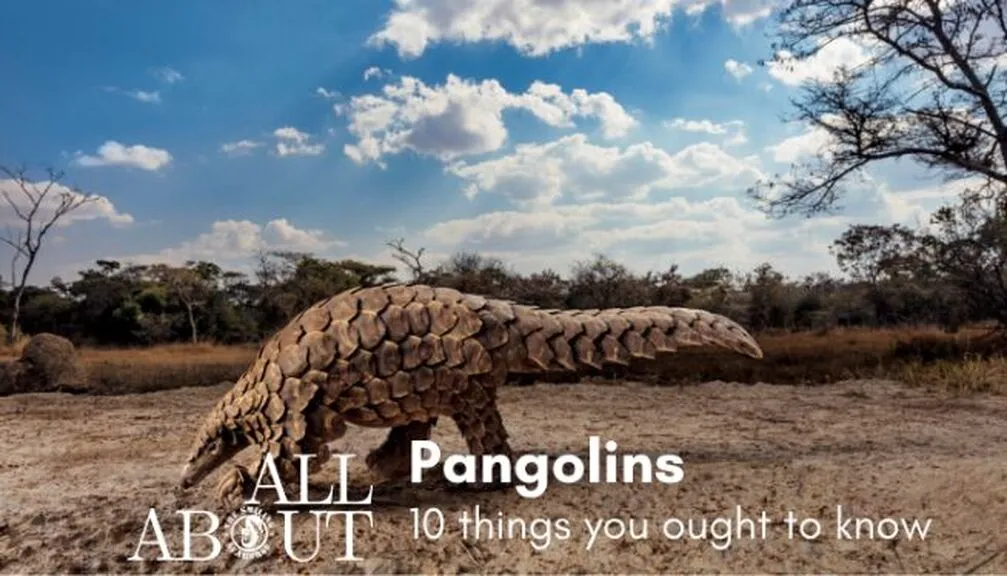
One of the first things that makes a pangolin so unusual is its appearance. Pangolins are the only mammals known to have large protective scales covering much of their bodies.
These scales are made of keratin, the same protein found in human fingernails and hair. They overlap across the animal’s body, creating a remarkable natural suit of armour.
Depending on the species, pangolins can look quite different in size and appearance, but all share this extraordinary defining characteristic.

2. The Name Pangolin Means “Rolling Up”
The word pangolin comes from the Malay word pengguling, meaning something that rolls up.
The name is particularly appropriate because rolling into a ball is one of the pangolin’s most remarkable defensive behaviours. When threatened, a pangolin can curl its body tightly, protecting its vulnerable head and underside behind its overlapping scales.
This defensive strategy gives predators a very difficult target. Instead of running away, the pangolin essentially turns itself into a heavily armoured ball.

3. Their Scales Provide Remarkable Protection
A pangolin’s scales are much more than an unusual feature. They are its primary defence against predators.
When curled up, the overlapping scales make it extremely difficult for a predator to reach the animal’s softer body. Large predators such as big cats may be capable of attacking pangolins, but the pangolin’s defensive posture can make it surprisingly difficult to bite or access.
It is a remarkable example of how evolution can produce a very different solution to the problem of survival: rather than relying on speed, strength or sharp teeth, pangolins rely on armour.

4. Pangolins Have Another Unusual Defence
The scales are not their only line of defence. Pangolins can also release a foul-smelling secretion from glands near the anus when they feel threatened.
This has led to comparisons with skunks, although pangolins and skunks are not close relatives. Their similar defensive strategy is simply another example of how different mammals have evolved ways of discouraging predators.
So, are pangolins the cousins of skunks? Not quite! Their strange defensive smell may make the comparison tempting, but their evolutionary relationships are much more distant.

5. Their Tongues Can Be Longer Than Their Bodies
Perhaps one of the most impressive pangolin adaptations is hidden inside its mouth.
Pangolins have exceptionally long, sticky tongues designed for reaching into ant and termite nests. When fully extended, a pangolin’s tongue can be longer than its body.
It is perfectly adapted to the animal’s specialised diet. Pangolins do not need large teeth to process their food because they mainly use their powerful claws to open insect nests before sending their incredibly long tongue deep inside.

6. Pangolins Can Walk on Their Hind Legs
Pangolins are also capable of walking on their hind legs, using their tail and forelimbs to help maintain balance.
Their powerful front claws are primarily adapted for digging into ant and termite nests, so walking with their forelimbs raised can also help keep those claws ready for action.
Watching a pangolin move in this unusual way is another reminder of just how different these animals are from most of the mammals we are familiar with.

7. Pangolins Have a Huge Appetite for Ants and Termites
Pangolins are specialised insectivores, with ants and termites forming the main part of their diet.
They use their powerful claws to break open nests and then use their long, sticky tongues to collect the insects. Their appetite is impressive, and pangolins can consume enormous quantities of ants and termites over the course of a year.
This feeding behaviour also makes pangolins an important part of forest ecosystems. By consuming large numbers of social insects, they interact directly with the populations of ants and termites found in their habitat.

8. Baby Pangolins Get a Free Ride
Baby pangolins may have one of the cutest ways of travelling through the forest: they ride on their mother’s back or tail.
Young pangolins remain dependent on their mother during their early development. During the first part of their lives, the baby can cling to its mother while she moves around in search of food and shelter.
This extraordinary mother-and-baby relationship is particularly striking when you consider the pangolin’s armour. Even at a young age, the baby is already equipped with the characteristic scales that make the species so recognisable.
 Photo credit: Associated Press
9. There Are Eight Species of Pangolin
There are currently eight recognised pangolin species, with four species native to Asia and four native to Africa.
The Asian species include the Chinese pangolin, Indian pangolin, Philippine pangolin and Sunda pangolin. African species include the ground pangolin, giant pangolin, black-bellied pangolin and white-bellied pangolin.
This diversity makes the conservation of pangolins particularly important. Each species occupies its own geographic range and faces its own combination of environmental pressures and threats.

10. Pangolins Are Among the World’s Most Trafficked Mammals
Unfortunately, the fascinating characteristics that make pangolins so special have also made them a target for illegal wildlife trade.
Pangolins have historically been hunted for their meat, while their scales have been used in traditional medicine despite there being no established scientific evidence that pangolin scales provide medicinal benefits.
International commercial trade in pangolins was brought under the highest level of CITES protection in 2016, but illegal trafficking remains a serious conservation problem.
Habitat loss is another major concern. Forest ecosystems throughout Southeast Asia continue to face pressure from development, agriculture, logging and other human activities. Protecting remaining habitats is therefore an essential part of protecting pangolin populations.
 Photo credit: Jakarta Post
Wildlife Above and Below the Water in the Mergui Archipelago
The observation of fauna and flora is one of the great pleasures of visiting the Mergui Archipelago. This remote part of Myanmar is famous for its spectacular islands, beaches, forests and largely undeveloped landscapes, as well as its exceptional underwater environment.
For divers travelling aboard a Myanmar liveaboard, the adventure does not stop when the dive is over. Between dives, you may have the opportunity to explore islands, walk along beaches, kayak through coastal waters or simply observe the wildlife around you.

Myanmar is recognised for its remarkable biodiversity, but many species and their habitats face increasing pressure. For a remote ecosystem such as the Mergui Archipelago, responsible tourism and the protection of natural habitats are particularly important.

Why Pangolins Matter
Pangolins may not have the fame of elephants or tigers, but they are an extraordinary part of Asia’s natural heritage. Their unusual armour, specialised diet, powerful claws, enormous appetite and unique behaviour make them one of the most fascinating mammals on the planet.
They also remind us that biodiversity is not only about the animals we see most often. Every species plays a role in the ecosystem in which it lives, from the smallest reef creature to the largest forest mammal.
Whether you are exploring the underwater world while diving in Myanmar or discovering the forests and islands between dives, taking the time to appreciate the wildlife around you is an important part of experiencing this remarkable region.
Discover More
- Mergui Archipelago – Discover the remote islands, forests and marine life of southern Myanmar.
- Diving in Myanmar – Explore the spectacular underwater world of the Andaman Sea.
- Myanmar Liveaboard Diving Holidays – Explore the Mergui Archipelago on a multi-day diving adventure.
- Best Dive Sites in Myanmar – Discover some of Burma’s most remarkable underwater sites.
- Marine Fauna of the Andaman Sea – Meet the incredible marine species found in this part of the Indian Ocean.
- Marine Conservation – Learn more about protecting the extraordinary ecosystems we explore.
>





One Response
These facts are great! Thank you for sharing your pangolin love. 🙂