Tiger sharks are among the most fascinating—and misunderstood—creatures in the ocean.
Often portrayed as aggressive predators, they actually play a vital role in maintaining healthy marine ecosystems.
In this guide, we answer the most common questions divers and ocean lovers ask about tiger sharks, including whether they are dangerous, where they live, what they eat, and what makes them such efficient hunters.
What Is a Tiger Shark?
The tiger shark (Galeocerdo cuvier) is one of the largest shark species in the world, typically reaching 3 to 4 meters in length and weighing up to 500 kg.
They are found in tropical and subtropical waters worldwide, including the Indian Ocean, Pacific Ocean, and Caribbean Sea. In Southeast Asia, they are occasionally spotted around remote dive sites such as the Burma Banks in Myanmar.
Tiger sharks are generally solitary hunters and are most active at night.
Are Tiger Sharks Dangerous?
This is the question most people ask first.
Tiger sharks are sometimes considered more “risky” than other species due to their non-selective feeding behavior. However, the reality is far more nuanced.
The truth about shark encounters:
- Shark bites are extremely rare worldwide
- Fewer than 80 incidents per year are reported globally across all species
- Fatal encounters average fewer than 5 per year
Most incidents involving tiger sharks are not intentional attacks. They are usually cases of mistaken identity or curiosity, often involving surfers or swimmers.
For scuba divers, the risk is extremely low. In fact, tiger sharks are often calm when observed underwater, especially when not provoked or fed.
👉 The key rule: Never feed or approach sharks aggressively.

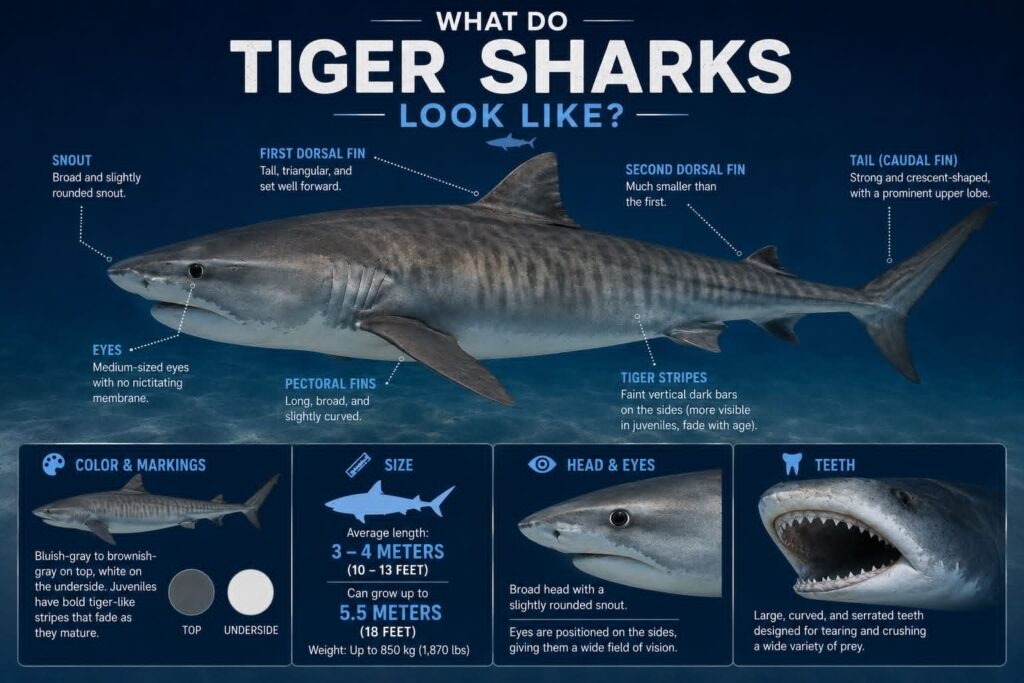
What Do Tiger Sharks Look Like?
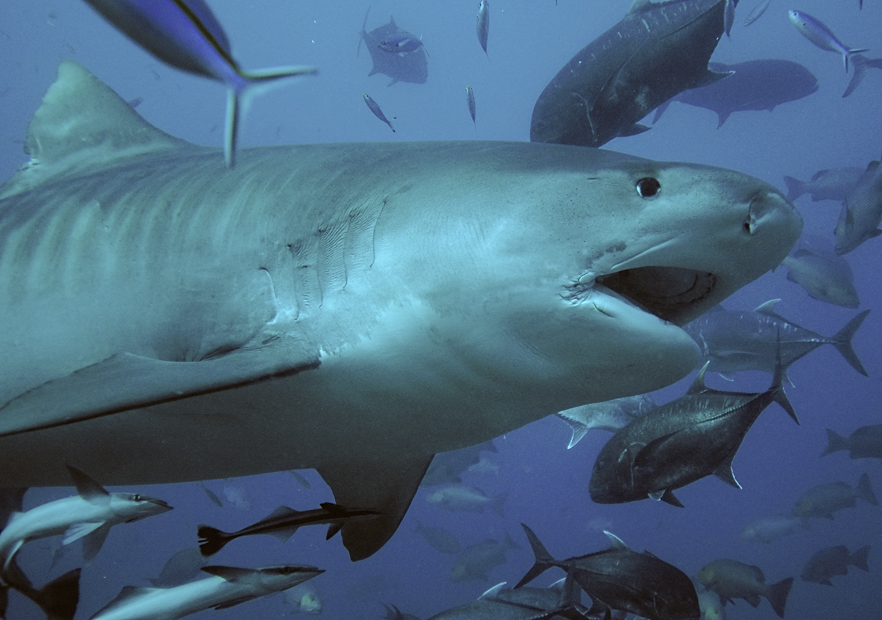
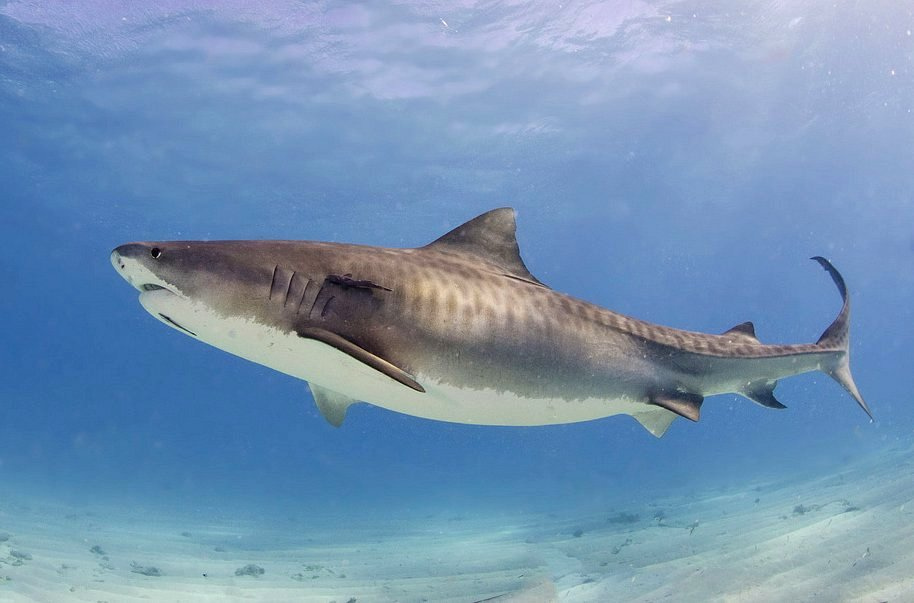
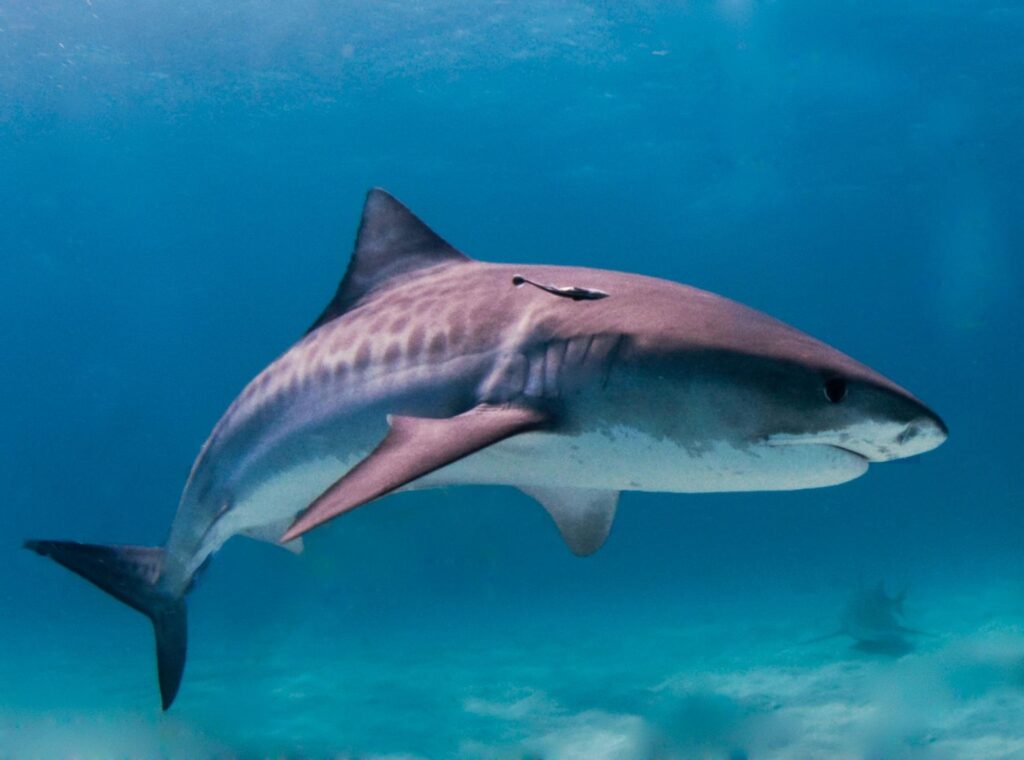
Tiger sharks are easy to recognize thanks to their distinctive appearance.
Key features:
- Broad, robust body
- Bluish-grey skin
- Dark vertical stripes (more visible in juveniles)
- Powerful jaw and blunt snout
Those iconic stripes are what give them their name—though they tend to fade as the shark matures.
Why Are Tiger Sharks Such Effective Predators?
Tiger sharks are often described as “super predators” due to their highly developed senses and adaptability.
Their hunting advantages include:
- Electroreception (Ampullae of Lorenzini)
Allows them to detect electric fields from prey - Enhanced night vision
A reflective layer behind the retina improves low-light visibility - Stealth hunting behavior
They move slowly, then accelerate rapidly to ambush prey
These adaptations make them extremely efficient nocturnal hunters across a wide range of environments.
Where Do Tiger Sharks Live?
Tiger sharks are widely distributed across warm oceans.
They are commonly found in:
- Coral reef systems
- Coastal waters
- Island drop-offs
- Open ocean routes between islands
They are present in:
- The Indian Ocean
- The Pacific Ocean
- Parts of the Atlantic Ocean
In Southeast Asia, sightings are rare but possible in remote and less disturbed regions such as the Andaman Sea and Myanmar’s offshore waters.
Unlike some species, tiger sharks do not tolerate freshwater. Only a few species, like bull sharks, can survive in rivers or estuaries.
What Do Tiger Sharks Eat?
Tiger sharks are opportunistic feeders, meaning they eat almost anything available.
Their diet includes:
- Fish
- Sea turtles
- Seabirds
- Rays and smaller sharks
- Marine mammals (occasionally)
- Carrion (dead animals)
They are sometimes called the “garbage cans of the sea” because stomach analyses have revealed unusual items such as plastic, cans, and even license plates.
This behavior is not preference-based—it reflects their highly opportunistic survival strategy.
How Do Tiger Sharks Reproduce?
Tiger sharks reproduce through ovoviviparity, meaning:
- Eggs develop inside the mother’s body
- Young hatch internally
- Fully formed pups are born live
Key reproductive facts:
- Gestation lasts about 12 months
- Females can give birth to up to 40 pups
- Juveniles reach maturity at around 4 years old
Because of their slow reproductive cycle, tiger sharks are vulnerable to overfishing and bycatch.
Are Tiger Sharks Endangered?
Tiger sharks are currently classified as Near Threatened by the IUCN (International Union for Conservation of Nature).
Main threats include:
- Commercial fishing
- Bycatch in longline fisheries
- Demand for shark fins in some regions
While not yet endangered, their populations are declining in several parts of the world, making conservation efforts increasingly important.
Are Tiger Shark Encounters Safe for Divers?
Yes—when done responsibly.
Scuba divers who encounter tiger sharks often describe the experience as:
- Calm
- Respectful
- Memorable
Sharks are generally not interested in divers unless provoked or habituated by feeding.
Safe diving guidelines:
- Maintain neutral buoyancy
- Avoid sudden movements
- Never chase or corner a shark
- Do not feed marine life
Respectful observation leads to safe and unforgettable encounters.
Final Thoughts: Respect, Not Fear
Tiger sharks are powerful apex predators, but they are not mindless killers. Like all sharks, they play a crucial role in maintaining ocean balance.
Rather than fearing them, understanding their behavior helps us appreciate how essential they are to marine ecosystems.
If you’re lucky enough to see one while diving in places like the Andaman Sea or Myanmar’s remote waters, consider it a rare and extraordinary privilege.