
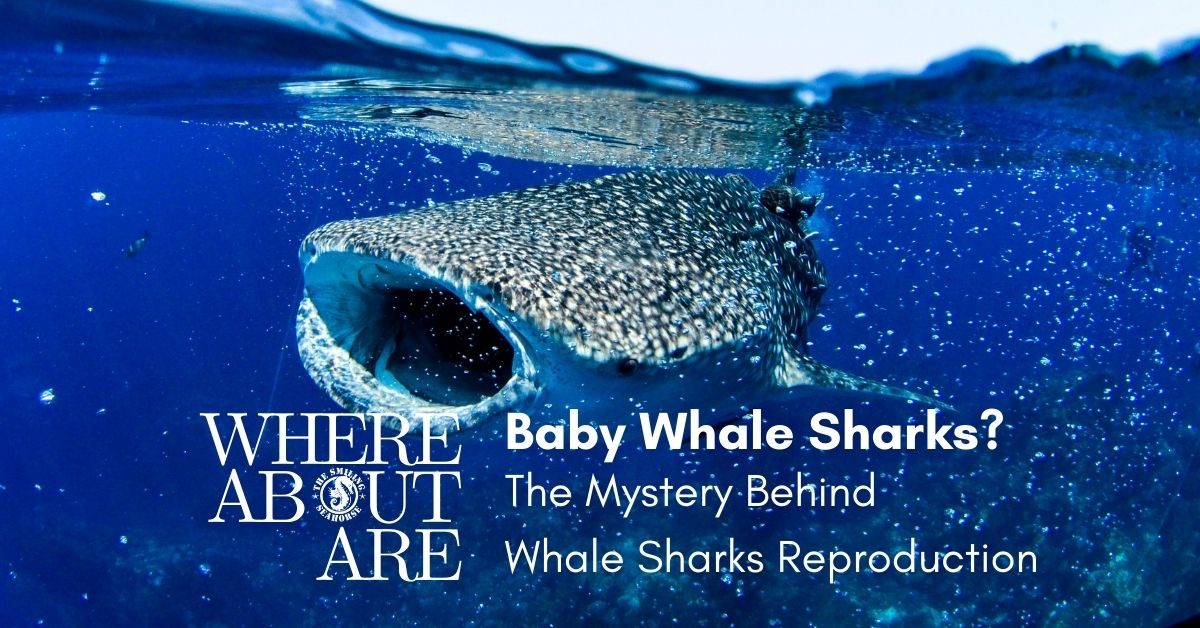
Whale Shark Life Cycle Is Still an Enigma: What Marine Biologists Know About Baby Whale Sharks
Whale sharks are the biggest fish in the oceans. Their enormous size suggests slow growth rates and great longevity. Male whale sharks reach sexual maturity at around 30 years of age, and their adult size is rarely greater than 8 metres. Females grow much bigger, but it can take them around 50 years to become sexually mature.
While whale sharks could potentially live for 100 to 150 years and produce hundreds of pups during their lifetime, this late development means that their populations may be slow to recover. Many whale sharks may never live long enough to reproduce.
Before they get the chance to breed, they have to survive numerous threats, including accidental capture in fishing nets.


What Do You Know About Their Reproduction?
The answer to this question is: not much – even among whale shark specialists.
There are three different modes of reproduction among sharks and rays: oviparity, ovoviviparity and viviparity, as well as a fourth variant involving asexual reproduction.
Oviparous species, like many other fish as well as birds and reptiles, lay eggs.
Viviparous species give birth to live young, just like mammals. A placenta links the developing embryo to its mother and provides it with nutrients while it develops in the womb.
Ovoviviparous species also give birth to live young, but there is no placenta linking mother and baby. The embryo first develops inside an egg, obtaining nutrients from the yolk. It then hatches from the egg while still inside the mother’s body, and the mother gives birth to the young.
Asexual reproduction has also been documented in some sharks. Leopard sharks kept in aquariums have given birth after years in captivity, despite having no access to a male.


Whale sharks are ovoviviparous, and this was discovered thanks to a single pregnant female caught in fishing nets in 1995. Nicknamed “Big Mama”, she contained 300 embryos in her uterus at various stages of development. Some were still inside their eggs, while others had already hatched. The largest embryo was 64 cm long.

So When Baby Whale Sharks Are Born, Where Do They Go?
Where whale sharks go to give birth is still a mystery. It is believed that whale sharks are born at around 40–70 cm long, but surprisingly, no diver has ever seen a whale shark smaller than 2 metres. It is still unknown where they spend the early part of their lives before reaching this size.
As deep water is one of the few places where they could remain hidden from predators and other threats, it is believed that baby whale sharks may be born in very deep water and spend the first years of their lives at depth.
Baby Whale Shark Sightings Are Very, Very Rare – But They Have Been Seen!
Only 21 baby whale sharks smaller than 1.5 metres long had been recorded globally at the time of the original article, with most being neonates accidentally captured as bycatch in fishing nets.
The latest whale shark baby mentioned in the original report was found on 15 March 2020 and measured just 60 cm long. This is smaller than the largest embryo found inside “Big Mama” in 1995, meaning this pup was either a very small newborn or possibly a neonate.


Given their size and swimming ability, the areas where these young whale sharks were found – including the Philippines, Peru, India, Australia, Pakistan and Taiwan – may be close to whale shark nursery areas.


Watch a baby whale shark swimming off in this video:
To learn more about adult whale sharks, read our dedicated article:
And if you have something to add, feel free to leave us a comment below!





One Response
really interesting!!! read my mom this to get her out of my room cuz this is what I had open and it worked!!!